After our time on Vanua Balavu, it was time to move on again. From Mbavatu Harbour, we planned to leave the reef through the northwestern pass and set course for Qamea Island, with Namata Bay as our destination. It was a passage of around sixty nautical miles, and the weather forecast actually looked quite promising: around fifteen knots of wind. Nothing spectacular, but more than enough for a lovely day of sailing.
At least, that was the idea.
Once outside the reef, however, there was very little left of those predicted fifteen knots. Six knots was about the maximum we saw and, although we optimistically tried to make something of it under sail, it simply was not enough to get My Motu moving at any decent speed. So the engine went on and, in the end, it stayed on for almost the entire sixty nautical miles.
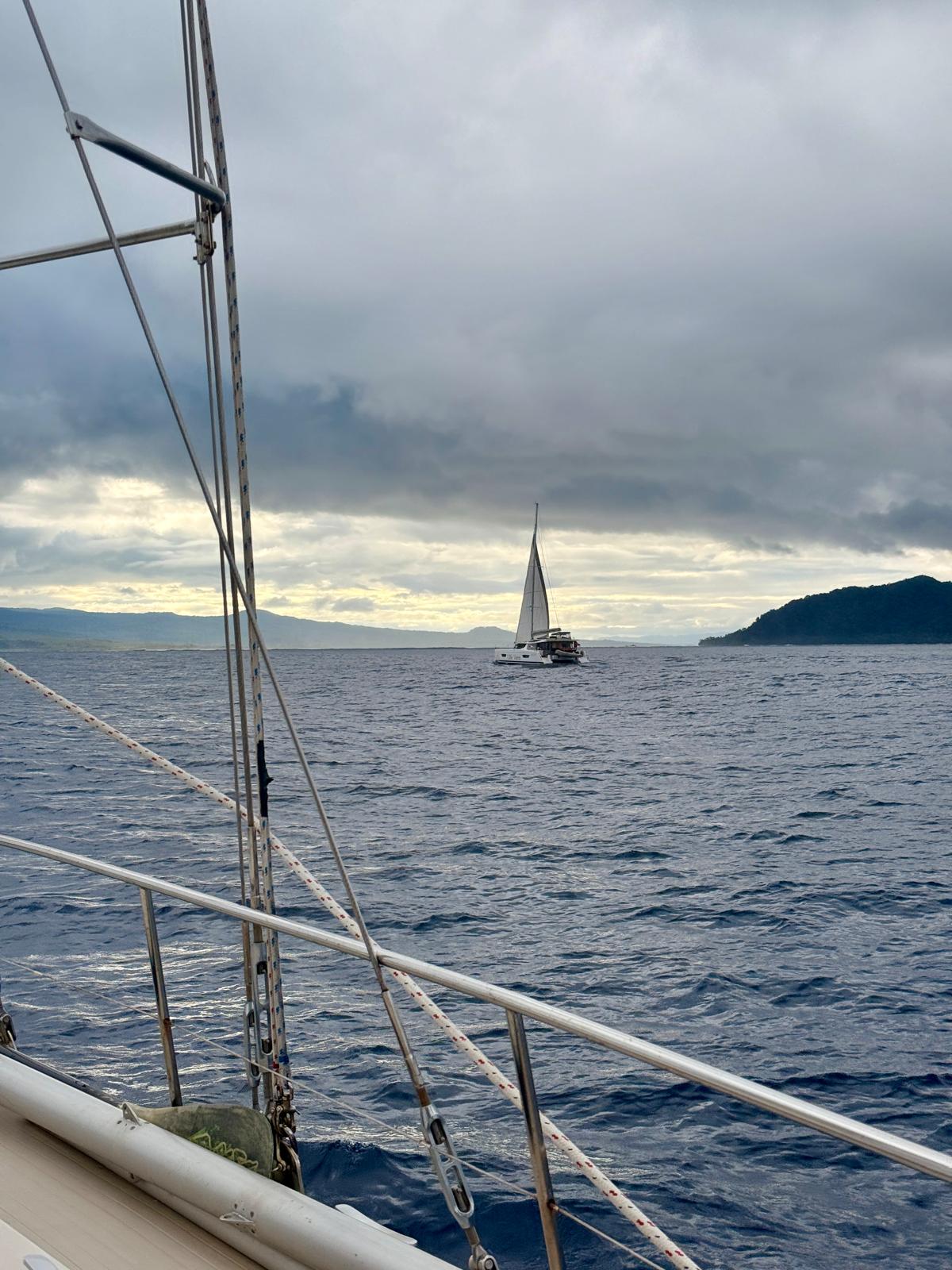
Not exactly the kind of passage that normally makes for an exciting story. No big waves, no reefing and no unexpected manoeuvres, just the steady hum of the engine, a calm sea and, above all, a lot of hours stretching out ahead of us.
And hidden in all those quiet hours was something unexpectedly valuable: time.
When you suddenly have time to spare
There are always projects waiting somewhere in the background. Things you once started full of enthusiasm, only to have everyday life take over. And life on a sailing boat turns out to be surprisingly good at doing exactly that, because although from the outside it may sometimes look as if we simply sail from one tropical bay to another, our days have a habit of filling themselves.
There is always something that needs repairing, a new place to explore, groceries to buy, a weather forecast to study or the next route to plan. I write our blogs, bake bread, cook and try to plan our meals ahead a little, because fresh ingredients are not available everywhere. Making yoghurt has also become part of life on board, although I have now discovered that it is something best avoided on a moving boat. Apparently, even yoghurt needs a little peace and quiet.
And so the days fly by, while larger projects sometimes remain untouched for much longer than intended.
But sixty nautical miles under engine suddenly gives you hours as a gift. Of course, I do not spend an entire passage sitting behind my computer. Even when the sea is calm, my attention is constantly drawn outside. My eyes automatically scan the horizon for large groups of birds, because when lots of birds are diving into the water, there is usually something interesting happening underneath them as well. And after all the incredible encounters we have had in the Pacific, I am always hoping to spot that single blow on the horizon that tells me there is a whale somewhere out there.
And, of course, the fishing lines went out again. You never know what might decide to take an interest in our lure.
In between scanning the horizon, checking our course and the normal rhythm of life on board, I picked up an old project again: my book Wild Side – What the Sea Hides.
The manuscript had been sitting there for over a year, but as anyone who writes knows, that does not mean a book is finished. I started reading again, changing things, polishing sentences and revisiting scenes, and slowly I disappeared back into the world of Saar and Pim.
Wild Side – What the Sea Hides is a fictional story about Saar and Pim, who leave their familiar life behind to sail around the world aboard their yacht. They are searching for freedom, adventure and a life beyond the usual path, but as they travel farther, they discover that life at sea brings more than new islands, tropical anchorages and unfamiliar shores. Some encounters leave their mark, and some secrets quietly travel with you.
When Saar and Pim meet Floor and Michiel, their life aboard the luxurious Blue Horizon seems almost perfect. Floor is charming, confident and difficult to read, yet from the moment they meet, there is something about her smile that stays in Saar's mind. In fact, the story begins with that very smile: “The smile came first.” Although nothing particularly unusual seems to happen that first evening, much later Saar may no longer remember which wine Floor poured or what they laughed about, but she will still remember that smile.
And so there I was, somewhere in the Pacific, with My Motu steadily motoring towards Qamea while I disappeared into a fictional sailing world. Every now and then I looked up from my screen to scan the horizon, check the fishing lines and see whether a group of birds had appeared somewhere above the water.
For a while that day, our real sailing life and the fictional life of Saar and Pim seemed to flow into each other.
Action at last in the final miles
With Qamea Island becoming increasingly clear ahead of us and about five nautical miles left before the pass, our uneventful passage suddenly became a lot more interesting. Ahead of us, enormous groups of birds were circling above the water and fish were jumping everywhere.
That is the kind of sight that immediately gets our full attention. So much activity above the surface usually means that at least as much is happening underneath it.
We changed course and headed straight towards the action. Jeroen was already waiting beside the fishing rod and it was not long before we had a bite. The line raced off the reel and immediately it was obvious that we had hooked something substantial.
“They are yellowfin tuna!” Jeroen shouted excitedly.
“Ohhh, delicious! Sushi tonight!” I shouted back.
I may have celebrated a little too soon.
The tuna clearly had very different ideas about our dinner plans and, after a fight lasting more than twenty minutes, it finally managed to break free. The line went slack and we looked at each other in disappointment. No yellowfin and therefore no fresh sushi that evening.
You cannot have everything.
We set course for the pass again, but by now there was even more happening around us. In the distance I spotted whales, and the huge groups of birds we had been following seemed to be moving in their direction as well. Of course, it was tempting to change course again and head over for a closer look, but the day was already getting on. When whales, fish and birds are actively feeding, you never know how long they will stay in one place and, by the time we reached them, the whole spectacle could easily have moved miles away.
So we decided to stay on course and simply enjoy the show from a distance.
Once safely through the pass, the weather suddenly changed. The sky darkened and heavy rain began to fall, but that rain brought one of those little gifts you could never plan. Right beside My Motu, a complete double rainbow appeared, incredibly bright and so close that it almost looked as if we could sail straight underneath it.
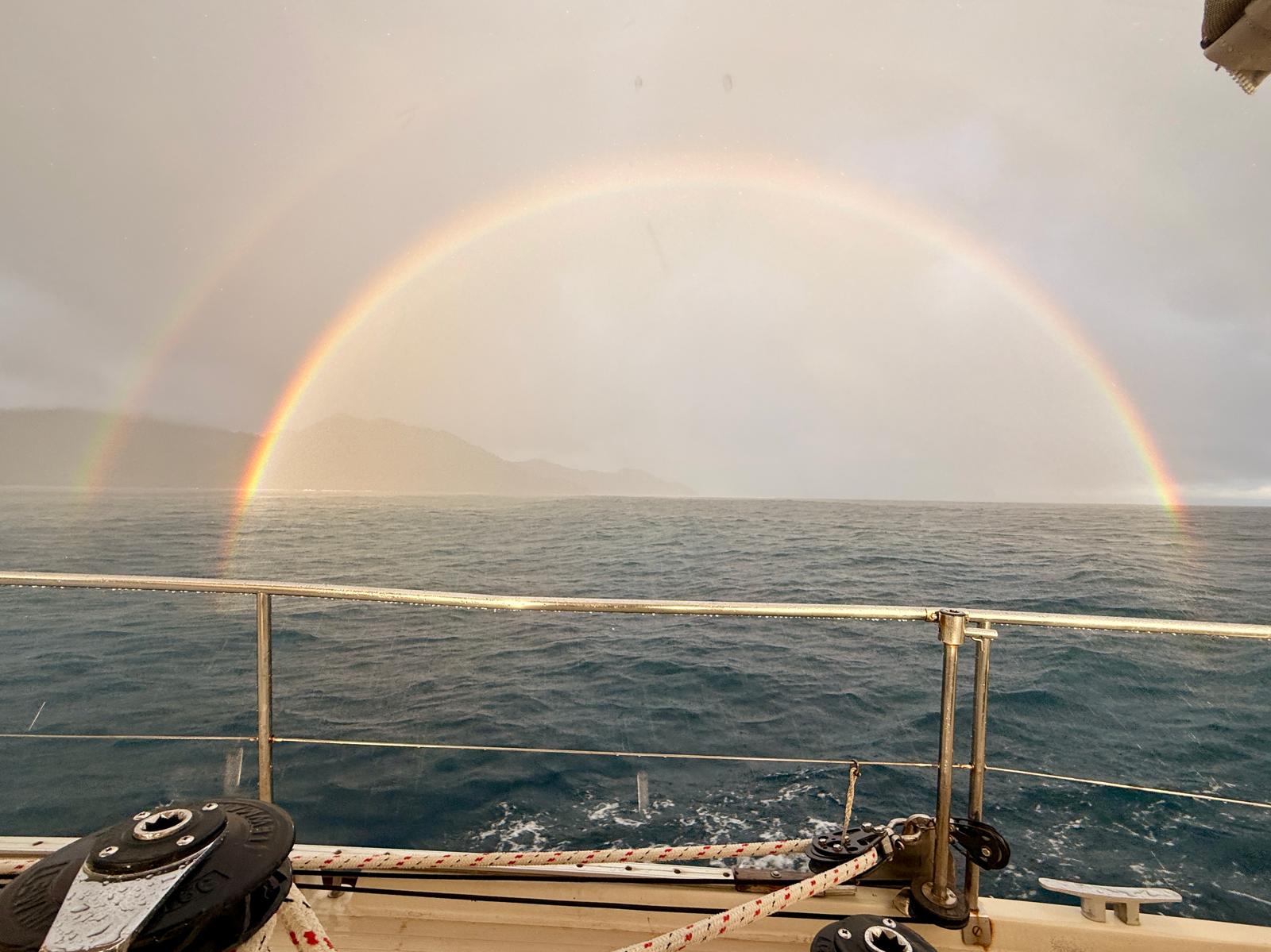
We have seen plenty of rainbows over the years, but you do not often see one so complete, so vivid and so incredibly close to the boat.
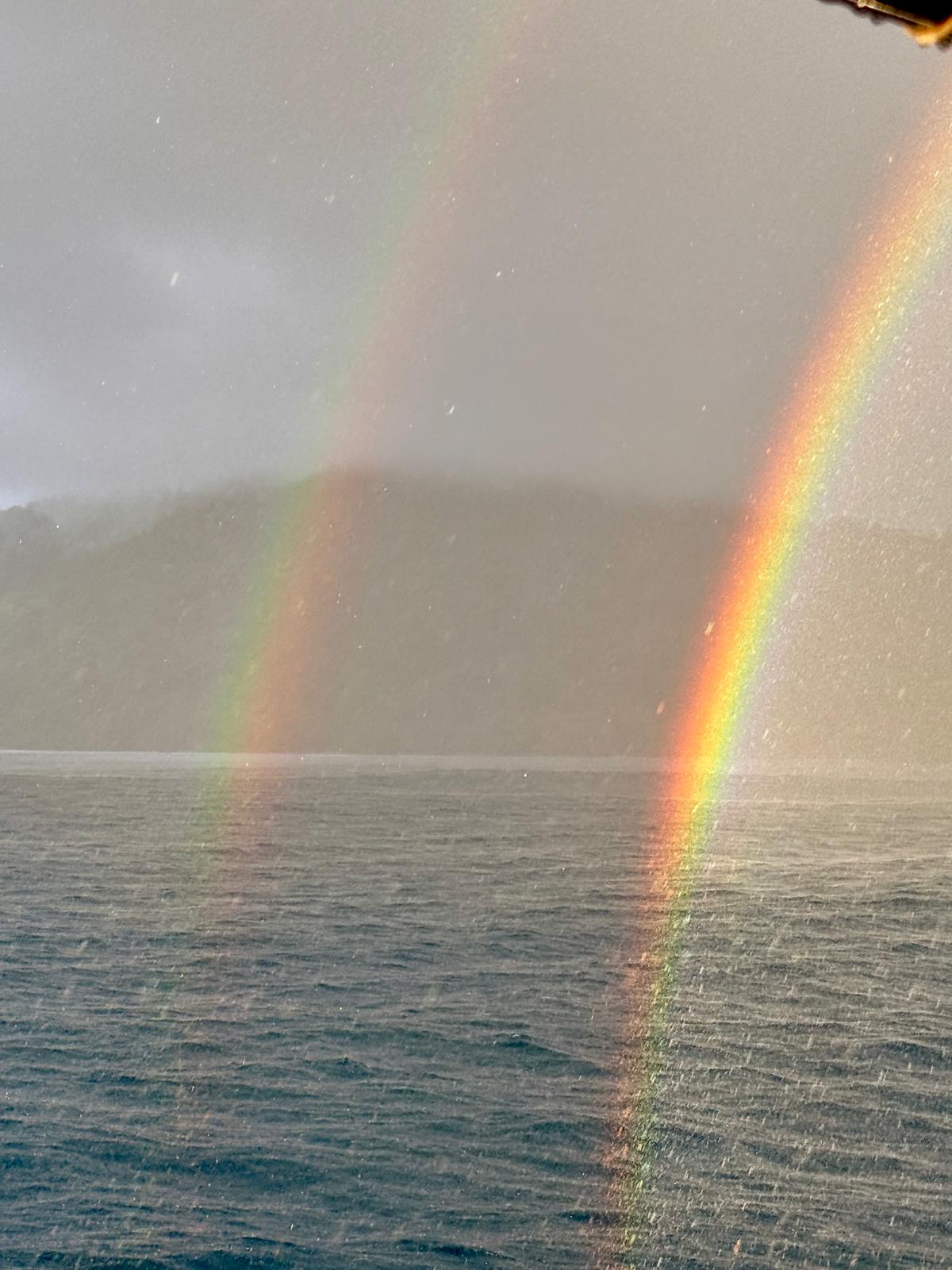
With only about three nautical miles left, we continued deeper into Namata Bay. Darkness was beginning to fall when we finally found our anchoring spot. Four other boats were already in the bay and, looking at the clear water and reef around us, we had a feeling this might be another place where our snorkelling gear would be used regularly.
We had barely settled in when we received a message from Gunnar and Rosa aboard Ruawaka. They were on their way as well, but the weather had completely changed and they wanted to enter Namata Bay despite the darkness.
Navigating a pass through a reef already requires concentration in daylight; doing it in the dark is something you would much rather avoid. Since we had safely navigated the pass that same afternoon, we sent them our track so they could see exactly which route My Motu had followed through the reef and towards our anchorage.
After that, there was not much we could do except wait.
By around two o'clock in the morning, they had fortunately made it safely inside.
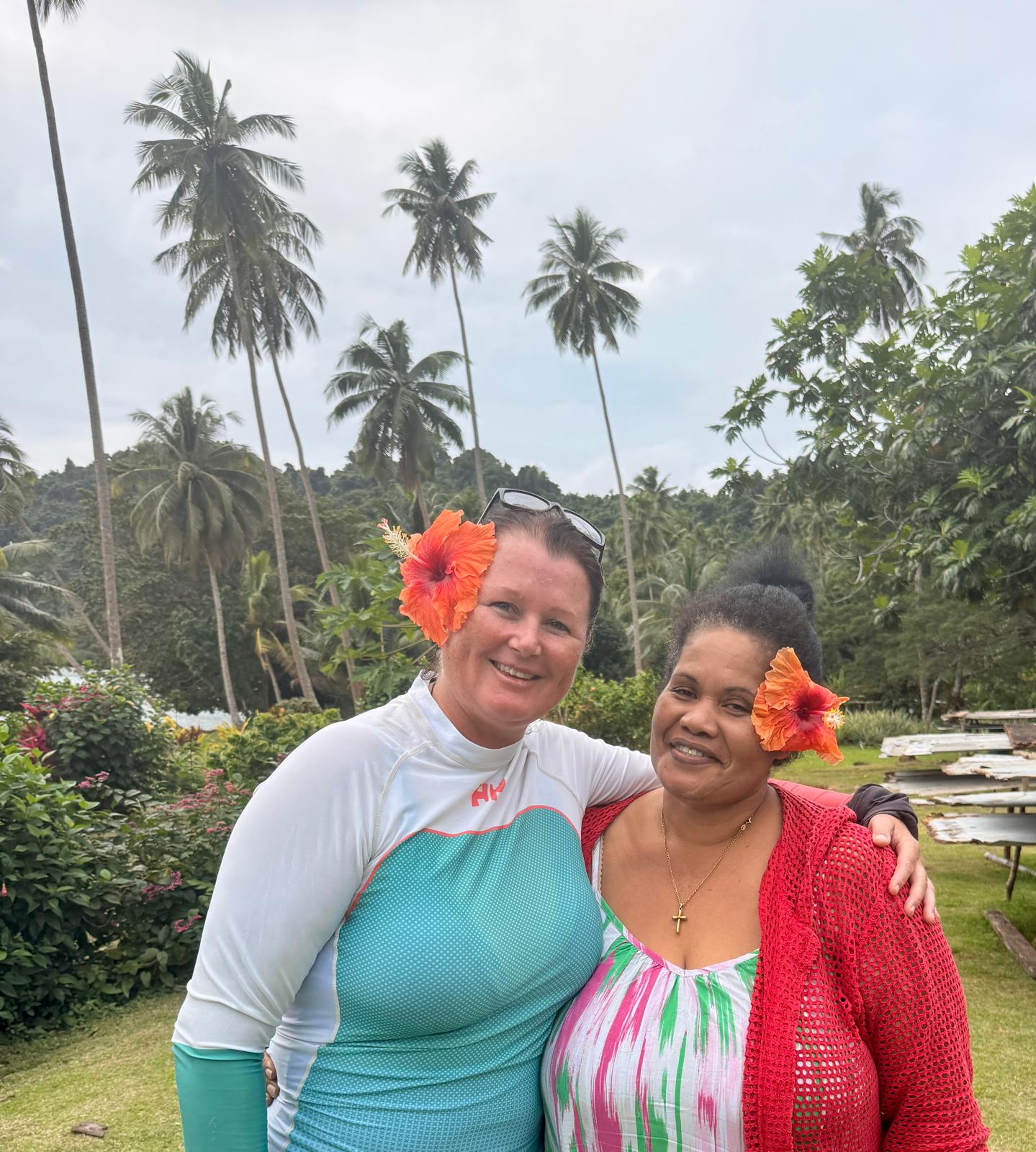
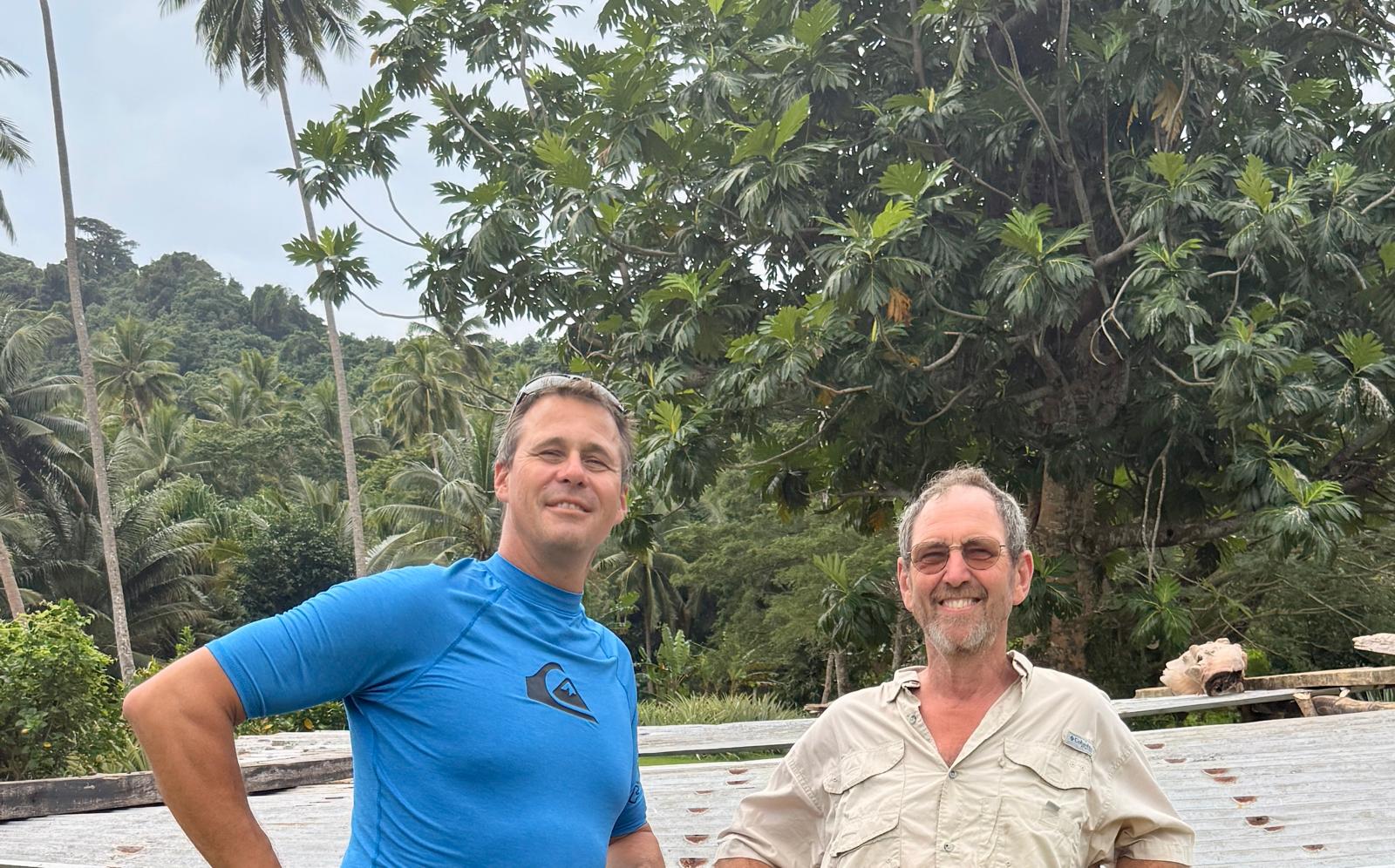
The following morning we could finally see who our neighbours in the bay were. That was where we met Helwi and Akky from Passport II, Dutch people who have lived in New Zealand for more than thirty years but still absolutely love having the chance to speak Dutch again. The feeling was mutual and before long we were happily chatting away in our own language.
And, of course, there were Gunnar and Rosa aboard Ruawaka again, safely anchored after their nighttime adventure.
Namata Bay immediately felt welcoming: new people, familiar faces, clear water all around us and plenty of reef waiting to be explored.
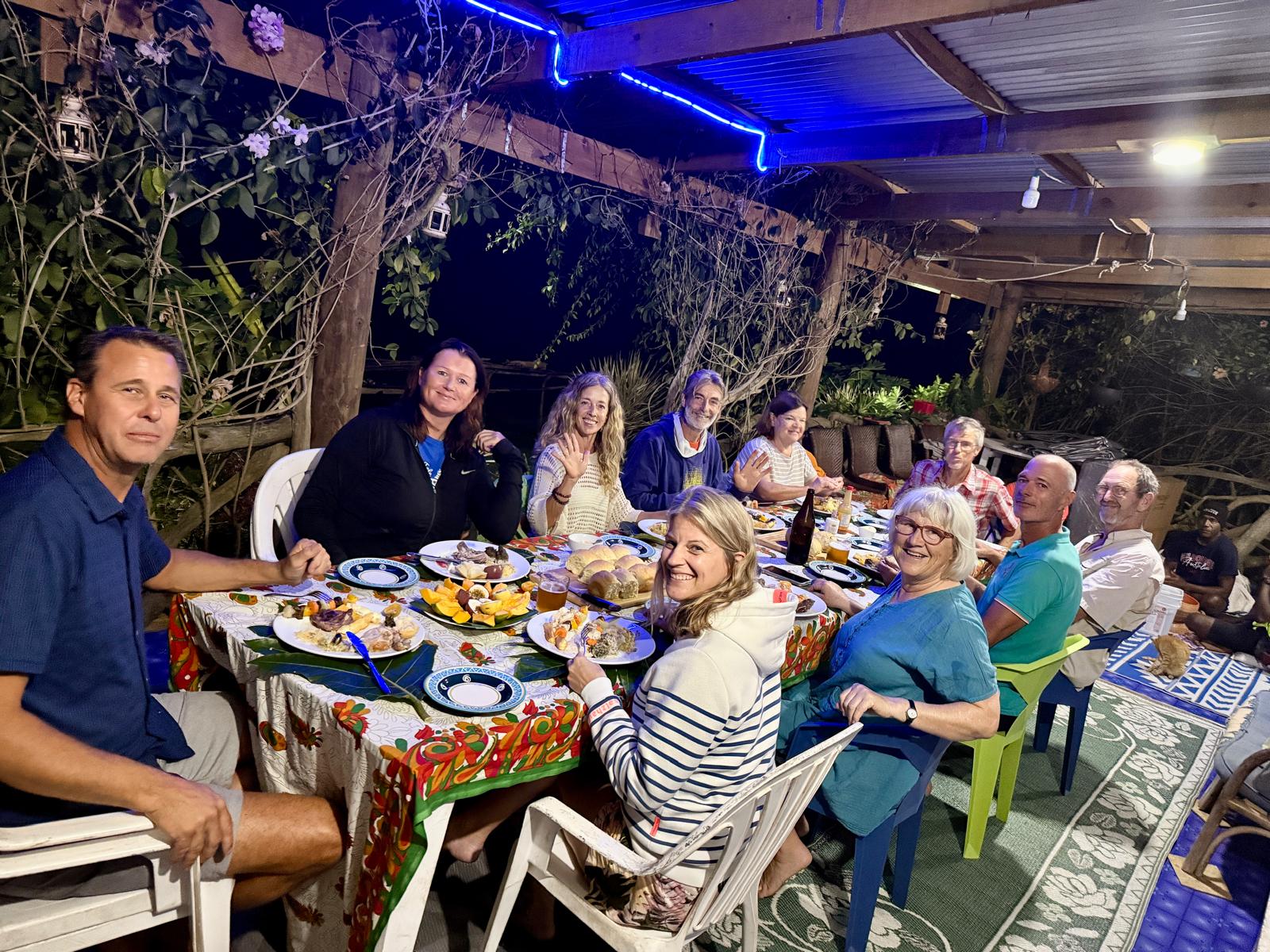
Gunnar and Rosa told us about a family living on Qamea who prepared dinners for visiting cruisers and asked whether we would like to join them. We did not need much convincing and that is how a group of ten of us eventually found ourselves at the home of Siah and Kai.
As is so often the case in Fiji, the evening did not begin by immediately sitting down at the dinner table. First we were welcomed, sat together and were offered kava. We talked, got to know each other and laughed, and only afterwards did the food appear.
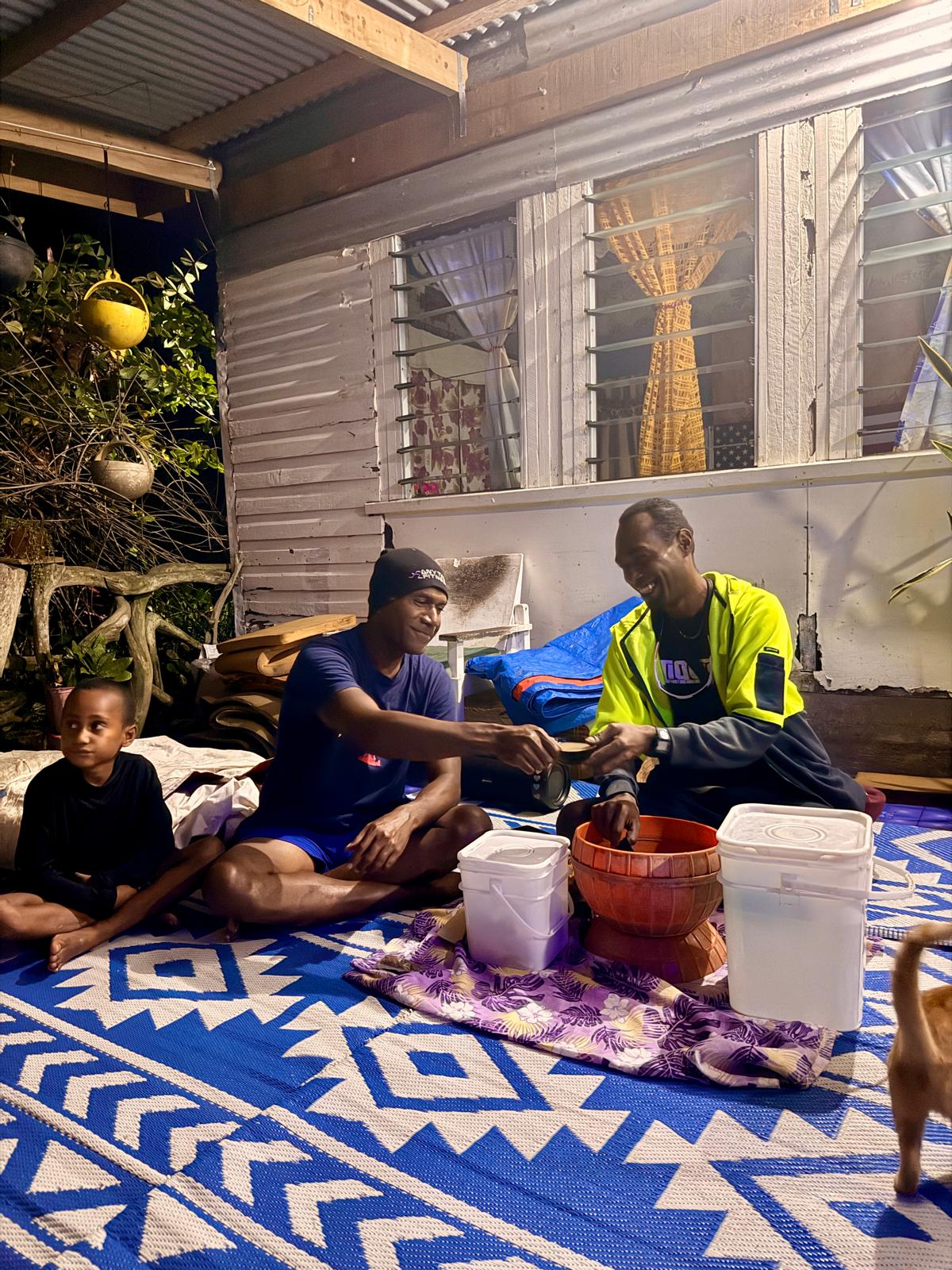
Siah had really gone to town and prepared a wonderful dinner for us. We thoroughly enjoyed it and, sitting there, I was reminded once again that it is not necessarily the places listed in guidebooks or the things you carefully plan along your route that make travelling so special. Very often, it is the unexpected encounters that stay with you.
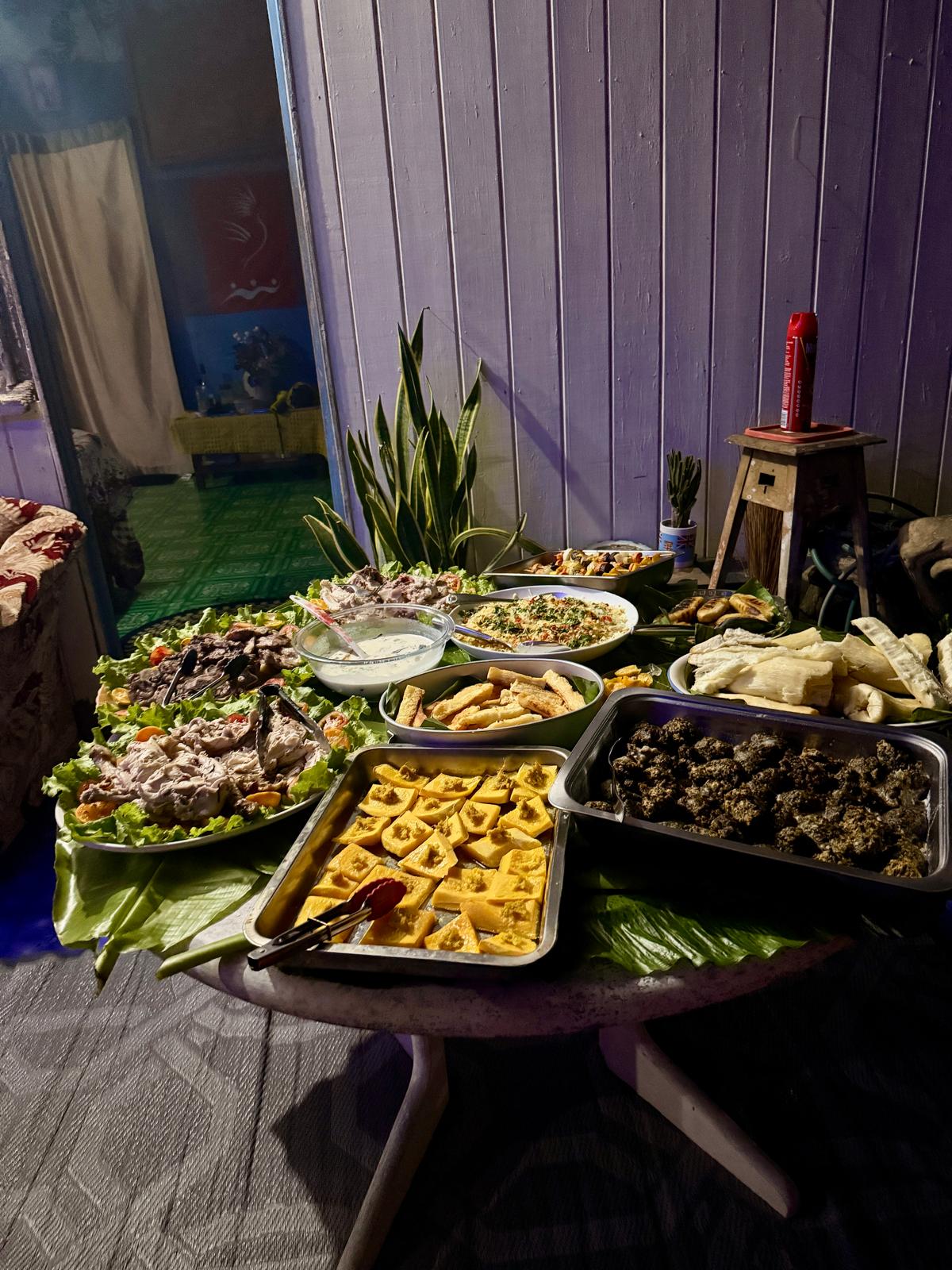
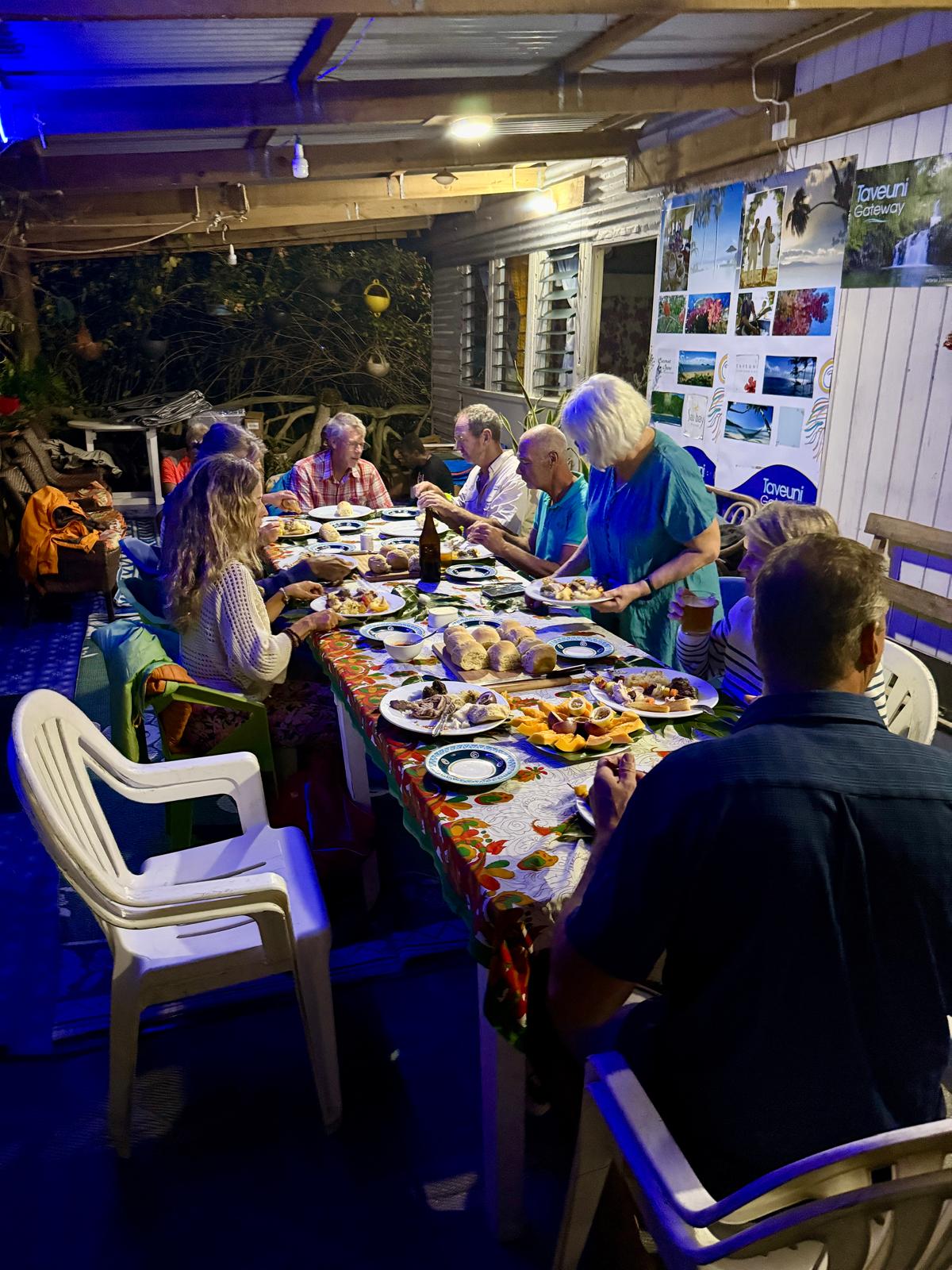
Only a few hours earlier, you did not even know Siah and Kai existed, and that same evening you are sitting in their home, drinking kava and sharing a lovingly prepared meal around a table with ten people.
Meanwhile, our supply of fresh fruit and vegetables was getting seriously low. We usually carry plenty of tins, pasta, rice and other long-life food on board, but after a while you start longing for something as simple as a fresh tomato, a capsicum or a piece of fruit.
We asked Siah where we could buy fresh produce and she told us that Kai travelled to Taveuni every day in his longboat. There was a small fruit and vegetable shop there as well as a supermarket, and for 50 FJD per person we could join him.
We happily accepted.
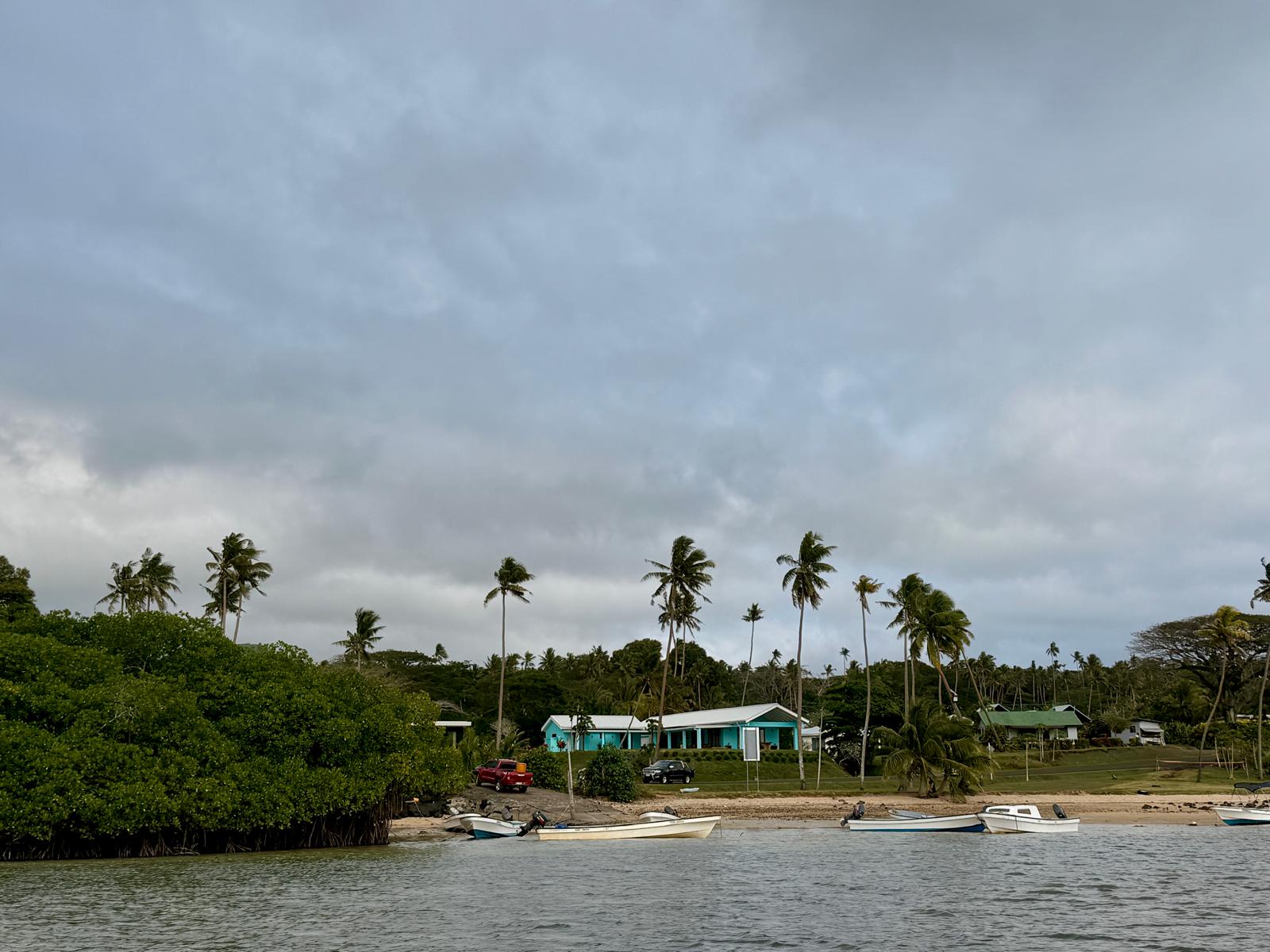
The next morning Barbara and I climbed into Kai's longboat and headed across to Taveuni. After spending time among the smaller islands, a shop filled with fresh produce suddenly feels almost like a treasure trove. We stocked up properly and returned later with bags full of fresh ingredients.
It is funny how travelling changes your idea of luxury. Sometimes luxury is not a beautiful hotel, an expensive restaurant or buying something new. Sometimes it is simply a bag filled with fresh fruit and vegetables and the prospect of being able to cook delicious meals again for the next few days.
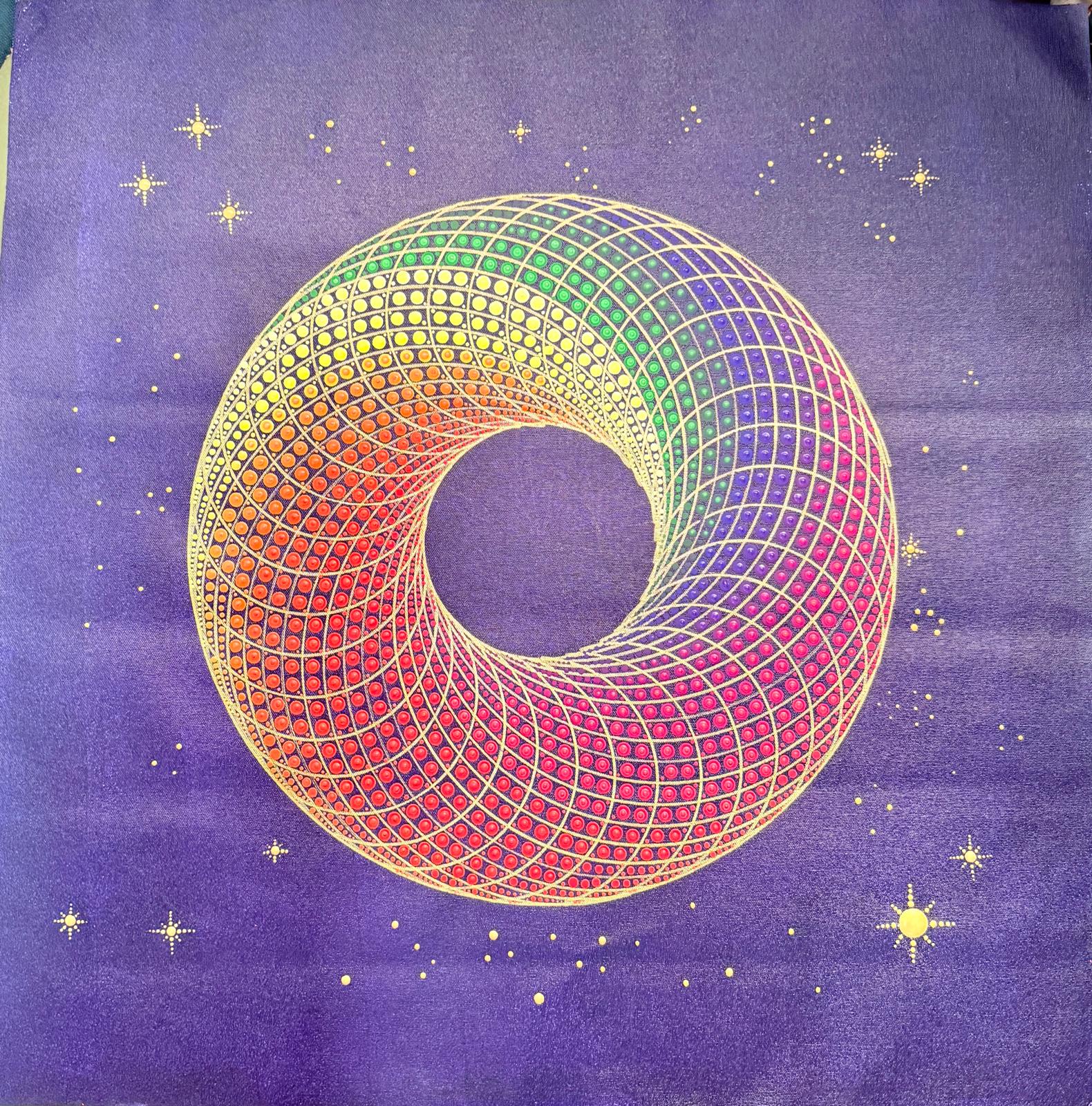
The following day we visited Siah and Kai one more time to say goodbye. Their hospitality, the wonderful dinner and the opportunity to travel with Kai to Taveuni had made our stay in Namata Bay even more special, so I wanted to leave them something personal as a thank-you. One of my paintings.
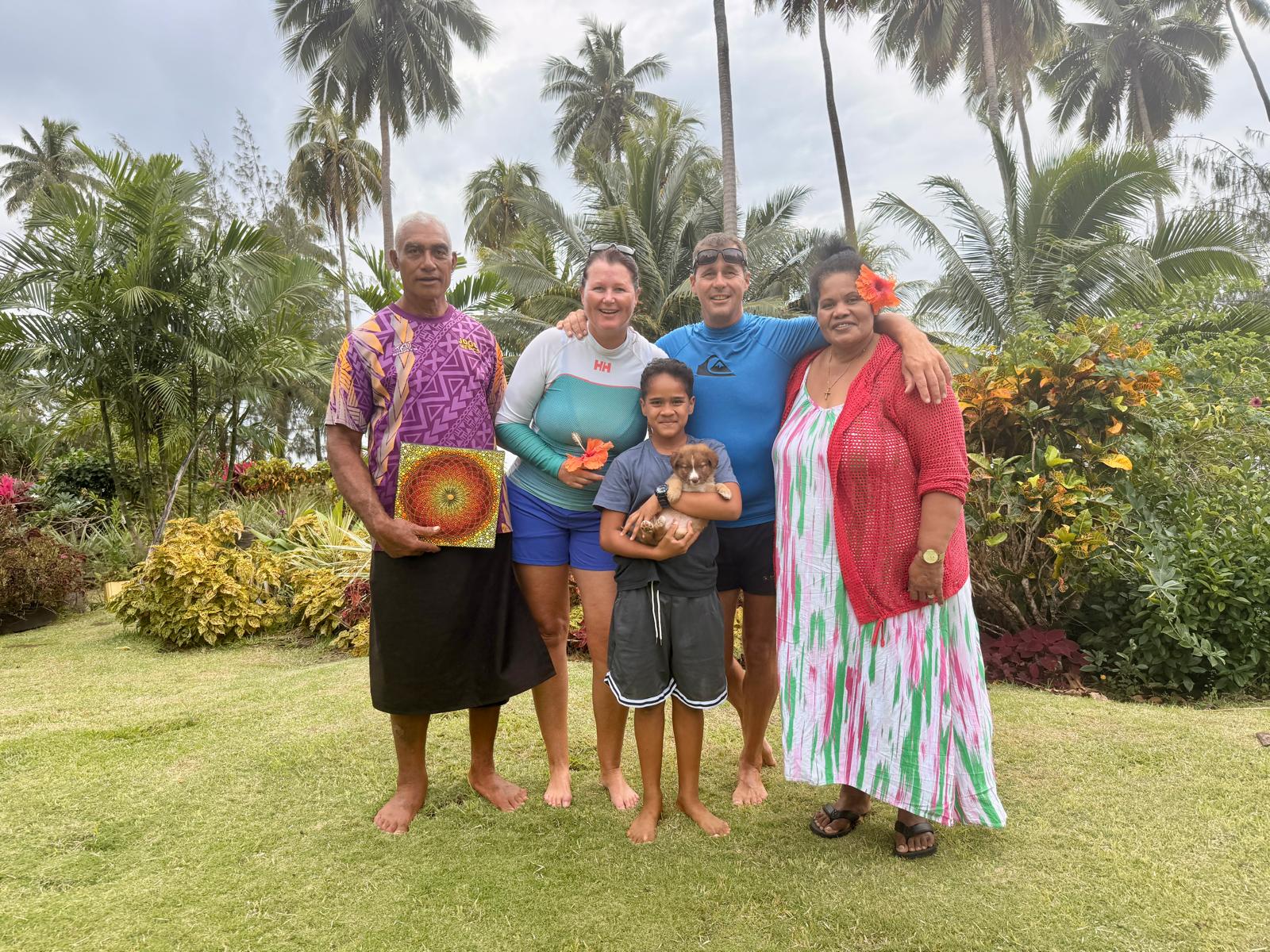
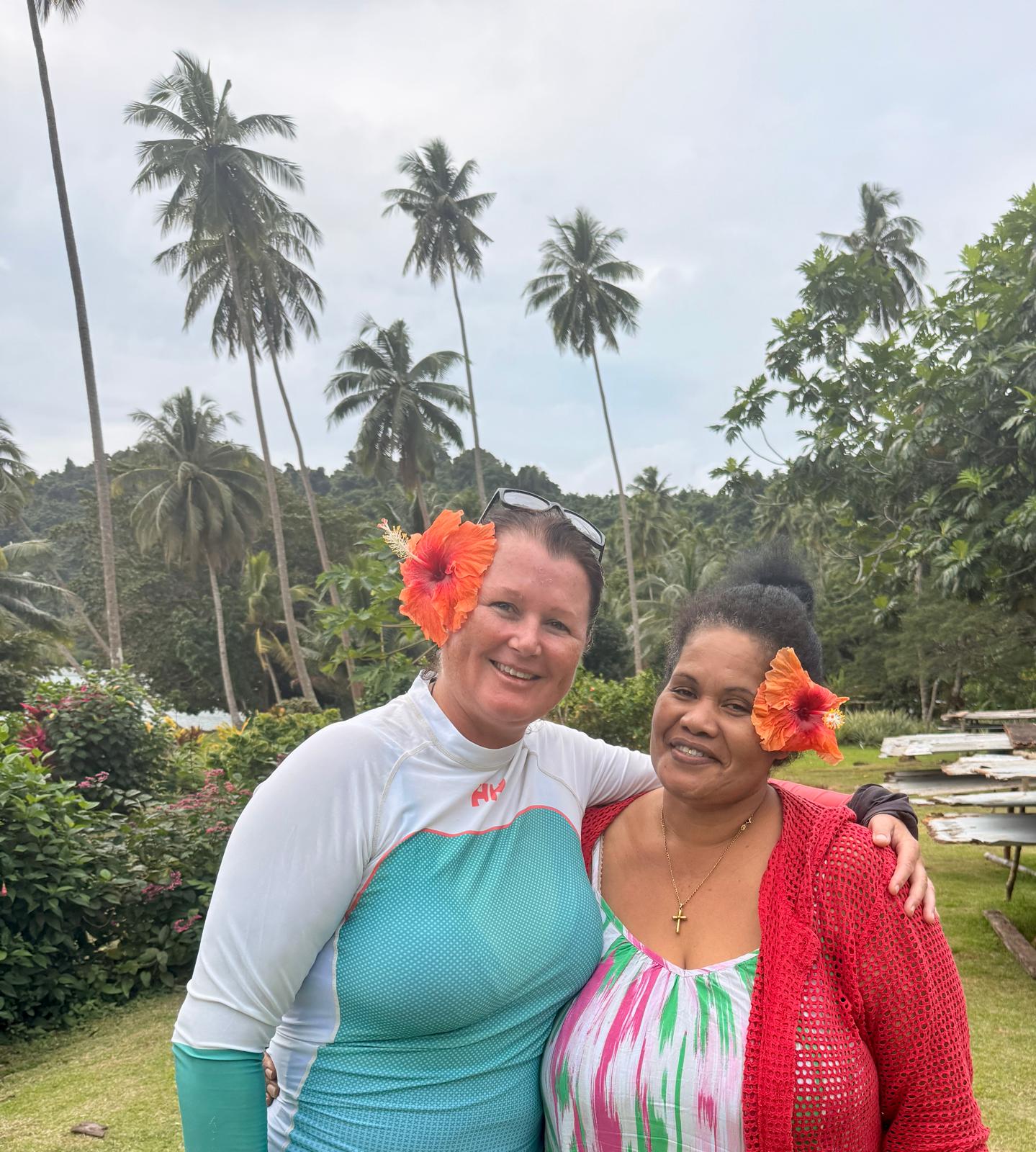
Helwi and Akky joined us for the visit and afterwards we went snorkelling together. It was beautiful again. The clear water, the colours of the coral and the abundance of life moving all around us never stop being special, no matter how many times we have looked beneath the surface.
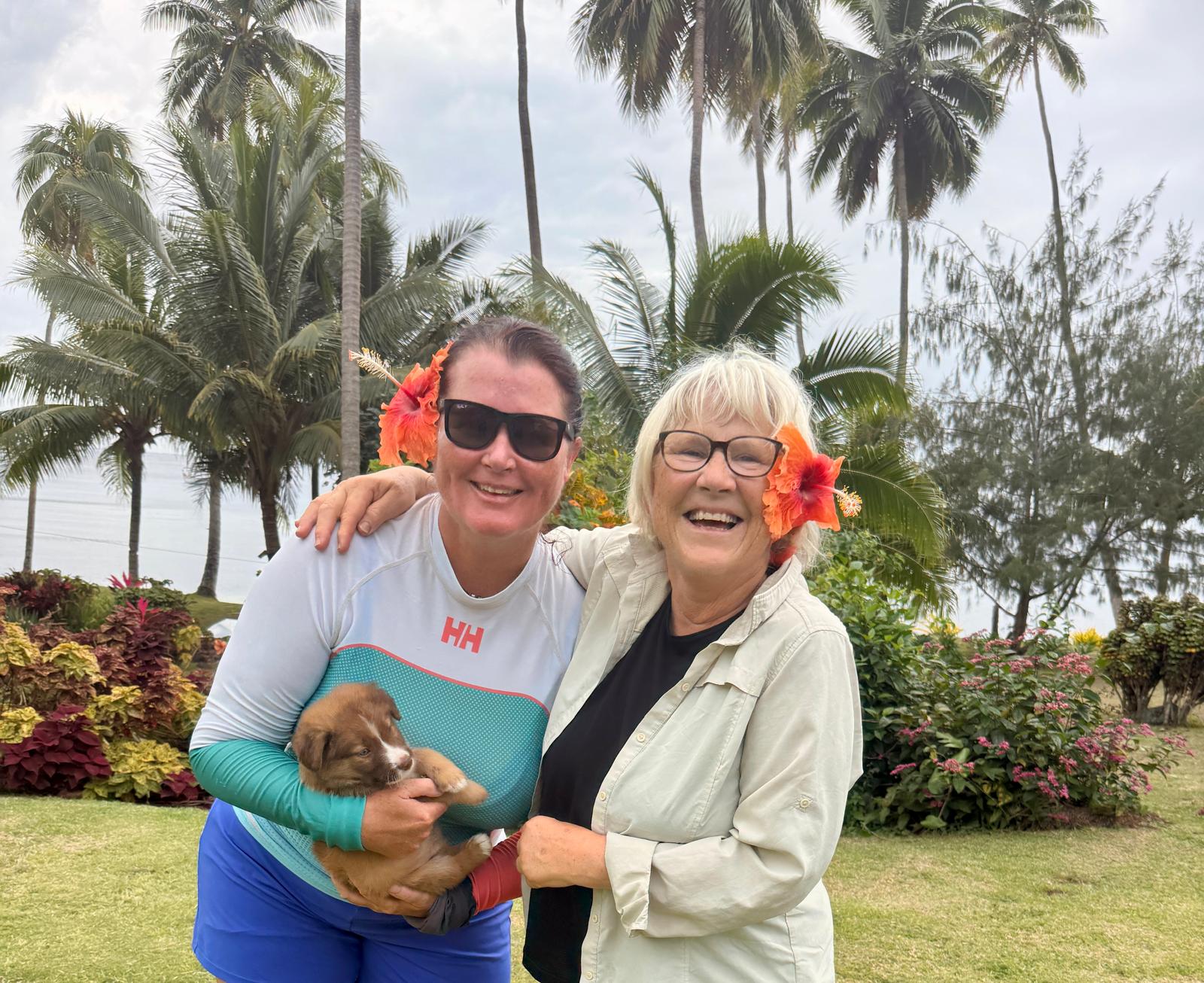
I knew then that this would be my last snorkel for quite some time, because the following day we would leave Namata Bay and I would begin a treatment that would change my life on board for a while.
I had discovered skin cancer in several places on my face. Fortunately, the affected areas were still superficial and could be treated with a special cream. The treatment did, however, mean applying the cream every day for 30 days and staying completely out of the sun for at least 44 days.
That may sound simple enough: just stay out of the sun for a while. But that instruction takes on a rather different meaning when you live aboard a sailing boat in Fiji.
A large part of our life takes place outdoors. We sit in the cockpit, take the dinghy ashore, snorkel, walk, swim and often simply jump into the water whenever we feel like it. Suddenly, most of those things were no longer possible and I would be spending much of the coming weeks inside My Motu.
It was certainly not how I had imagined this period in Fiji, but at the same time it gave me something I normally never seem to have enough of: long stretches of uninterrupted time.
Our next destination was Viani Bay, close to the famous Rainbow Reef, where we would also meet SV Flora again. We had been looking forward to doing several dives together, but because of my treatment, diving was now completely off the table for me.
Fortunately, the sail to Viani Bay was beautiful and this time we could leave the engine alone for most of the passage. Our enthusiasm faded rather quickly when we arrived, however. The bay was quite busy and we were not happy with the holding. We tried several times to find a good place to anchor, but each attempt left us unconvinced and eventually Jeroen said he simply did not feel comfortable staying there.
We let Flora and Lille Venn know that we had decided to sail about eight nautical miles back north and look for a quieter anchorage in Naqaiqai Bay. We were all disappointed that we would not be staying together, but for the moment it simply made the most sense. Jeroen did not want to go diving without me, while for Lille Venn and Flora, diving Rainbow Reef was the main reason for being in Viani Bay. They stayed for the diving while we raised the anchor again and went in search of a place that suited us better at that moment.
Eight nautical miles back to the north, we arrived in Naqaiqai Bay and found a much quieter place to anchor. Of course, we wanted to do sevusevu here as well. By now we are used to bringing kava for the ceremony, but Eddy, who lived alone in the bay, had a very different request. He did not want kava at all and told us that fresh bread and some tinned vegetables would make him much happier.
That was no problem for us. I had baked bread, so we went ashore carrying a still-warm loaf, pasta, pasta sauce and several tins of vegetables.
Eddy was visibly surprised and absolutely delighted with everything we had brought, but the warm bread in particular made him happy. He enthusiastically told us that he was going to enjoy it even more because it was so fresh, and his reaction made the whole visit especially lovely.
I actually thought it was a beautiful way to do sevusevu: not automatically bringing something simply because that is what you normally give, but listening to the person whose home you are visiting and bringing something that genuinely makes him happy.
Jeroen underwater, me among the words
Over the following days, Naqaiqai Bay became a wonderfully peaceful place for us. Jeroen went snorkelling on his own several times while I stayed aboard. Of course, I sometimes wished I could join him. Beautiful clear water surrounded us and I knew exactly what I was missing, but there was nothing I could do about it. The treatment needed time to work, so instead I focused my attention elsewhere.
I continued working on Wild Side.
What I had picked up again during our motor passage to Qamea turned into long days of writing, reading and rewriting, followed by going back just one more time to a chapter I had been absolutely convinced was already finished. Anyone who has ever written a book will probably understand that “almost finished” is a remarkably flexible concept.
Eventually, however, there came a moment when I no longer thought, “I am working on my book.”
The book was finished.
After all that time, Wild Side – What the Sea Hides was no longer a project waiting somewhere in the background. It had become a real book. It was a strange but wonderful feeling, especially because this unexpectedly quiet period had given me the time I needed to finally finish it.
And suddenly there was room in my head for something completely different. No secrets, no Saar and Pim and no Blue Horizon, but a tiny fish with three colourful dots.
Dot's Journey – The Voices of the Ocean could hardly be more different from the mysterious world of Wild Side. Dot is a small, curious reef fish who one day feels a deep, unfamiliar call vibrating through the water and decides to find out where it is coming from.
She swims farther from her familiar reef than she has ever gone before and meets extraordinary inhabitants of the ocean along the way. She discovers how whales communicate, how animals work together, travel enormous distances and navigate through a world that remains largely hidden from us. But as Dot listens to all those different voices, a much more personal question slowly begins to grow: what is my own voice?
For this book, I wanted not only to develop the story further but also to create the illustrations. It turned out to be a completely different way of storytelling. How small should Dot look beside an enormous whale for you to truly feel how tiny she is? How do you show in an illustration that sound can travel enormous distances underwater? And how do you give a little fish curiosity, wonder, uncertainty and courage?
I could spend hours working on it and suddenly there was almost an advantage to not being able to go outside all the time. While Jeroen went snorkelling, I swam through the ocean with Dot in my imagination and, little by little, more and more images for her story began to take shape. Can a little fish find her own voice among the giants of the ocean?
Dot leaves her familiar reef and follows an unfamiliar voice through the ocean. Along the way, she discovers the remarkable ways in which the ocean's inhabitants communicate, work together and find their way, but ultimately she may discover something far more important about herself.
Both Wild Side – What the Sea Hides and Dot's Journey – The Voices of the Ocean will be available in Dutch and English.
After a few days, we had company again in Naqaiqai Bay. Gunnar and Rosa from Ruawaka decided to leave Rainbow Reef behind and came to spend a few days with us in the bay. We were very happy to have them there because, although I spent most of the daytime hiding from the sun inside My Motu, everything changed once the sun went down. That was when I was finally allowed to emerge from my hiding place and we could spend the evenings together, sharing meals, talking and catching up.
In the meantime, Rosa had heard from Jeroen and Barbara that I create dot art and, what are the chances, her son David turns out to be a dot artist too. Of course, that immediately gave us plenty to talk about. We discussed different ways of working, patterns, materials and techniques, and Rosa became increasingly curious. Eventually, she decided that she would like to give it a try herself and she had already found a very special surface to work on: the shell of a giant clam.
Of course, she only had to ask me once.
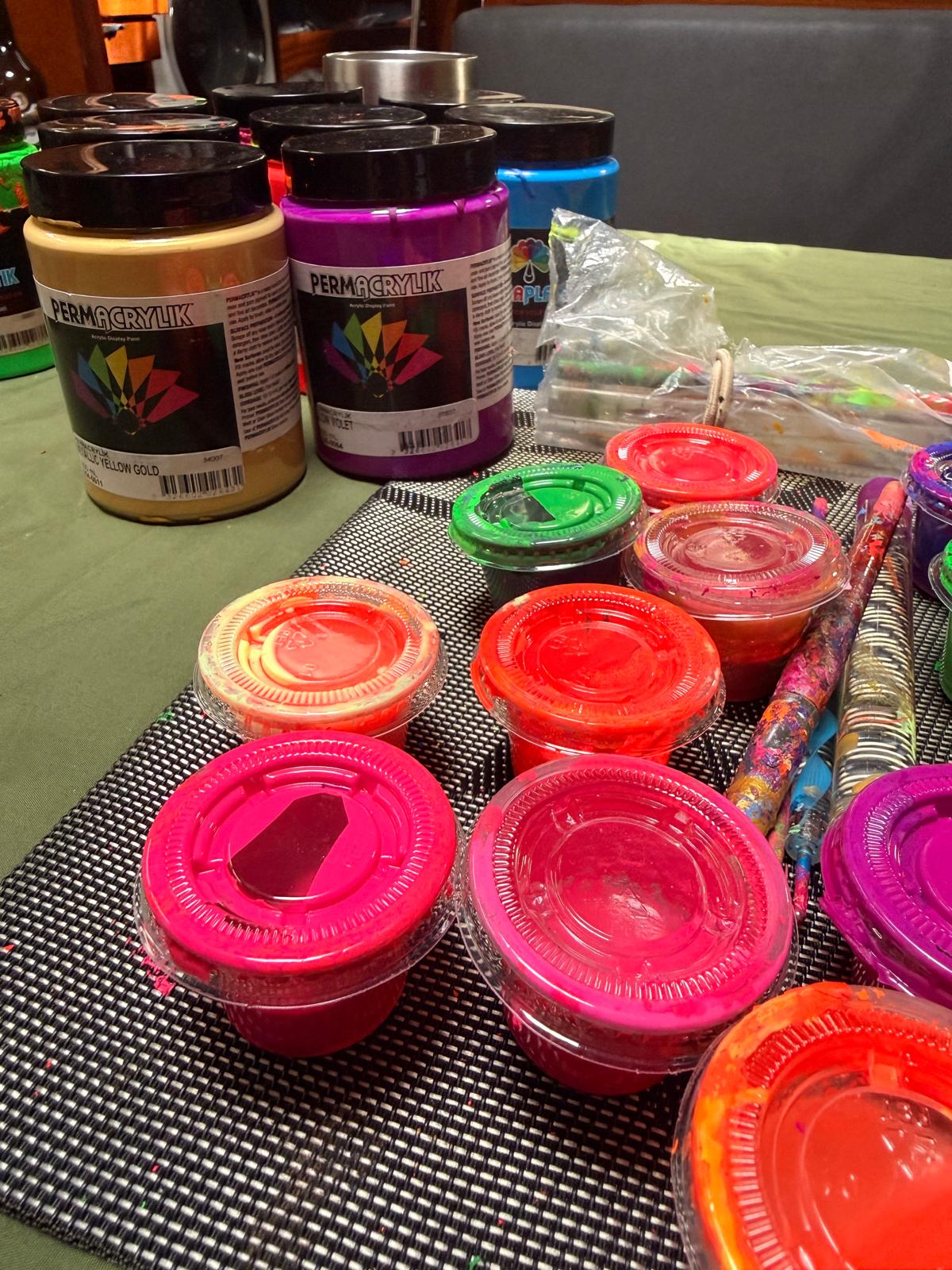
We spent a wonderful day together with paint and dotting tools. Dot by dot, the shell began to transform. At first Rosa worked carefully, as almost everyone does when dipping a dotting tool into paint for the first time, but it did not take long before she began to get a feel for it and a pattern slowly started to emerge.
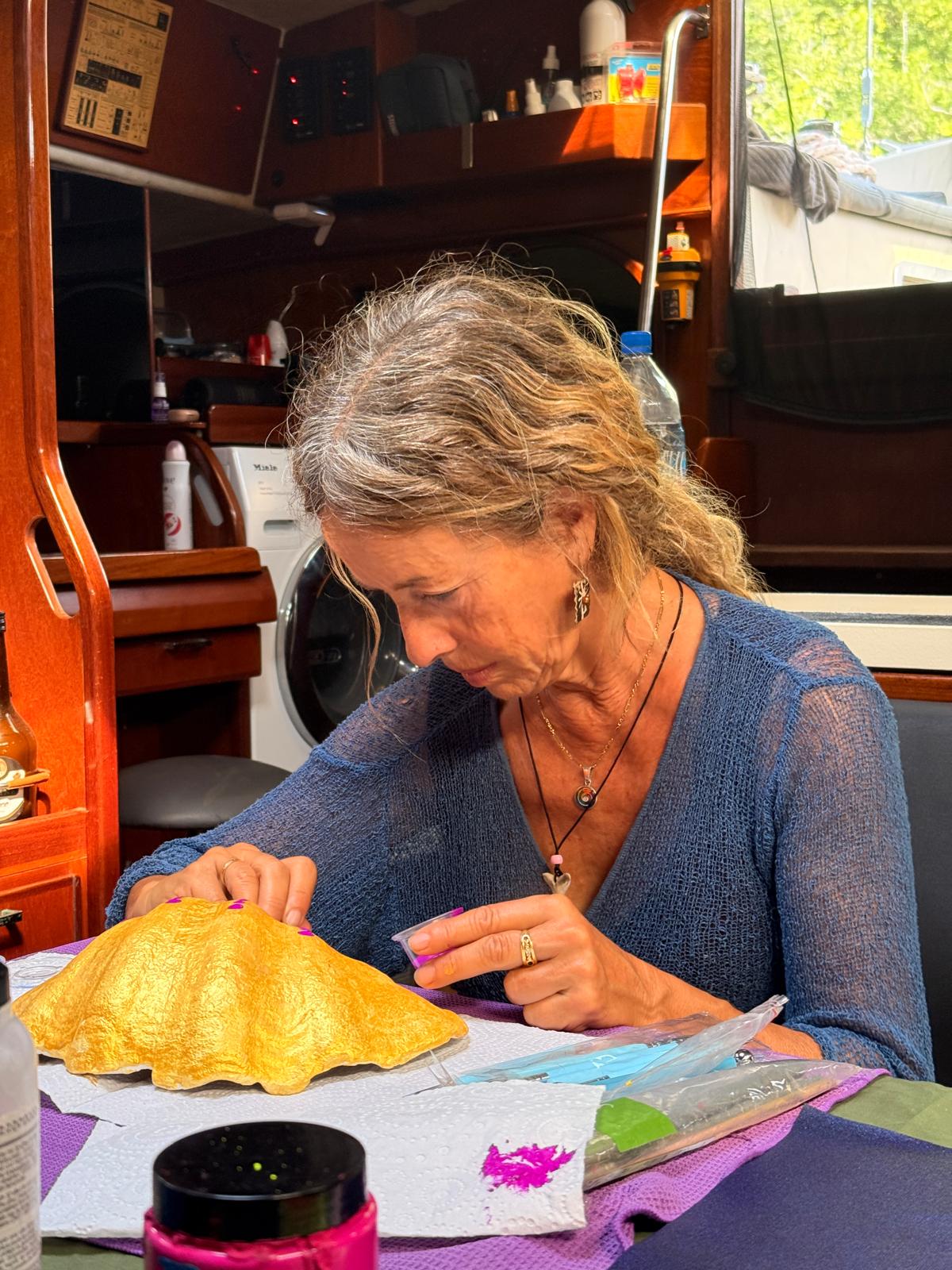
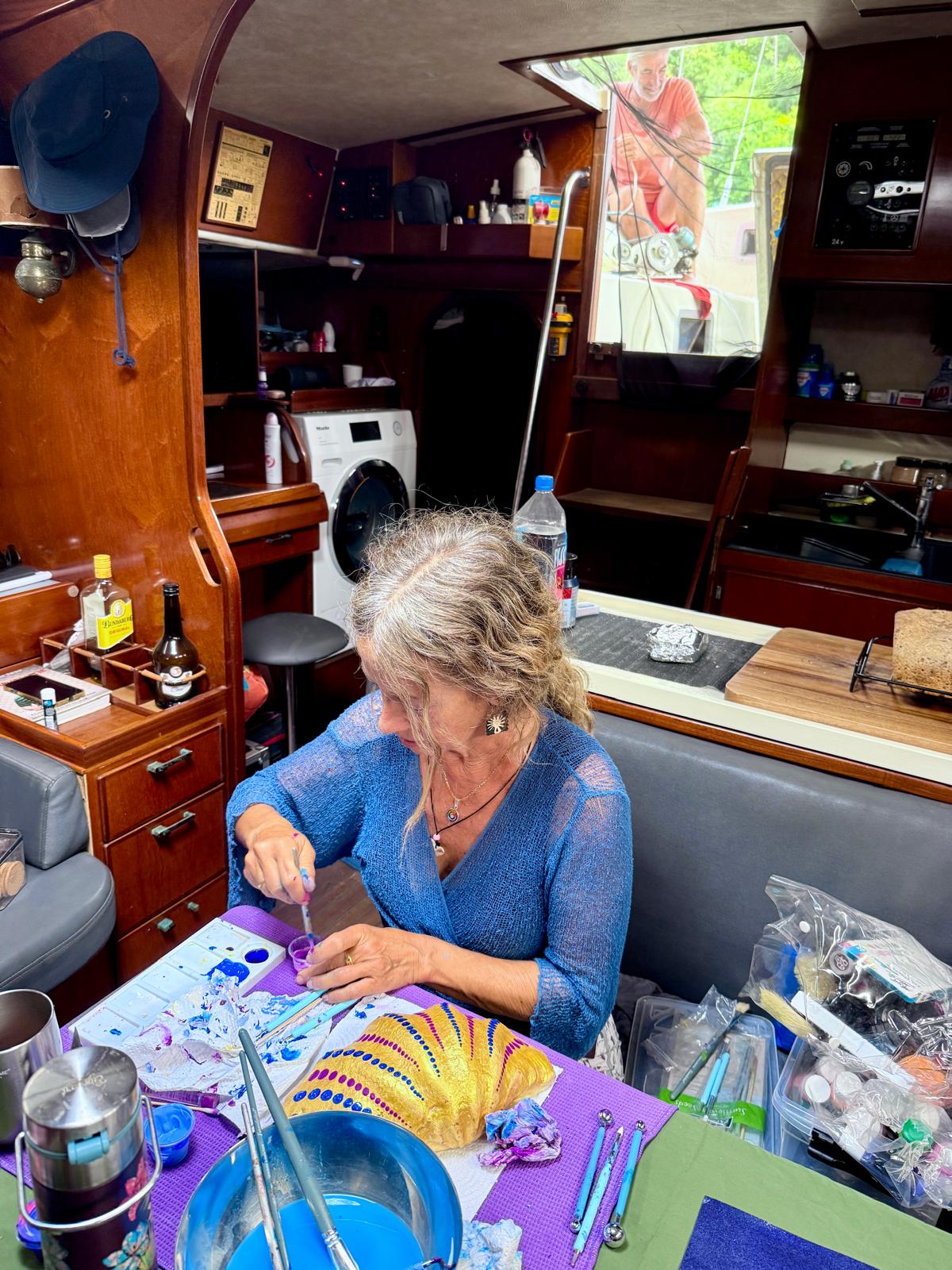
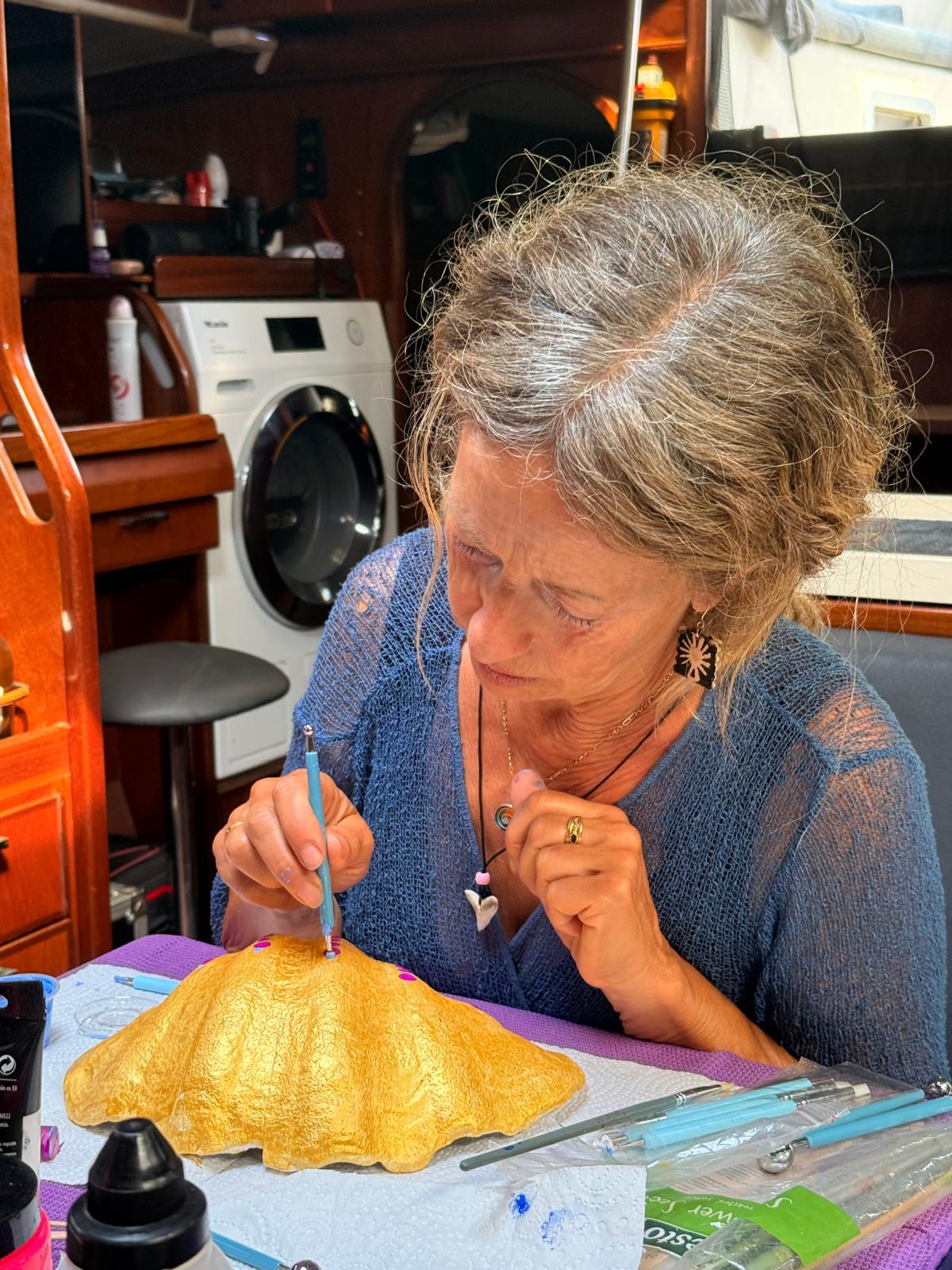
I really enjoyed being creative together with someone again. Normally, I can spend hours working alone on a painting, but this time we were sitting together in a quiet bay in Fiji with a giant clam shell between us, while just outside lay one of Fiji's most beautiful diving areas. I could not explore that underwater world myself for the time being, but in a way, a small piece of it had simply come to me.
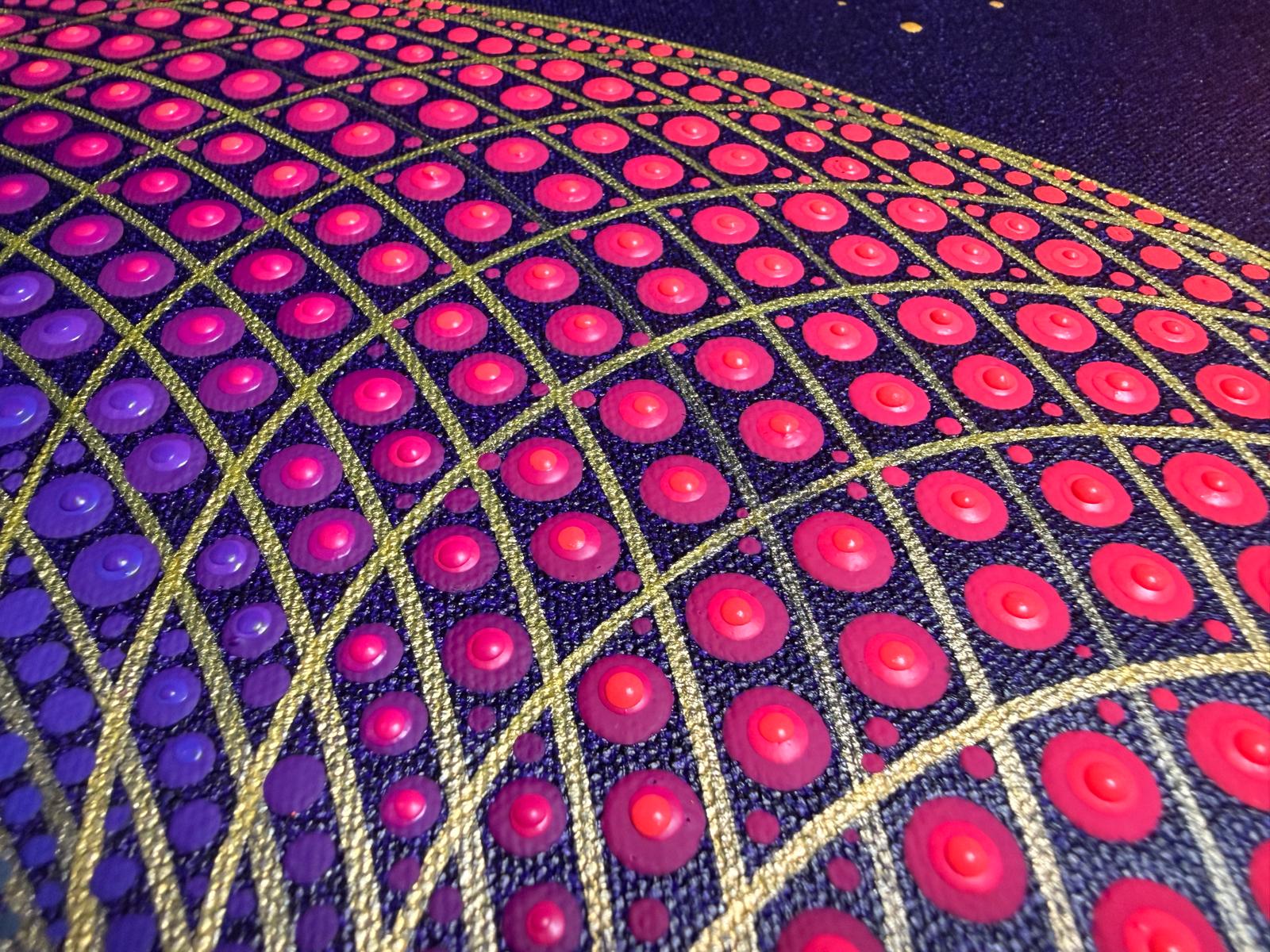
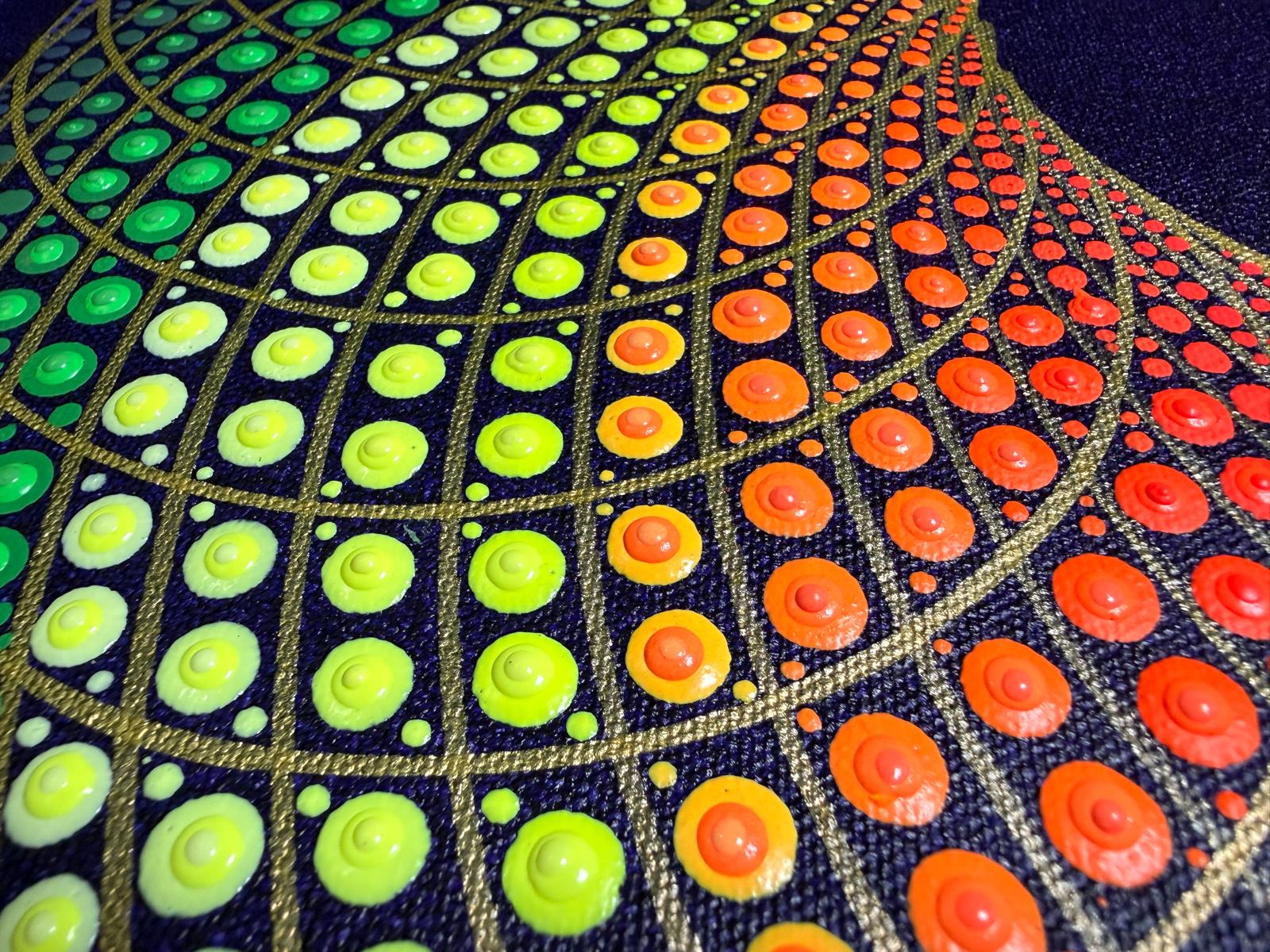
Once the sun finally disappeared below the horizon, I was officially allowed to come out of hiding again and we moved over to Ruawaka, where Gunnar and Rosa had prepared a delicious meal. After a day filled with paint and dots, we spent the evening eating, talking and laughing together, and at moments like these, having to stay out of the sun suddenly felt a lot less restrictive.
It was actually a funny coincidence. While I was spending my days working on the illustrations of Dot, a little fish trying to find her own way through the ocean, I was also sitting with Rosa creating patterns on a shell that had come from that very same underwater world. A month in which I had expected mainly to miss out on things unexpectedly created space for new stories, creativity and wonderful encounters instead.
This was certainly not how I had imagined our time near Rainbow Reef, but perhaps that was exactly what made it so special.
MESSAGES ON BOARD
Leave a message
Share a thought, question or greeting. Aagje reads every comment before it appears here.
Loading comments…