
One of my favorite moments on the boat is early in the morning, when everything and everyone is still asleep. The sun that just appears on the horizon and changes the colours and the spectacle of light every minute. The soft bright and fresh light of the rising sun also creates a warm and picturesque atmosphere of the surroundings. For a moment, I forget everything around me and enjoy this moment by seeing, hearing, feeling and smelling as much as possible.
Turtles allow themselves to be admired by me every few minutes when another one appears on the surface of the water to breathe. Sometimes I just hold my breath at those moments, I notice, as if I become invisible or something. The turtles look straight at me and I sometimes wonder what they think when they see me like this. The Brown Booby is also out early, looking for food and flying low over the water. The Brown Booby is a dashing seabird, both in plumage, brown and white, with bright yellow feet, and in flying style, involving rapid aerial manoeuvres and agile dives. Every now and then one lands on our bowsprit to take a rest.
I sniff the fresh scent of the sea and listen to the sounds of nature. Scattered around us are about 15 other sailing boats and catamarans and very slowly you notice that the new day has dawned for many. You slowly hear more voices and other sounds such as laughter and splashing water from the people who go for a swim first thing in the morning. Also, here on board, Jeroen and Rajesh have woken up and we are having a nice chat in the cockpit during our breakfast. Today we will visit several snorkelling spots with the dinghy in the area. The water is so clear and we see a lot of the well-known tropical fish, which never get boring. As long as you hang still, you can observe them all very well. But if you make a sudden movement, they all shoot into the coral at the same time and then reappear almost as quickly. Soft corals come in all sorts of colours. What they all have in common is that they like a bit of current. The current continues to supply fresh and nutrient-rich water. You will therefore not find them in the lee of a coral reef, but on the side where the waves and current are. We also see several moray eels. They look like a big, fat snake, but they are really fish. This can be seen in the long dorsal fin that spans almost the entire spring of the moray eel. Usually you only see the head of the moray eel sticking out of a hole in the coral. The animal will make “snapping” movements, which are not intended to be aggressive. This is simply this fish’s way of breathing.
There are also many species of parrotfish. They are all busy swimmers that are often difficult for us snorkelers to approach. They always keep a little distance. The parrotfish are colourful fish with very recognizable teeth. The fish’s teeth resemble a parrot’s beak. He needs these strong teeth to eat. It scrapes algae from the rocks with its teeth and takes large bites of the coral to digest the algae that live on it and to excrete the indigestible calcareous parts of the coral. Have you ever wondered what those beautiful sandy beaches in the Caribbean are made of? That’s right, parrotfish poop to be exact. The indigestible calcareous parts of the coral are excreted again as fine sand.
That afternoon we have lunch on the beach and enjoy delicious fresh fish, rice, a kind of fried banana and cabbage with carrots. After lunch we go back to the boat and we mainly snorkel around the boat where there are many turtles. Sometimes as many as six together. If we move slowly, a turtle usually quietly continues to eat and stay and we get time to admire this beautiful animal.
The next morning, we sail on to Bequia. Before we can sail to Martinique, we first have to check out the SVGs (Saint Vincent and the Grenadines) at customs and immigration. The sailing trip to Bequia was accompanied by a lot of swell, but also with a nice wind of 15 knots. 4.5 hours later we are back in our familiar place with WiFi. Via Predictwind we monitor the weather several times a day and we decide to stay an extra day in Bequia to avoid the bad weather near Martinique. Wednesday morning the weather has cleared and it is safe to make the crossing to Martinique. That morning Jeroen goes to Immigration and Customs early to check us out and I am already busy cooking Indian chicken biryani, for that evening, without high waves that is a lot more comfortable. At 11.15 am I give the sea a sip of rum for the blessing of a good crossing and at 11.30 am we raise the anchor. The crossing is 94 NM and will take us about 20 hours. As soon as we are out of the bay at Bequia we hoist the sails and our furling-reefing system falters from our mainsail.
Jeroen switches off the electric furling-reefing system, which has to be in front of the mast, and we roll out the mainsail by hand. The wind is not strong between 9 and 13 knots and we sail at a leisurely speed of 5 knots. Not long after we leave, I see fins coming out of the water in the distance and automatically yell “DOLPHINS!” We think it’s three or four dolphins, but they’re swimming the other way. When we are halfway to the island of Saint Vincent, the wind drops completely and we overtake the jib. We raise the mainsail and the mizzen and motor sail quietly. When we have passed the island of Saint Vincent, there is more wind again and we can roll out the jib again and continue sailing calmly. A few times we think we got a bite with our fishing line, but the first 3 times turned out to be seaweed.
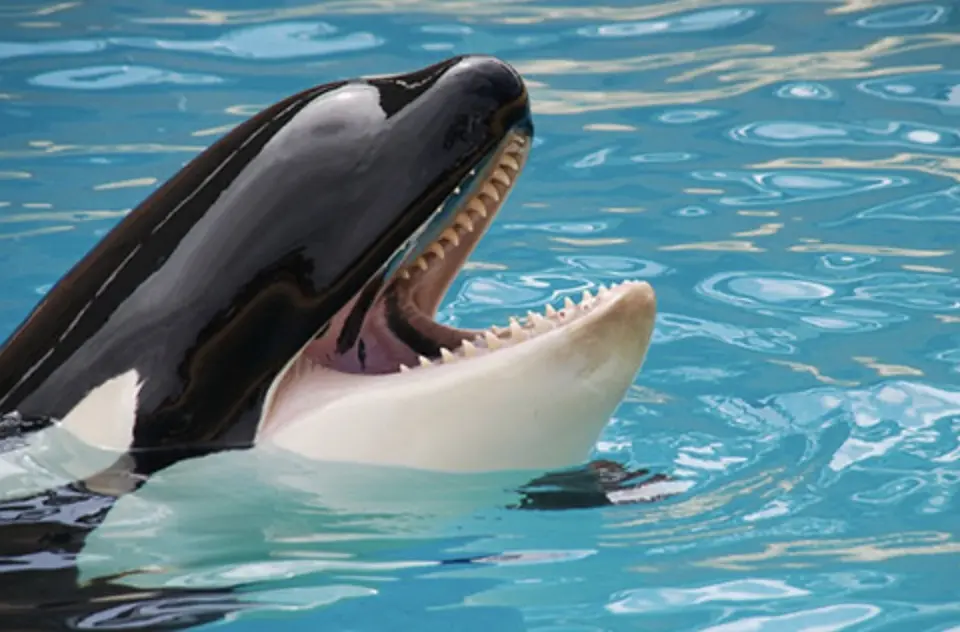
We got the 4th attempt. We can see from a distance that it is too small a Mahi-Mahi to eat. When Jeroen has the fish at the back of the boat, he shouts. There is something very big under the boat it is white with black. It looks like an orca! At that moment, a large orca comes up next to the boat and two swim behind the boat. What a magical moment! Immediately various scenarios about Orca flash through my head attacking boats along the Spanish and Portuguese coast. These attacks by the orcas at sailboats along the Spanish coast began in the summer of 2020, Spanish News Today reported. In about a year, the country recorded 236 such interactions, 20 percent of which occurred in the Strait of Gibraltar. In addition, none of us had thought that there were orcas swimming in the Caribbean Sea at all. We thought they liked colder water more. Rajesh who is busy removing the fishhook from the Mahi-Mahi shouts to me: “Mommy take your phone to film them.” Rajesh threw the Mahi-Mahi back into the sea, I dare not say whether it still survived or then fell prey to the orcas. The orcas did not stay long and quietly glided through the water surface back towards Saint Vincent. Unfortunately, I was not able to take very clear pictures. Too bad, because I would have liked to have had a picture of that okra that came up next to the boat. (the clear photo is have we took in 1999 in Sea World Florida) What a special experience!
After having seaweed on our fishing rod twice more, we give up fishing for now. We warm up the Indian chicken Biryani and enjoy this beautiful moment during the sunset and talk a lot about what just happened. We expect that the large “dolphins” we previously thought we saw, must also have been this group of orcas. Did you know that orcas got the name ‘killer whale’ from ancient sailors who saw groups of orcas hunting and preying on larger whale species. They named the orcas asesina ballenas, which literally means “whale killer,” a term that was eventually flipped to the easier version “killer whale.” Night falls and our usual evening schedule of three hours of waiting and six hours of sleep begins. During our watches, we are actively entertained by the wind. It varies wildly from no wind to 25 knots. Depending on whether we are sailing behind an island or between two islands. So, it is mainly reefing the jib (making it smaller), rolling out again (making it bigger) or if there is no wind, roll the jib and the mizzen all the way in and continue to motor. We have reefed the mainsail slightly and let it roll out as much as possible so as not to have to leave the cockpit all the time. At 07:00 in the morning we arrive in the pouring rain and 23 knots of wind in the bay of Sainte Anne in Martinique. After 3 anchor attempts, our anchor holds and we are safely over. Checking in is very easy here via a computer that is inside a store. Then we all sleep for a few more hours.
MESSAGES ON BOARD
Leave a message
Share a thought, question or greeting. Aagje reads every comment before it appears here.
Loading comments…