
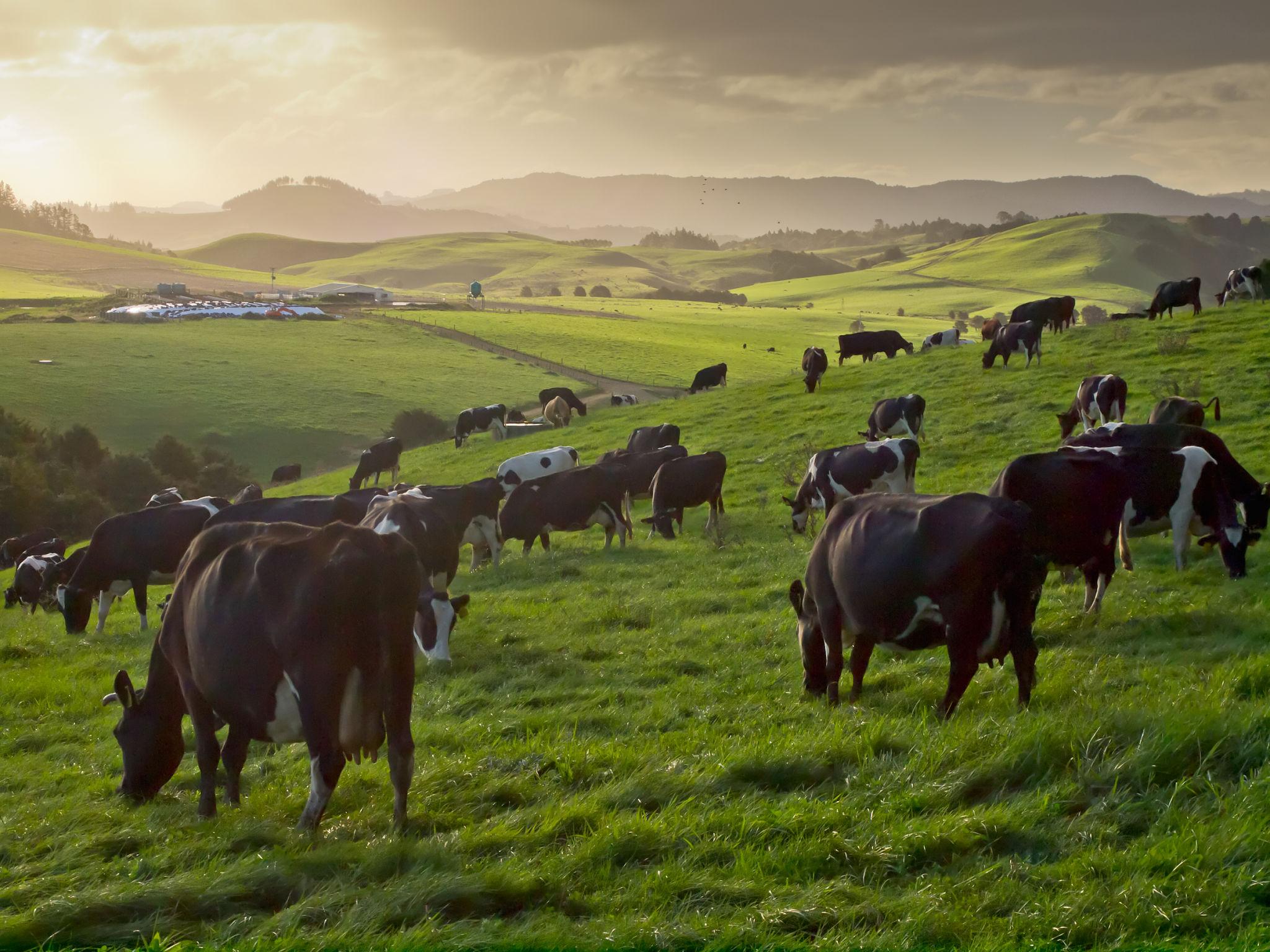
After all the sea miles of the past few weeks, it is time to discover New Zealand from a different perspective. This time, we are following roads winding between green hills rather than a course on the chartplotter. Driving on the left still requires a little extra concentration, while of course we also want to look around, because it is so beautiful here! 🥰
At times, New Zealand feels surprisingly familiar. We drive past green pastures where cows graze as though they have wandered straight out of a Dutch polder, beneath a blanket of clouds we recognise all too well from home. The rain, the chilly wind and the need to pull on a thick jumper complete the picture. After so much time among tropical islands, it takes some getting used to. Flip-flops make way for socks and shoes, shorts are replaced by jeans, and suddenly we find ourselves hunching our shoulders against the cold again.
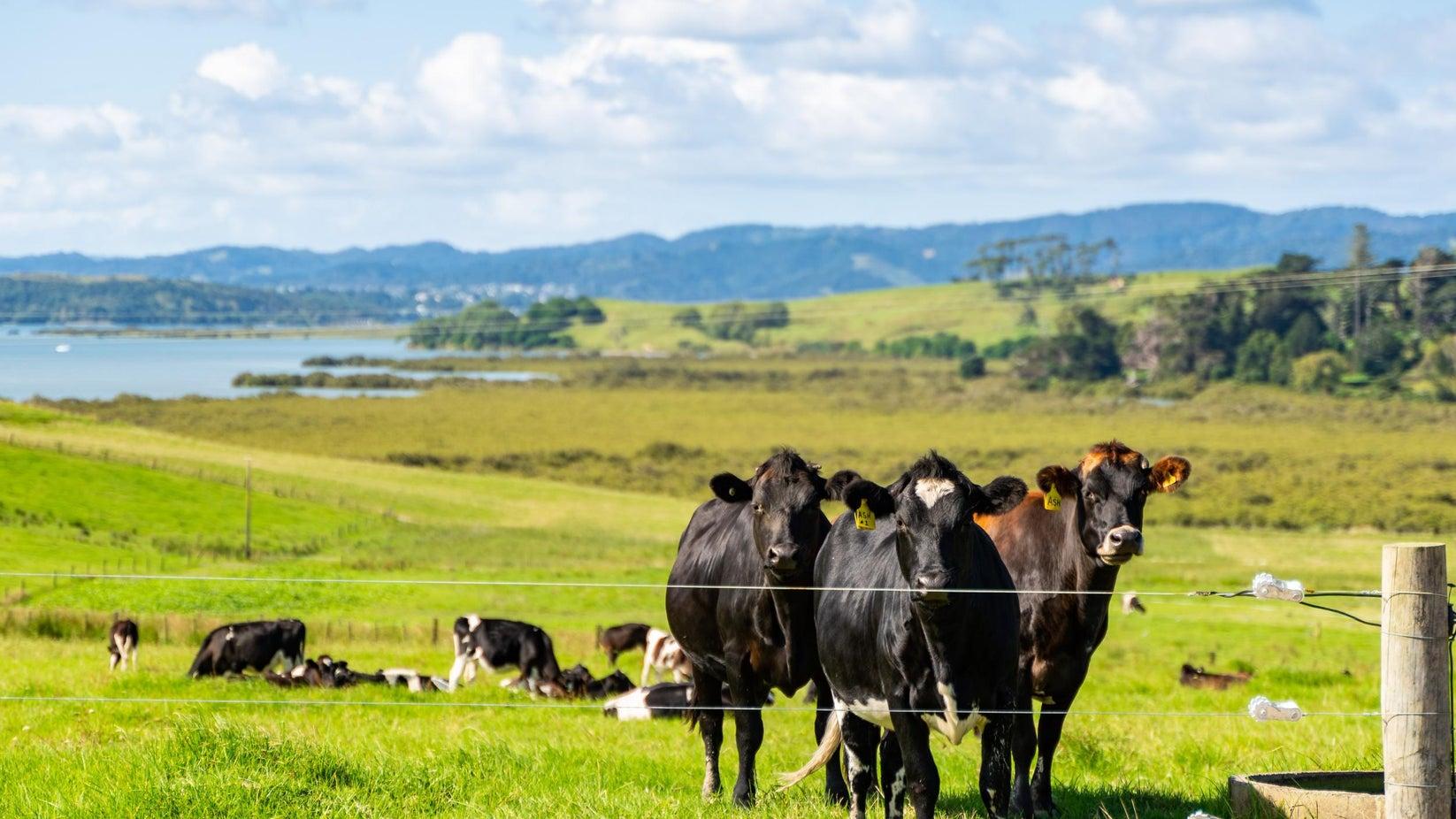
The seasons, however, still require a little adjustment in our minds. For us, November belongs to shorter days and the approaching winter, while New Zealand is heading towards summer. Our bodies may still be asking for warm jumpers, but here it is spring.
And Jeroen has certainly noticed, because his hay fever has returned. Normally, he only suffers from it in the Netherlands, and in the tropics he had been wonderfully free of it. It is a strange experience to find it waiting for him here, on the other side of the world. Apparently, his nose finds New Zealand just as familiar as we sometimes do! 🤣
Yet it only takes another bend in the road to remind us how far we are from home. In the Netherlands, our eyes tend to travel towards the horizon; here, they follow rolling hills, wooded slopes and pastures draped over the land like green blankets. The cows may look familiar, but their view is certainly different. Fences follow the contours of the countryside, and roads disappear behind hills before emerging again a little further along.
We also notice the sense of space during these first drives around the North Island. In the Netherlands, villages, towns and junctions often follow one another in quick succession, while here the scenery keeps holding our attention. A short distance on the map sometimes takes longer than expected because of all the bends, but with so much to look at, we do not mind at all.
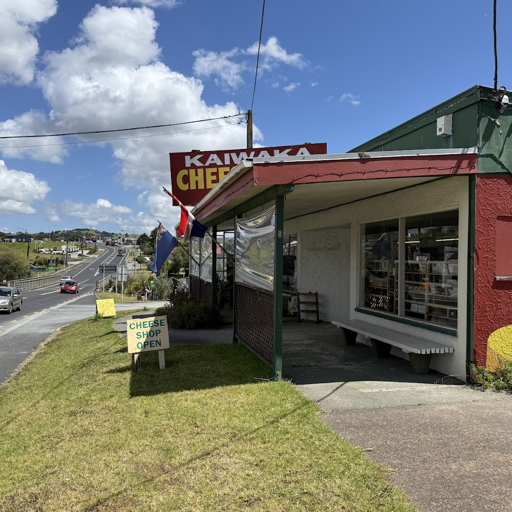
Then there is the pleasure of ordinary things that no longer feel quite so ordinary after our time on remote islands: well-stocked shops, plenty of choice in the supermarket, and being able to stop somewhere along the way for coffee or something delicious. So when we discover a little piece of the Netherlands in Kaiwaka, we do not need much persuading.
Next to Eutopia Café is the Kaiwaka Cheese Shop, filled with cheeses and familiar Dutch treats. Stroopwafels, liquorice, apple syrup… suddenly, on the other side of the world, we are surrounded by products that take us straight back home. We have become quite good at improvising with whatever is available along the way, but some flavours are still especially hard to resist. And yes, that makes it rather difficult to pop in “just for a look”! 🤣
There is also a lovely family story behind this shop. When the cheese shop was in danger of closing, Robert ter Veer and Marijke Valkenburg, the owners of the neighbouring Eutopia Café, bought the land and the building. Their son Anton and his partner Kristel Faber took over the shop in July 2021, ensuring that this little piece of the Netherlands in Kaiwaka was preserved. Two rather special neighbours, then, because after enjoying the familiar flavours of the Netherlands, we step into a world at Eutopia where our imagination is free to run wild.
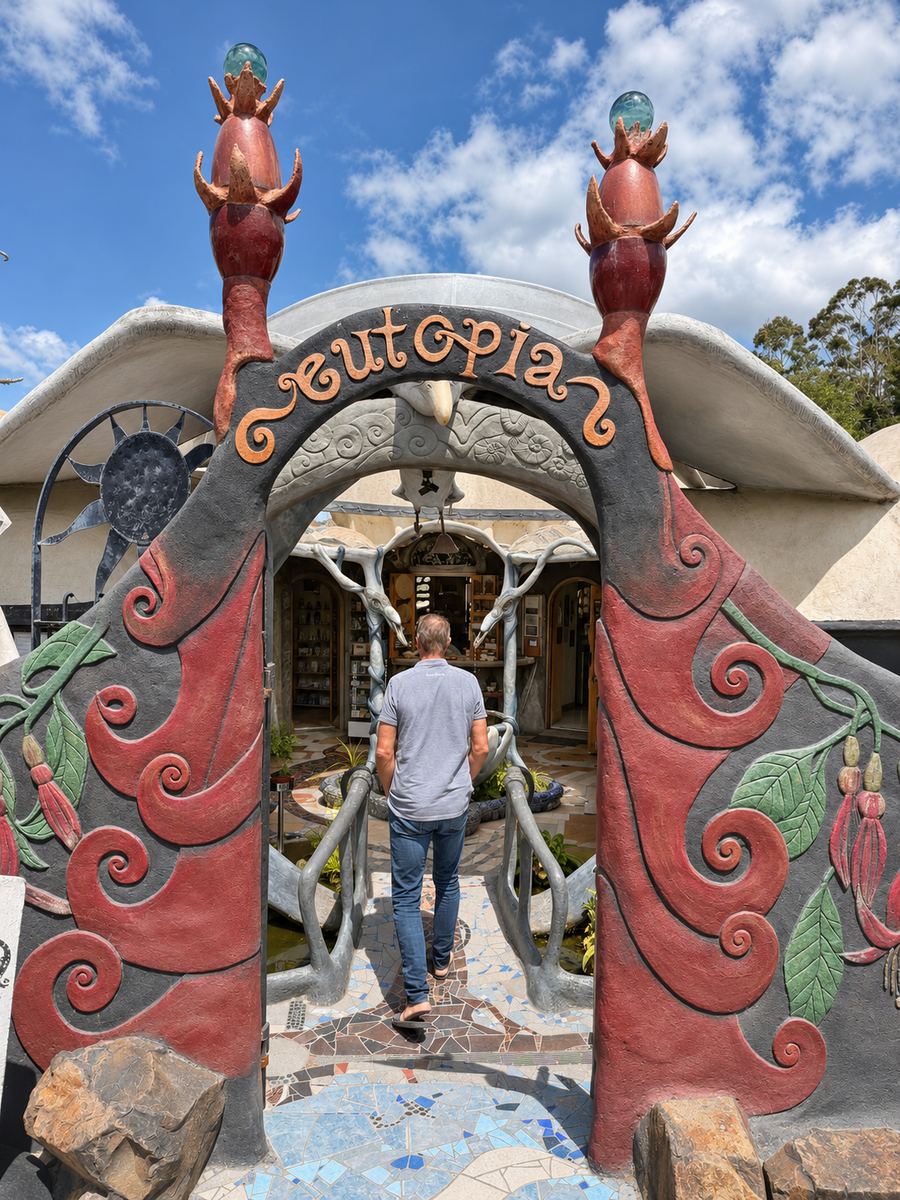
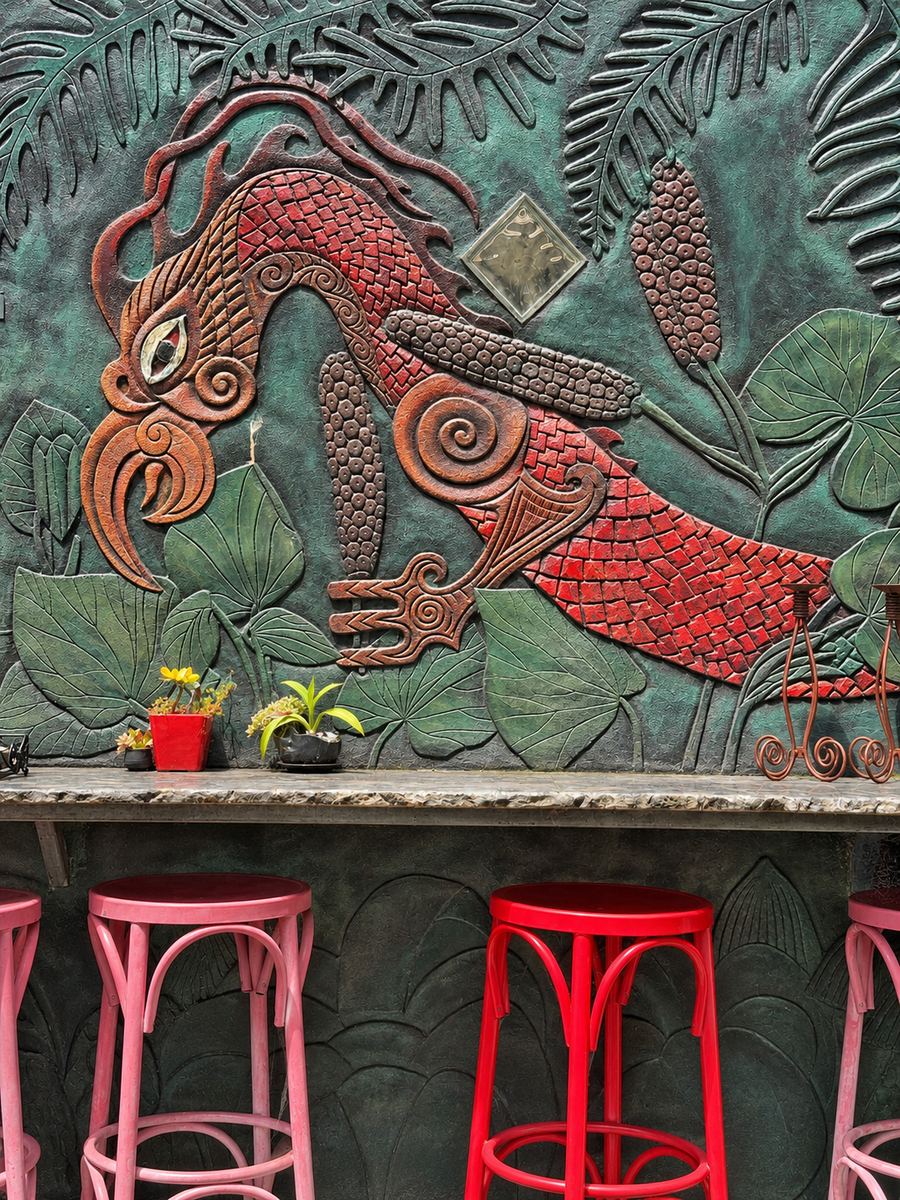
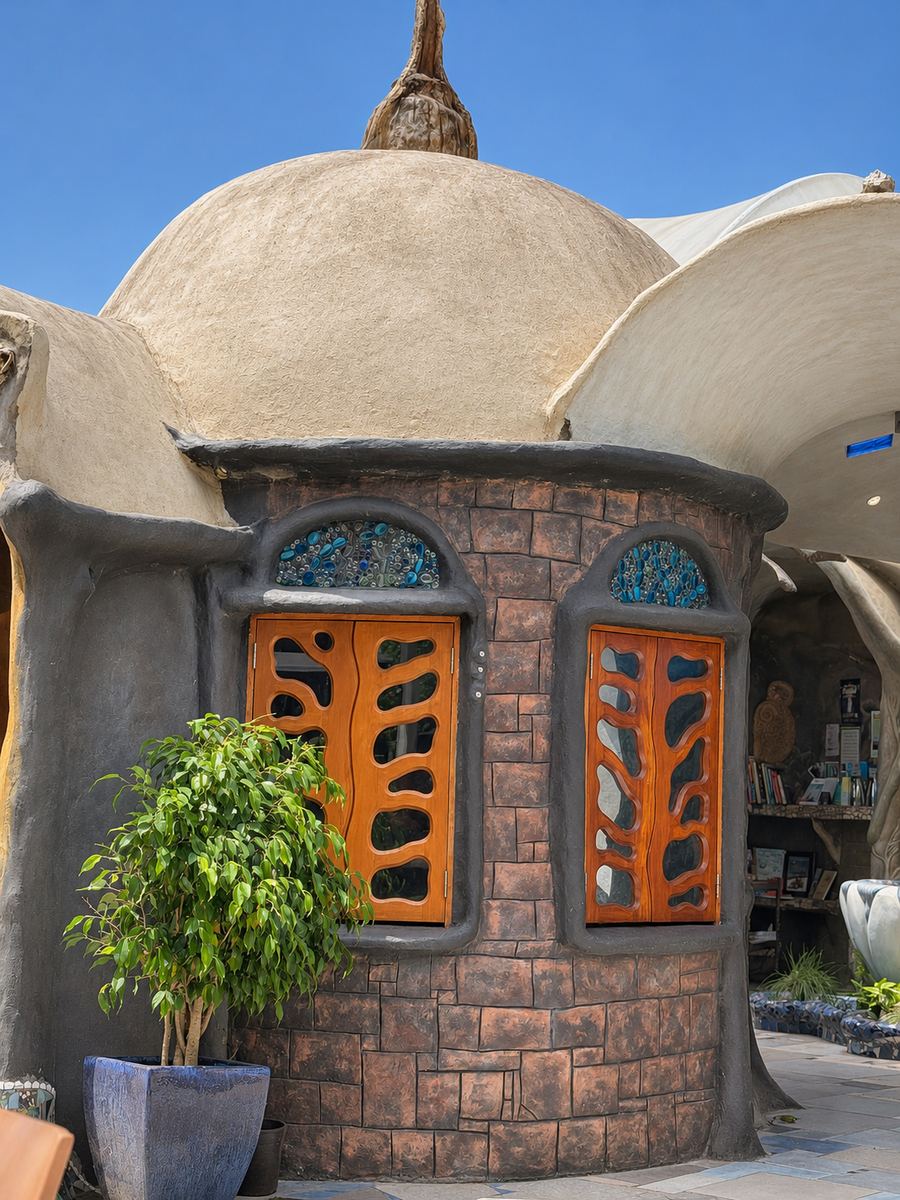
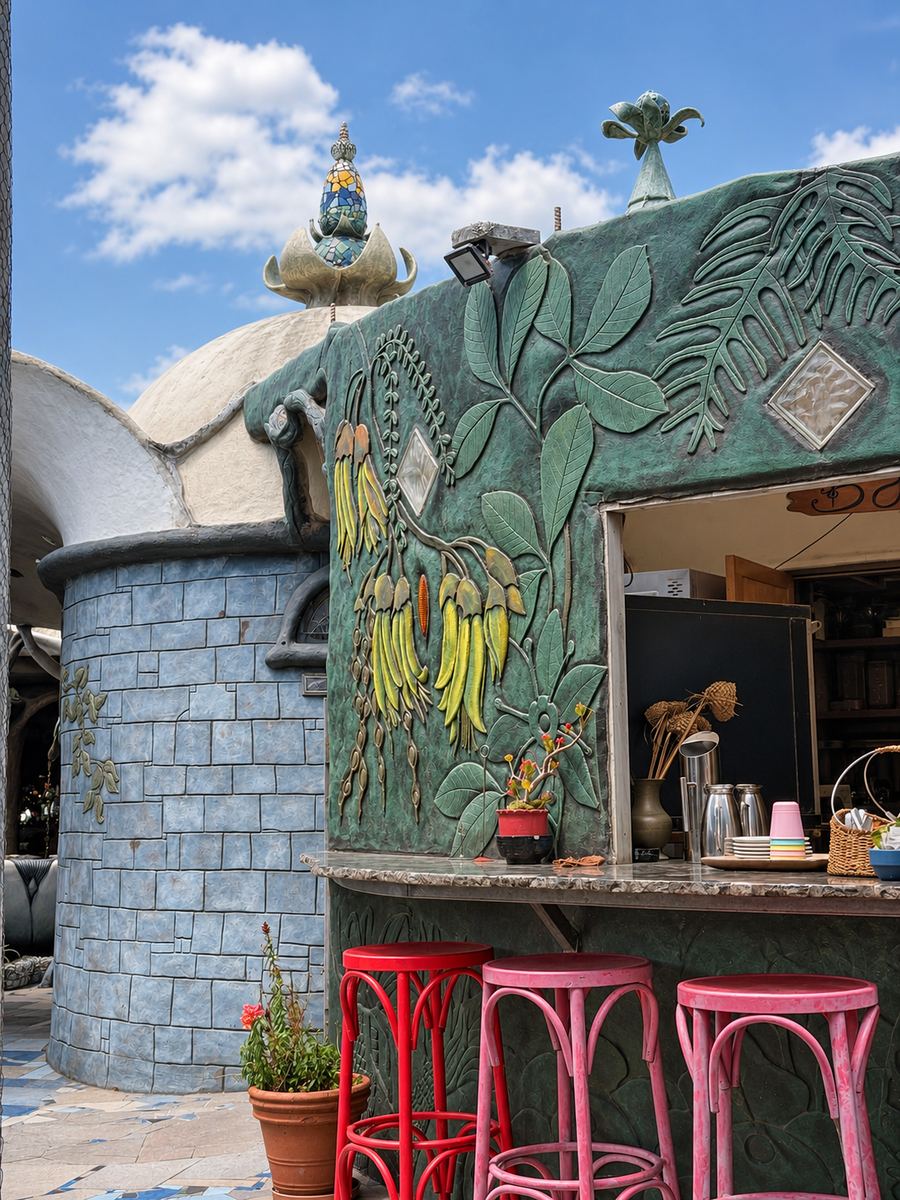
The entrance alone is enough to make us stop. Following a mosaic path beneath an elaborately decorated archway, we walk among rounded domes, irregular windows and walls filled with plants, animals and curious figures. There is something to discover everywhere, and naturally my camera stays busy, because just when I think I have seen everything, another detail appears in a different corner.
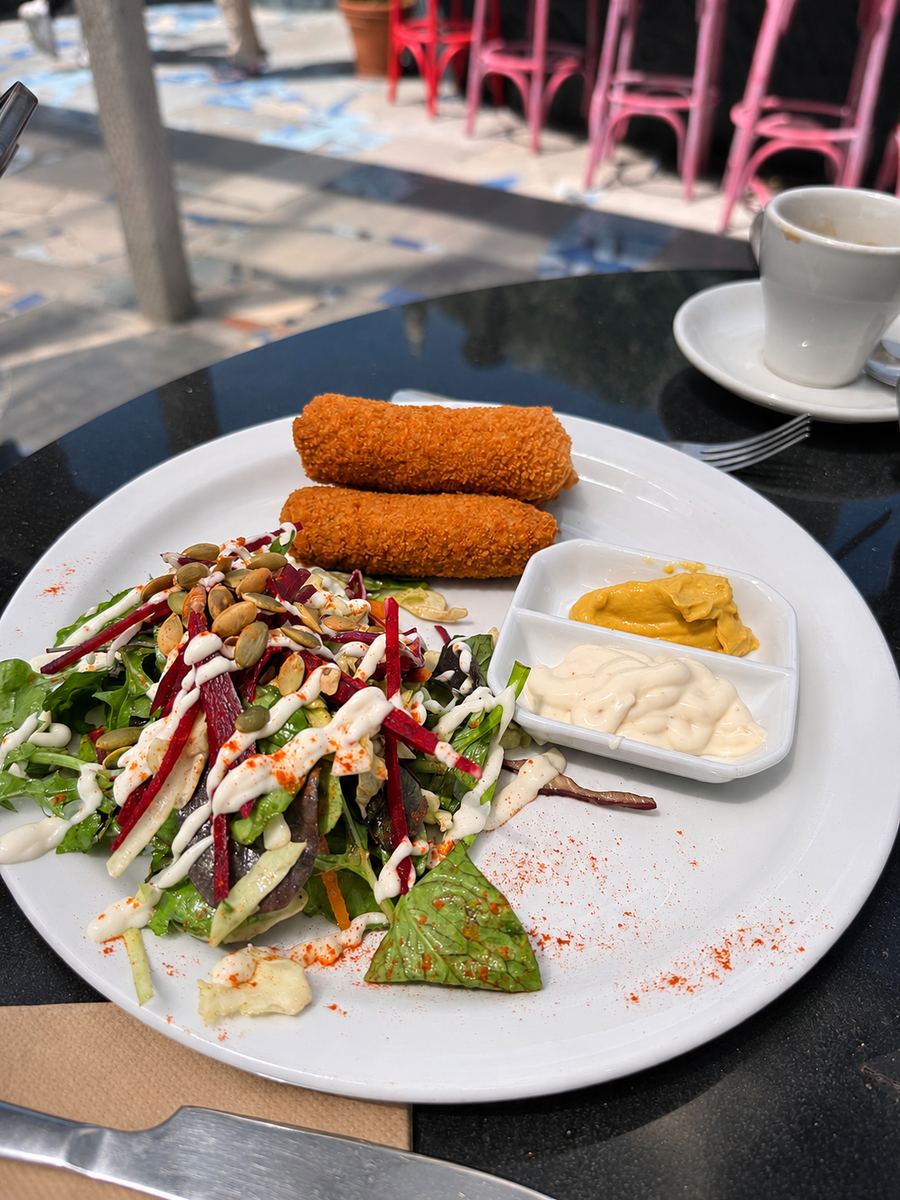
We happily stay for lunch and choose a salad with croquettes. So, surrounded by mosaics and imaginative figures, we also have a familiar little taste of the Netherlands on our plates. After all that time in the tropics, a Dutch croquette tastes especially good! 🤣 Meanwhile, our eyes keep wandering over the details around us.
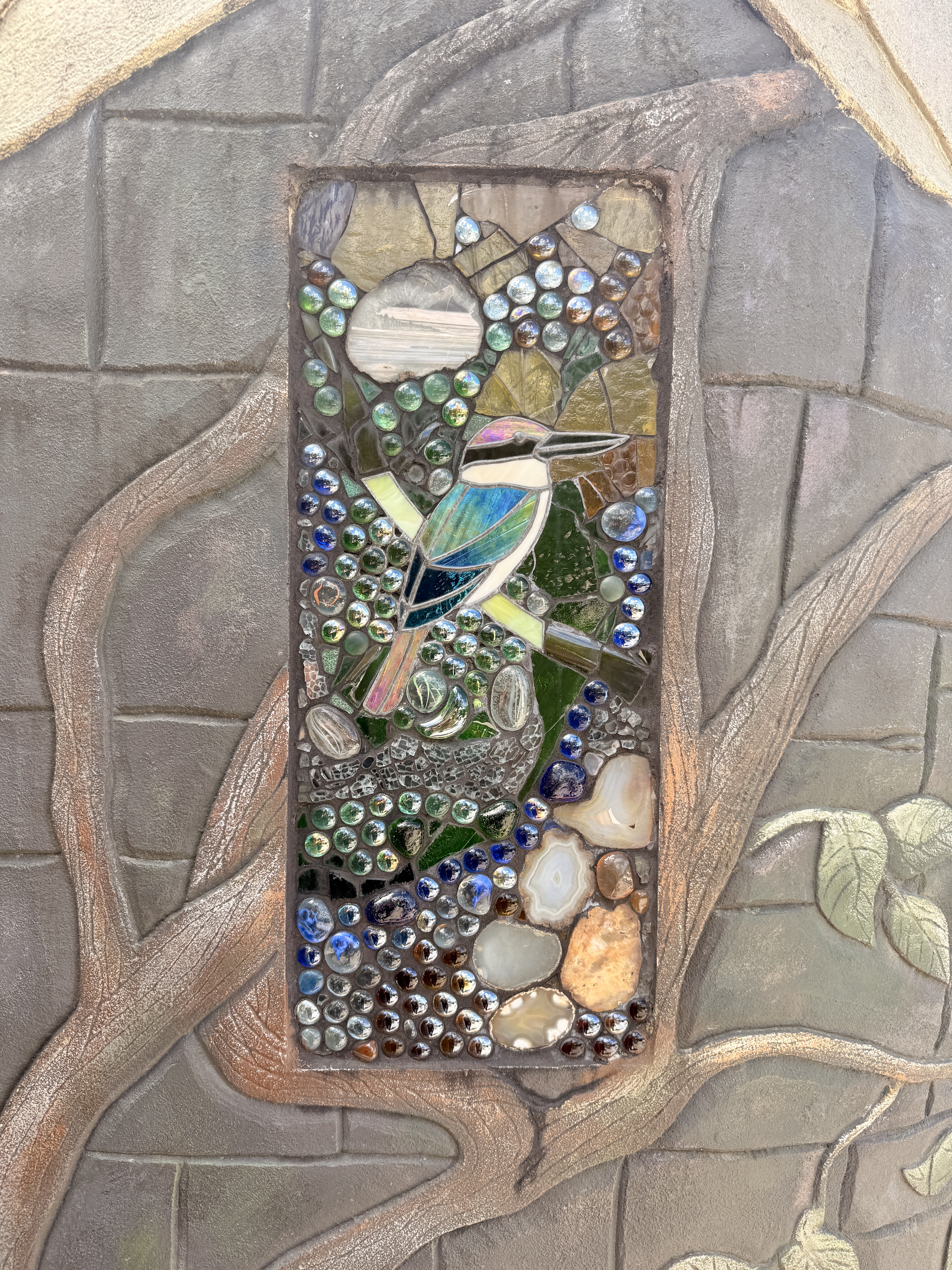
Robert and Marijke spent five years rebuilding this once-dilapidated café, together with their sons and with help from volunteers. Leftover tiles, found objects and donated materials were given a second life in mosaics and artworks, with New Zealand’s natural world providing much of the inspiration. What an enormous amount of work must have gone into it! It is the kind of place where you come for something to eat or drink and end up looking around for much longer than you expected.
Those colours and imaginative shapes find a continuation when we visit the Hundertwasser Art Centre in Whangārei. Here, the building itself demands just as much attention as the art inside. Colourful columns, a golden dome and a roof covered in plants and trees: there is plenty to admire before we even step through the door.
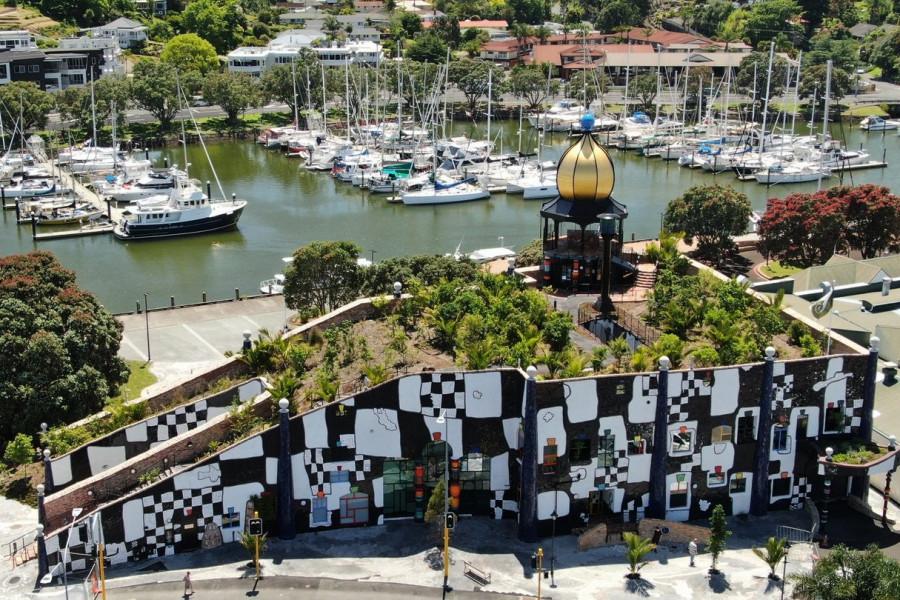
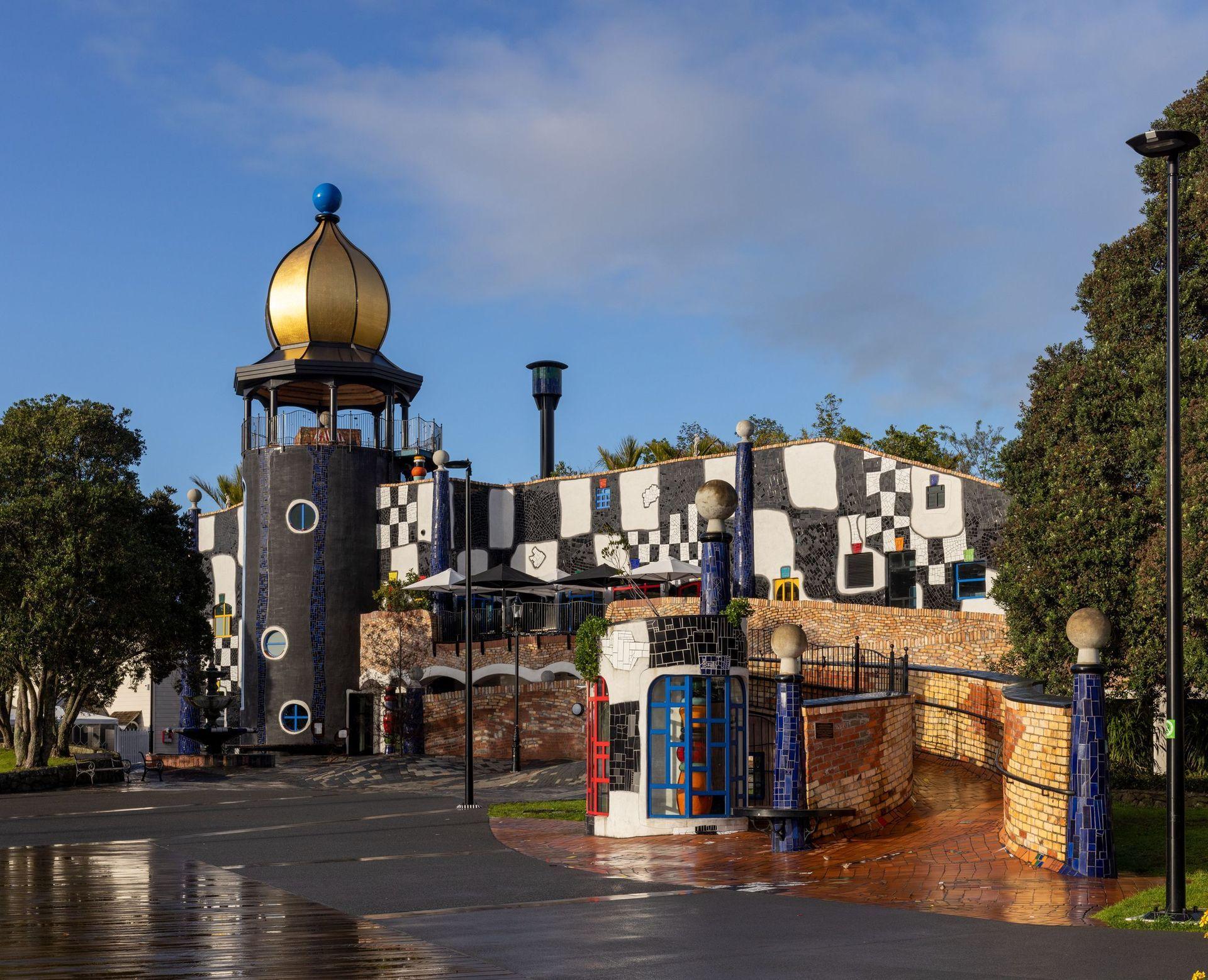
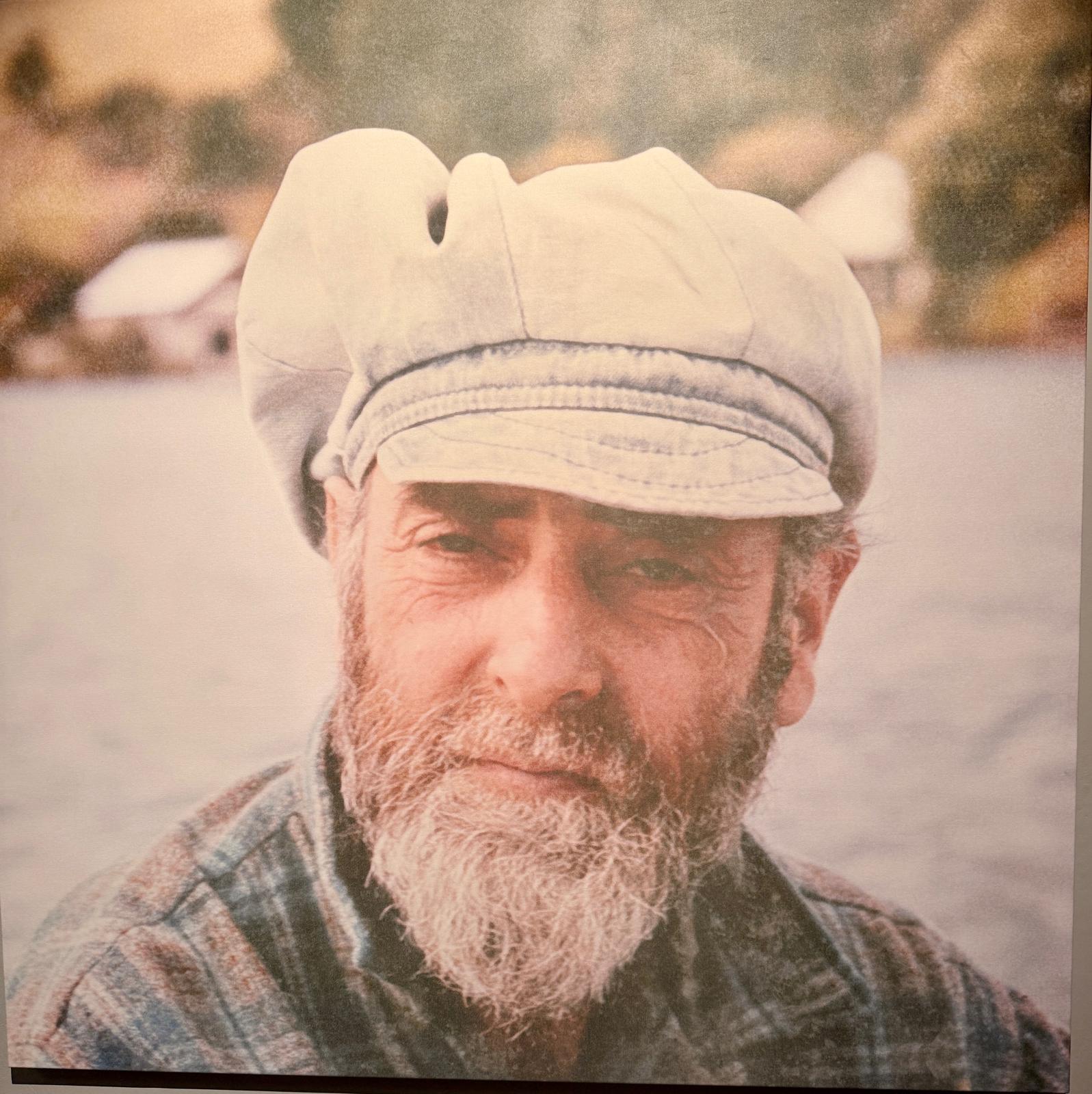
Behind this extraordinary world is Friedensreich Hundertwasser, an Austrian artist who spent many years living in New Zealand. He painted, worked on architectural projects and campaigned for nature. His ideas about buildings went far beyond an attractive façade. People should be able to express their individuality in their homes, and nature should have space in our cities, too. He had little affection for rigid straight lines, preferring shapes that could curve, grow and follow their own course.
I particularly like the thinking behind his planted roofs. If we take a piece of land to put up a building, Hundertwasser believed we should give the greenery a place on top of it. Here, that idea has been brought to life quite literally, with thousands of plants and trees growing on the roof. A building with its own little patch of nature above its head.
But we discover something that makes him especially interesting to us when we reach the model of his boat: Hundertwasser was also a passionate sailor. His ship, Regentag, was his home for years, as well as a place where he painted. He had the former cargo vessel converted into a two-masted sailing boat with an unconventional appearance that suited him perfectly.
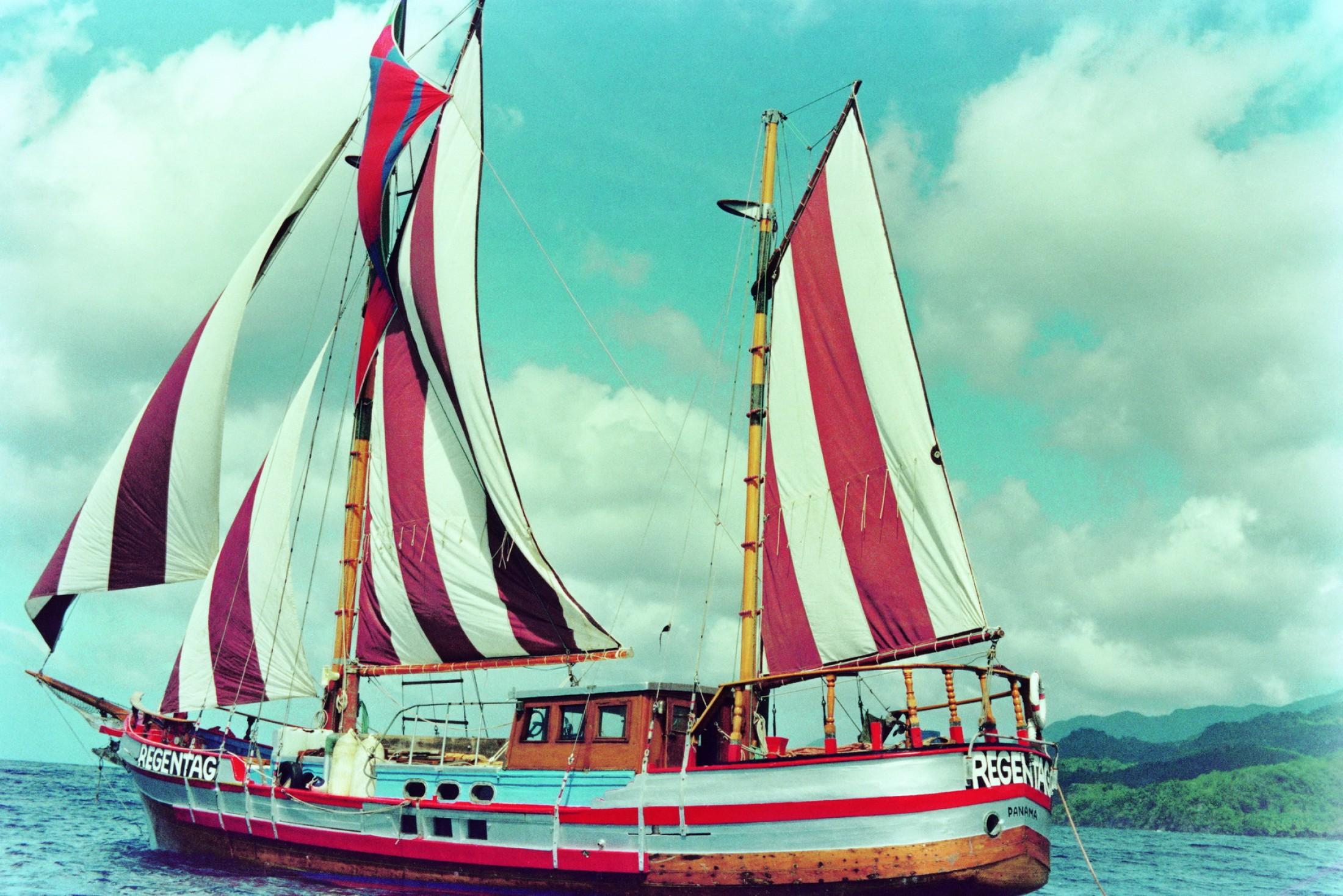
Naturally, we linger here for a while. A home that travels with you, where you live, work and always find something else to change or improve… yes, we can certainly relate to that. 🥰
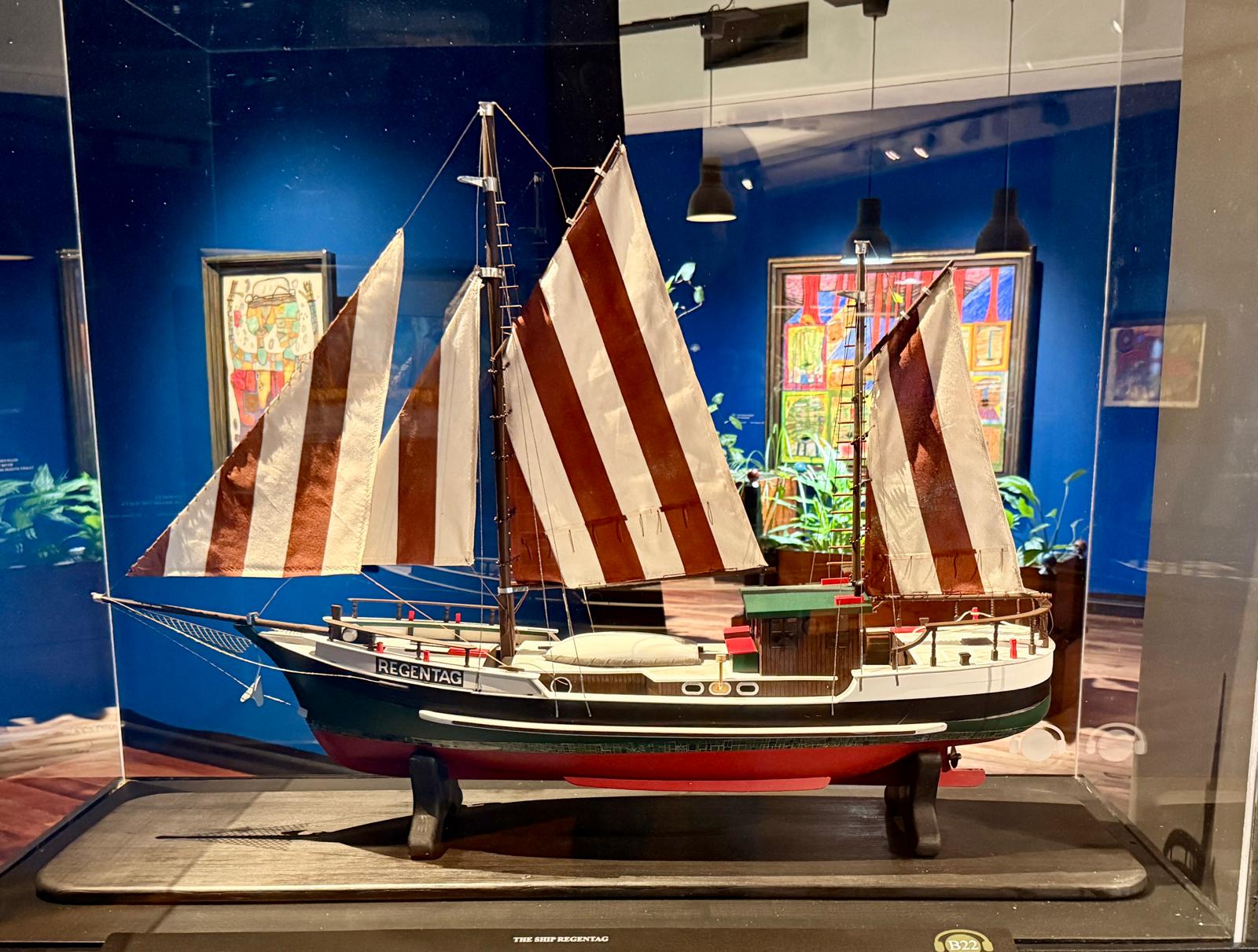
We read how Regentag sailed from Europe through the Caribbean and the Panama Canal into the Pacific, eventually reaching New Zealand in 1976. Hundertwasser joined various parts of the journey, also taking the helm as captain. The information panels mention places that have become much more than dots on a map to us. The Caribbean, Panama, the Pacific: suddenly, his story follows a route with some surprisingly familiar connections to our own.
His approach to painting appeals to me, too. He worked wherever he happened to be: at home, travelling, outdoors or on board. He did not need a studio with an easel. Instead, he laid his paper or canvas flat in front of him, and while travelling he sometimes folded the paper and continued painting on whichever section remained visible.
He also saw possibilities in materials that someone else might already have thrown away. Used wrapping paper, found objects and pieces of wood could all become the starting point for an artwork. In the museum, we see how these materials were given a second life, filled with colour and patterns. It certainly makes you look a little differently at what we call rubbish.
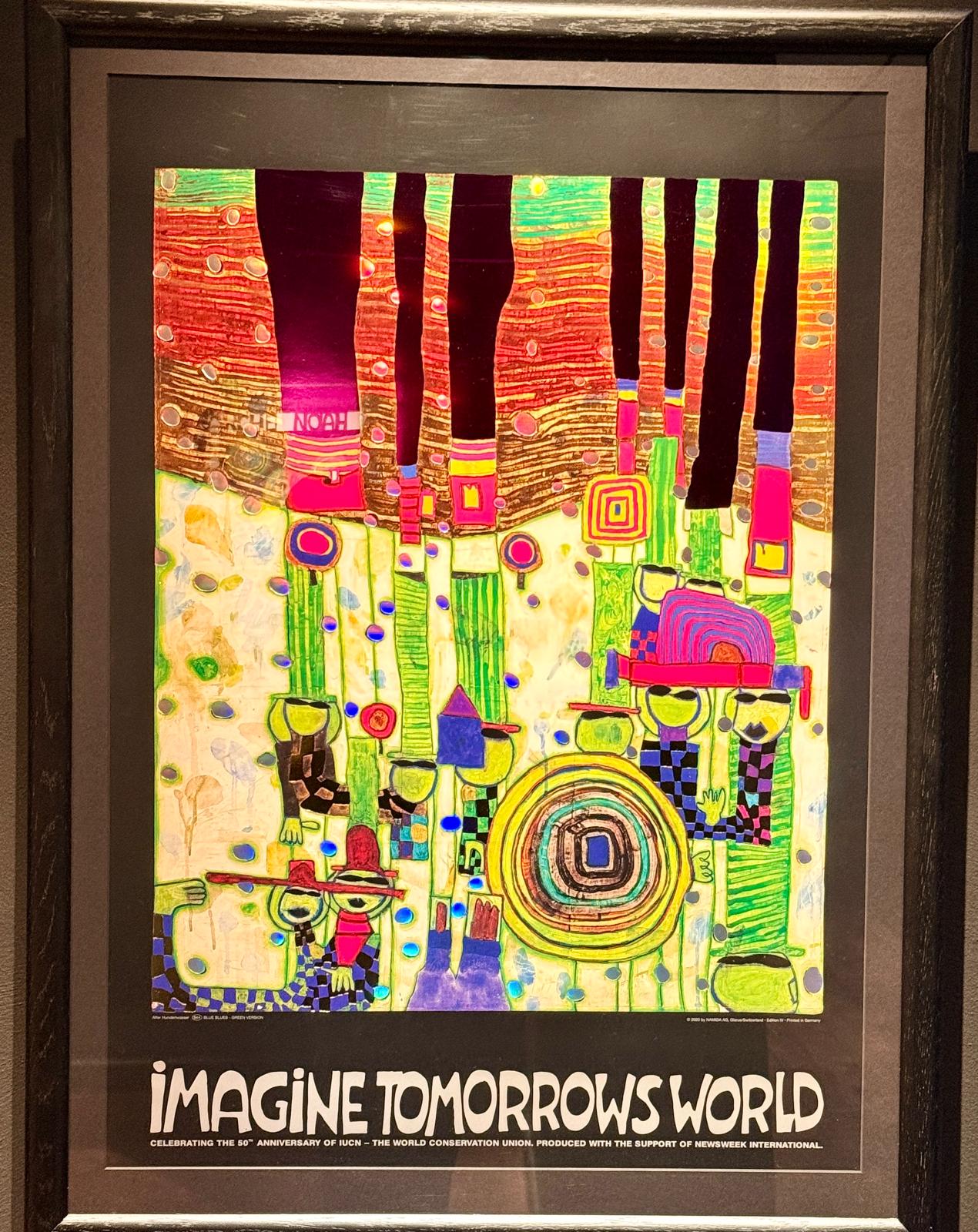
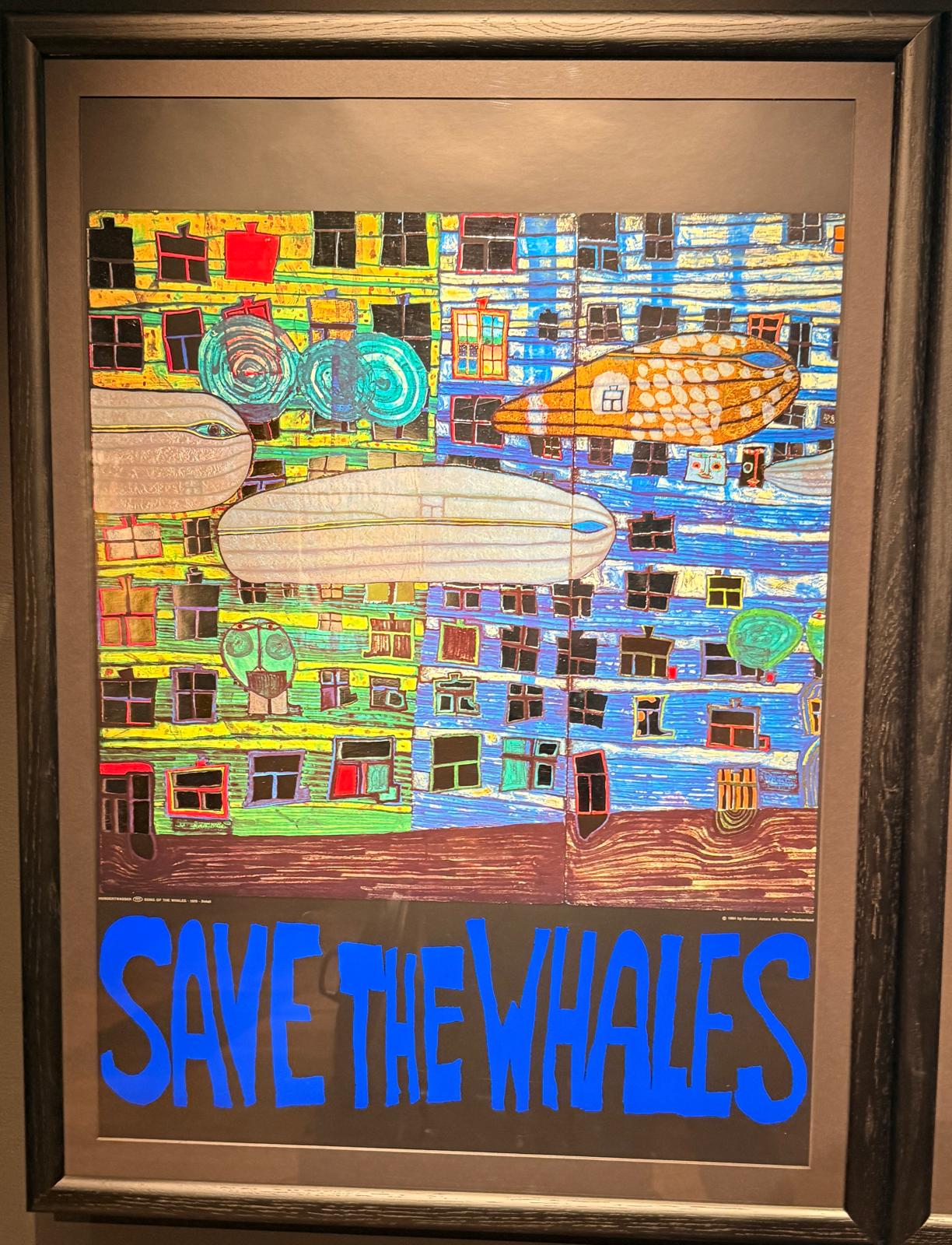
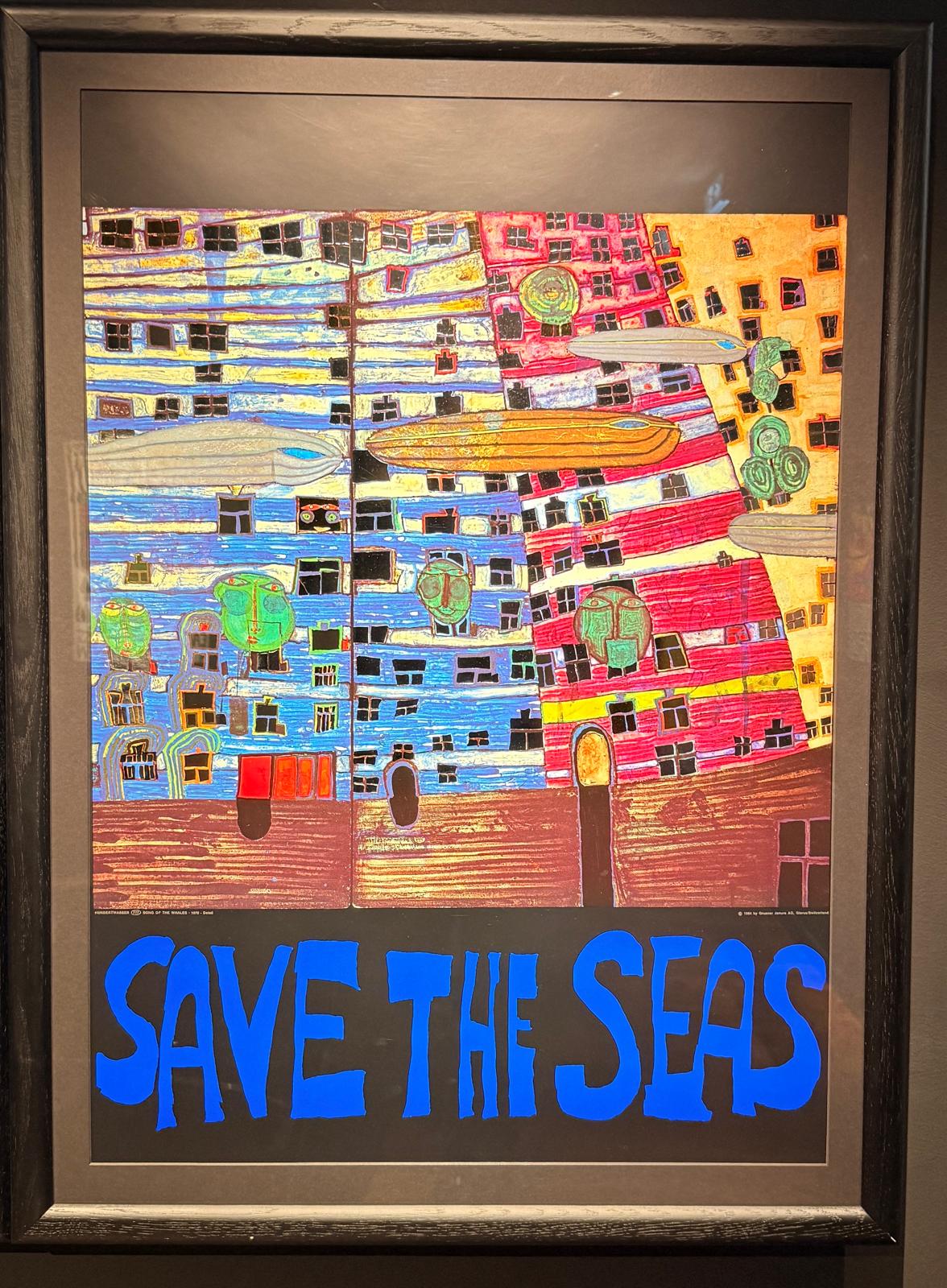
His interest in reuse was part of his belief that we should treat the earth with greater care. We read about his commitment to cleaner water, less waste and returning space to nature. His colourful posters calling for the protection of oceans, whales and rainforests hang on the walls. After years at sea and among the islands, these subjects naturally speak to us. Behind all those vibrant colours is a clear message, and someone who used his public profile to draw attention to it.
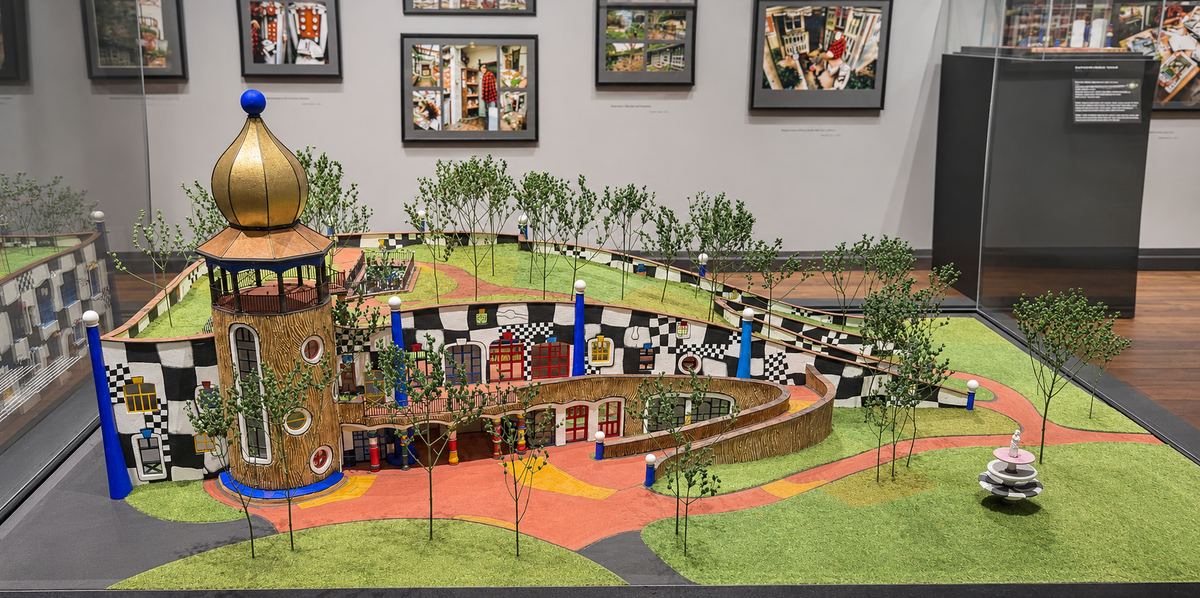
Among the artworks and architectural models, we find another connection with the Netherlands. In Valkenburg stands the Ronald McDonald Kindervallei with its Rainbow Spiral, a holiday retreat for families with a child who needs intensive care. Here, we see the model, with colourful bands flowing around the façades, playful windows and a tower topped with an unusual crown.
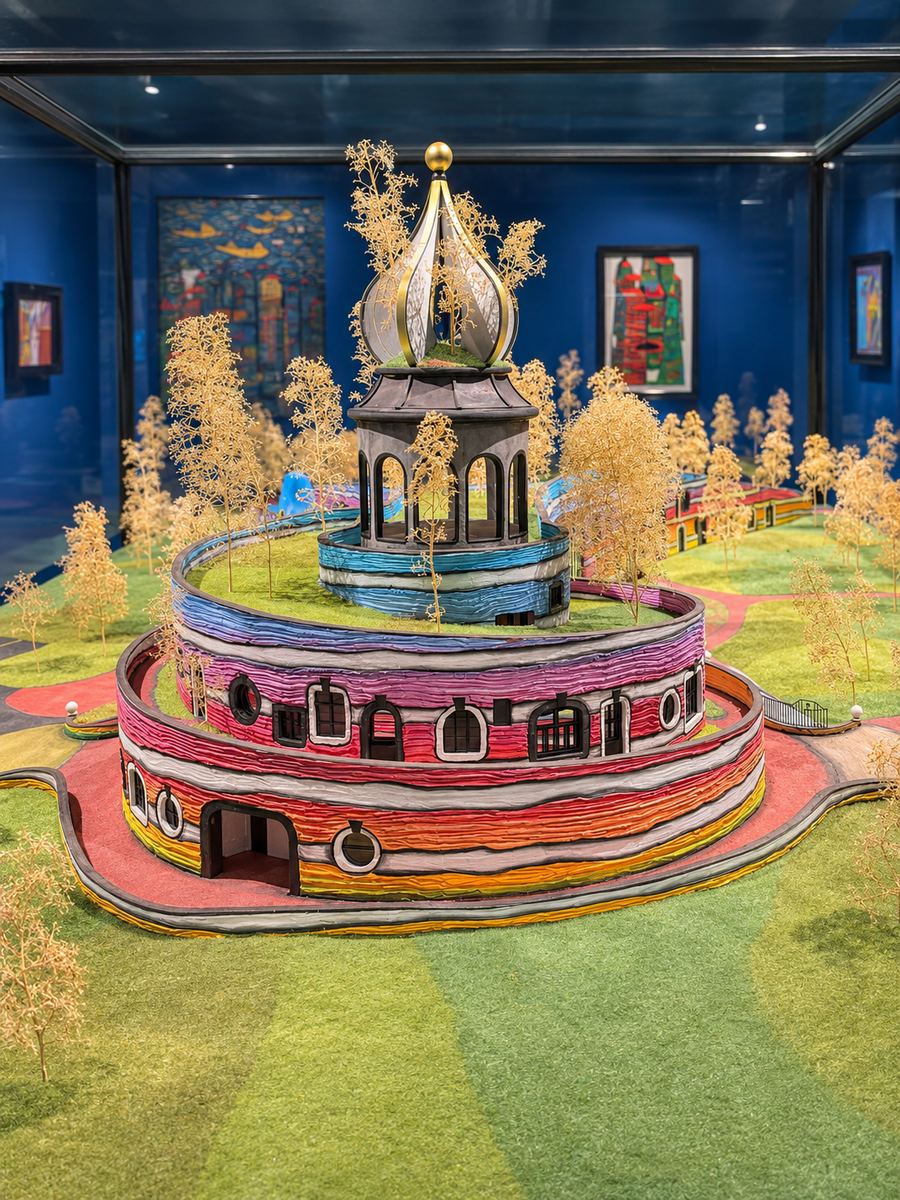
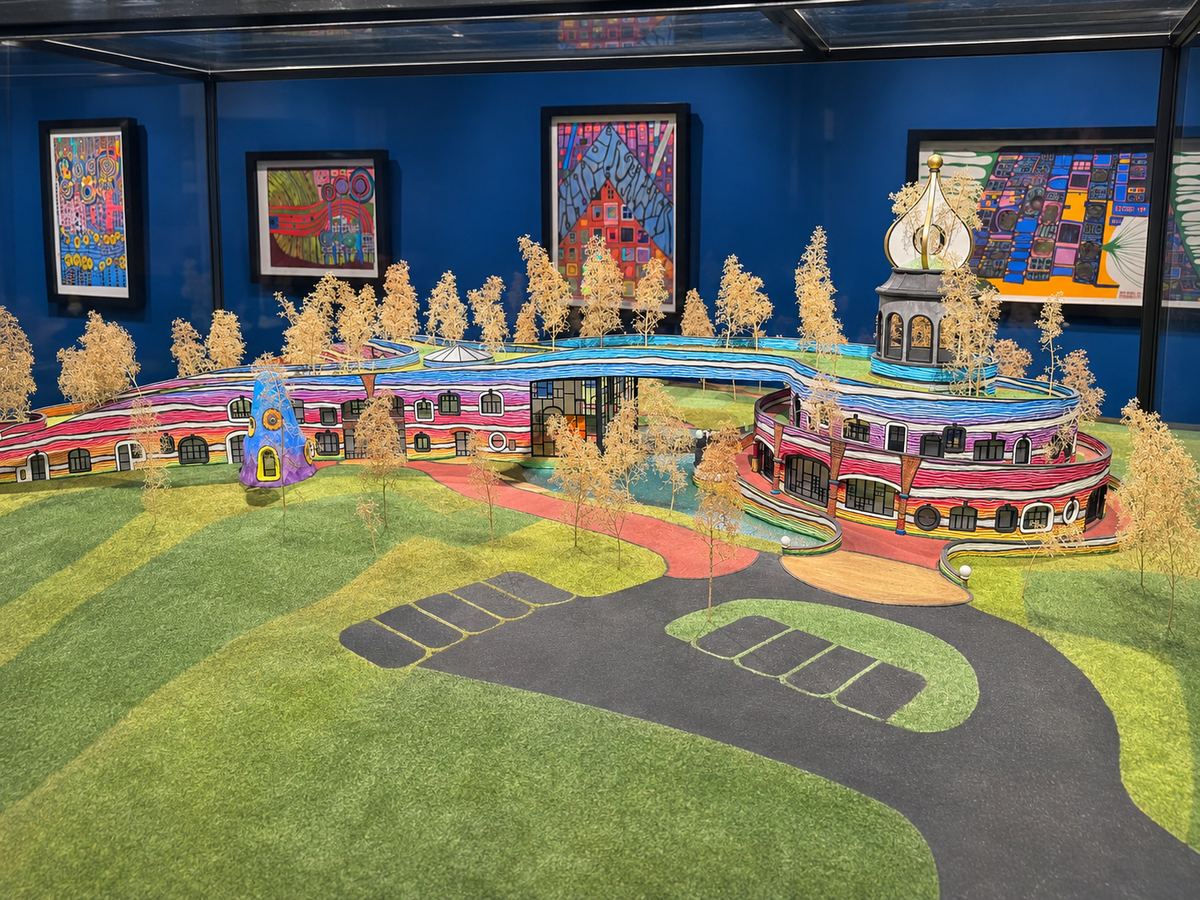
The building was developed after Hundertwasser’s death according to his ideas, using an earlier design of his as its starting point. It is lovely to find a model here in New Zealand of a place in the Netherlands where families can take a little time to catch their breath together. For me, that purpose gives all those colours an added meaning.
Even Hundertwasser’s thoughts about death reflected his close connection with nature. He wrote that he looked forward to becoming humus after his death, returning to the earth and nourishing new life. He also associated the spiral, which appears so often in his work, with life and death. As we read his words, that recurring shape becomes more than just a beautiful pattern.
On 19 February 2000, he died in the Pacific Ocean aboard the passenger liner Queen Elizabeth 2. In accordance with his wishes, he was buried on his own land in New Zealand, in the Garden of the Happy Dead, where a tulip tree was planted on his grave. A final wish that fits the way he lived and saw the world.
He never saw the completed art centre in Whangārei. His first sketches date back to 1993, but the building only opened its doors in 2022, following years of determination by local residents and volunteers. It is remarkable that an idea can continue to inspire so many people that, almost thirty years later, it finally becomes reality.
We came for the colours and unusual architecture, but also discover the traveller, the sailor and the person behind the work. Someone who kept creating wherever he went, saw possibilities in discarded materials and tried, in his own way, to give something back to the world.
Our first explorations on land have already brought plenty of surprises. From familiar Dutch cows and croquettes to green hills, imaginative mosaics and an artist whose sailing route unexpectedly overlaps with our own. Every now and then, New Zealand makes us feel a little closer to home, before revealing something entirely new around the next bend.
And we have not even seen the starry sky beneath the
MESSAGES ON BOARD
Leave a message
Share a thought, question or greeting. Aagje reads every comment before it appears here.
Loading comments…