
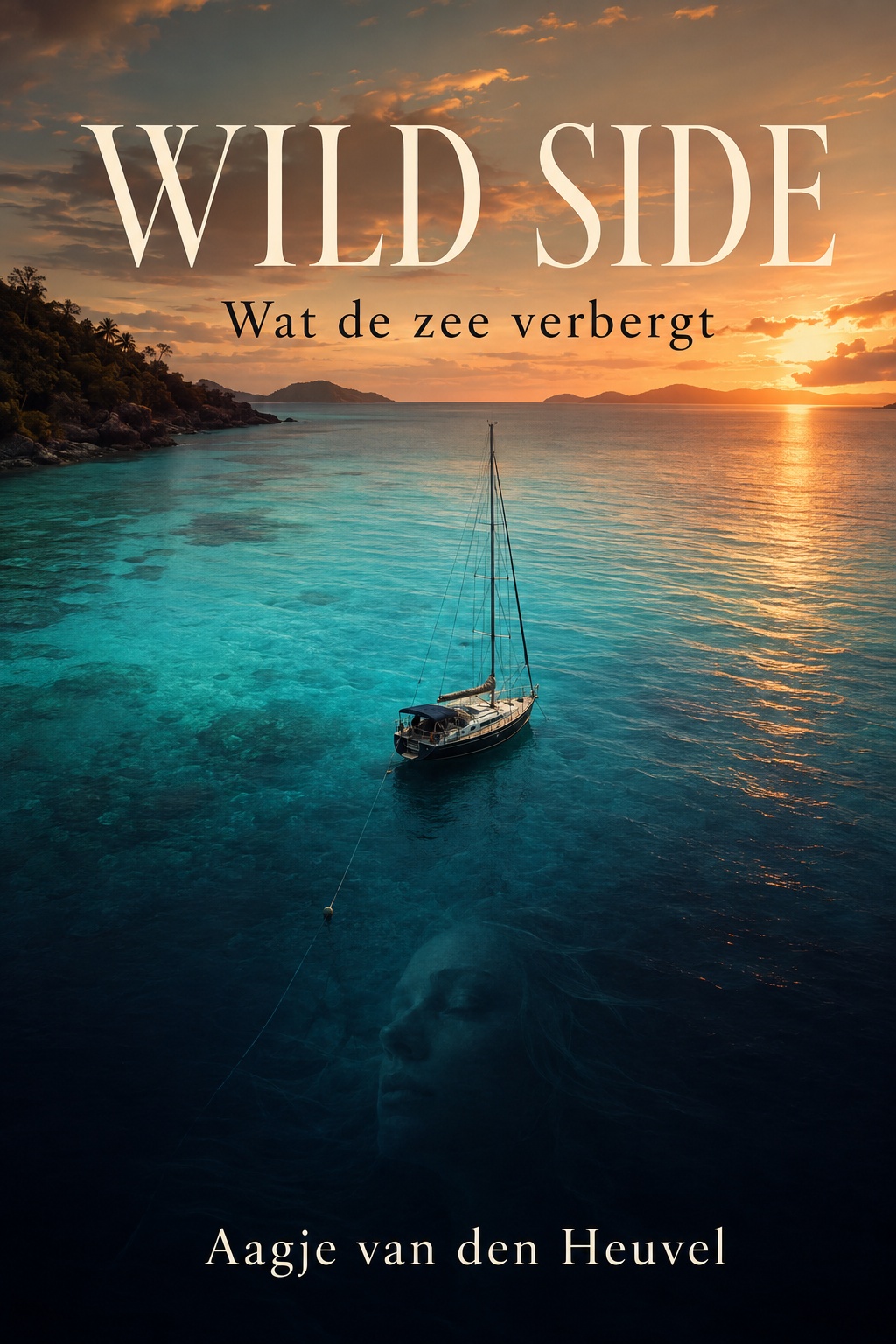
How our sailing journey, conversations on board and my imagination came together in a novel.
There is a lot of me in Saar. In Pim, you will recognise certain things about Jeroen. But anyone who reads Wild Side and thinks they now know exactly what life is like on board our boat may find themselves being led astray every now and then.
For a start, Jeroen would like to know why I did not give Pim his sense of humour.
It is an interesting question, how much of ourselves has found its way into the books. When I write, I draw on a world I know well: life on board, travelling and the encounters that come with it. But once Saar and Pim step into that world, they can make different choices from ours. They can pause a little longer, ask more questions or find themselves in a situation that exists only in my imagination.
That was exactly the freedom I wanted to explore when the idea of writing a book slowly began to take shape.
It began with our blogs
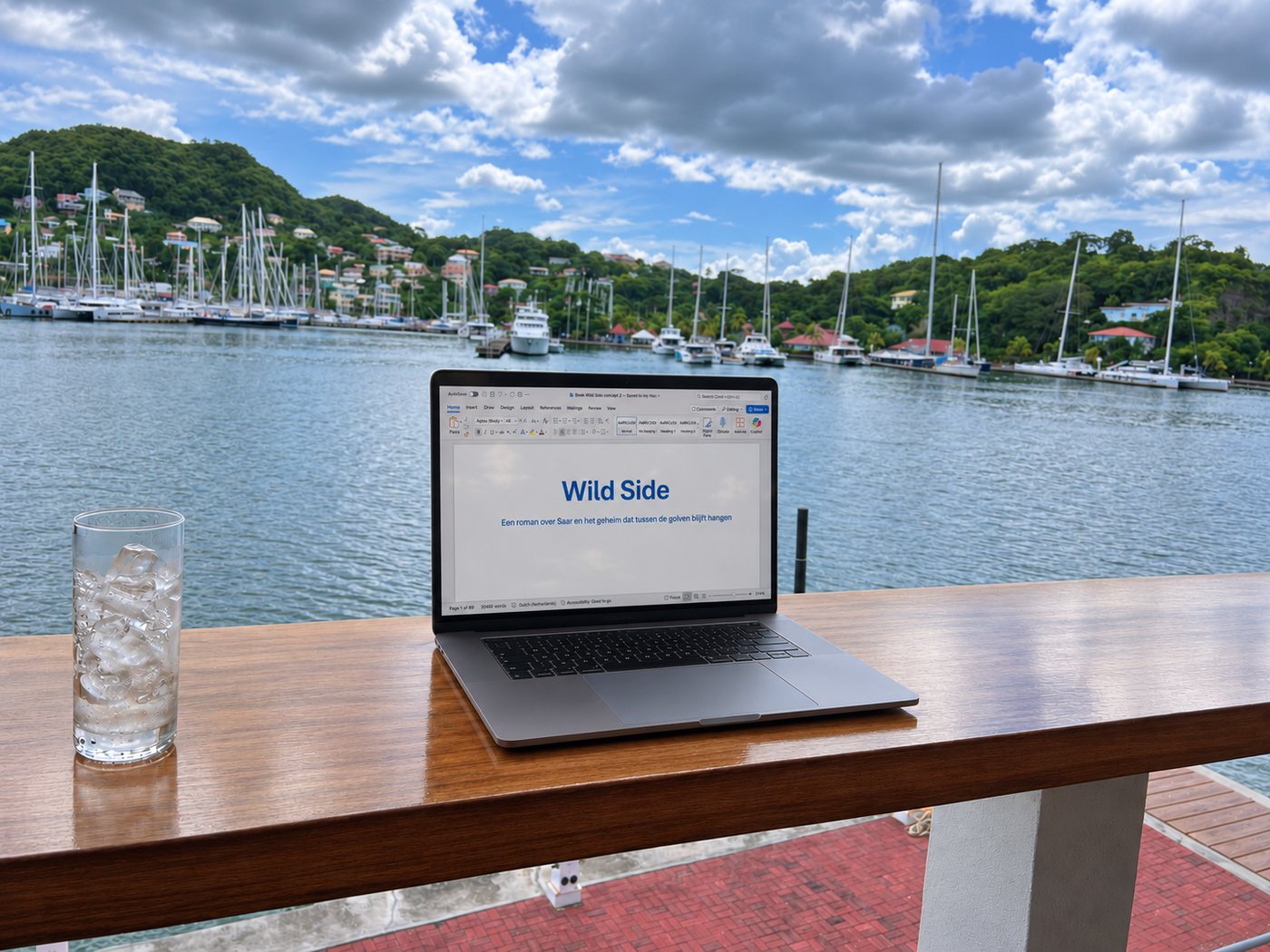
The more I wrote about our journey, the more I enjoyed it. I liked revisiting things that had happened and finding the words to take someone back to a place we had been. Sometimes the story was in an ocean passage, sometimes in an encounter or a small detail that had caught my attention.
Gradually, I began to wonder whether I could write a book too.
So I read through our blogs again and tried to imagine how I could bring them together into a whole. By then, we certainly had enough experiences to write about. Yet as I worked on it, I felt something was missing. People who followed our blogs already knew many of those stories. I wanted to offer them something new, and I wanted to go beyond describing what had actually happened.
I became more curious about what I could invent. Could I build a story that would hold someone’s interest for an entire book? Could I create characters people wanted to follow, even if they knew nothing about our journey?
I did not know. But I wanted to try.
The strangest stories begin over a beer or a glass of wine
There is no shortage of inspiration along the way. You meet sailors from very different backgrounds, all with their own reasons for living on a boat. You talk to local people, hear about their lives and sometimes listen to stories you could hardly have imagined yourself.
When you sit together a little longer, perhaps over a beer, something else often comes up that takes the conversation in an unexpected direction. An unusual experience, a bizarre twist or a detail I find myself thinking about later.
Then my mind starts working on its own.
What if someone is hiding something? What would happen if two people experienced the same event very differently? And how well do you really know someone you have only just met along the way?
A good friend and I can also happily spend an evening sitting at the back of the boat with a glass of wine, making up suspenseful stories. One of us starts, the other adds something, and before we know it, we are deep in conversation about everything that might happen to our imaginary people.
The lovely thing is that nothing is fixed at that point. An idea is allowed to be a little strange. We can laugh about it, develop it further or decide that it makes no sense at all.
But sometimes something stays with me.
My first attempt was much more comical
Starting a novel felt exciting and a little daunting. I enjoyed writing, but that did not mean I knew how to put an entire book together.
At first, I tried to make it very funny. I often looked for an amusing phrase or the humour in a situation. But I realised I could not sustain that tone throughout a whole book. I also wanted room for suspense, uncertainty and moments when a joke would feel out of place.
Eventually, Karin suggested creating two storylines: one following Saar and Pim, and the other following Floor and Michael.
That opened up many more possibilities. With Saar and Pim, I could follow the journey and explore what happens to people when they move from life on land to life at sea. A lot changes when you start living together on a boat. You have to work out how to divide responsibilities, how to work as a team and how you respond when things become tense.
With Floor and Michael, I could describe a very different life. They too lived on a catamaran, but their story gave me room to look beyond the journey itself.
With those two storylines, the book began to take a shape in which different lives and events could become intertwined.
Saar is sometimes a step ahead of me
There are recognisable parts of me in Saar, but she is not a copy. For example, she investigates things much more thoroughly than I often do. She keeps asking questions, wants to understand what is going on and does not always settle for the first answer.
Sometimes I would like to do a little more of that myself.
Perhaps that is one of the pleasures of writing: I can give her that curiosity and then discover where it takes her. I do not have to make her stop at the point where I might already have moved on.
I also recognise her organised side, although she takes it further than I do. On our boat, Jeroen is actually more of the list maker.
Pim, in turn, has certain qualities that come from Jeroen, but Jeroen is much more sociable and has a very different sense of humour. As I write, those differences become clearer. I can start with something familiar, but then I have to consider what fits the character.
The life on board that I describe is also shaped by many more stories than our own. Other sailors’ experiences, the way they share responsibilities and how they deal with stressful situations all give me something to think about.
Sometimes the truth lies in a feeling
Some experiences mainly help me understand what might happen between people in a scene.
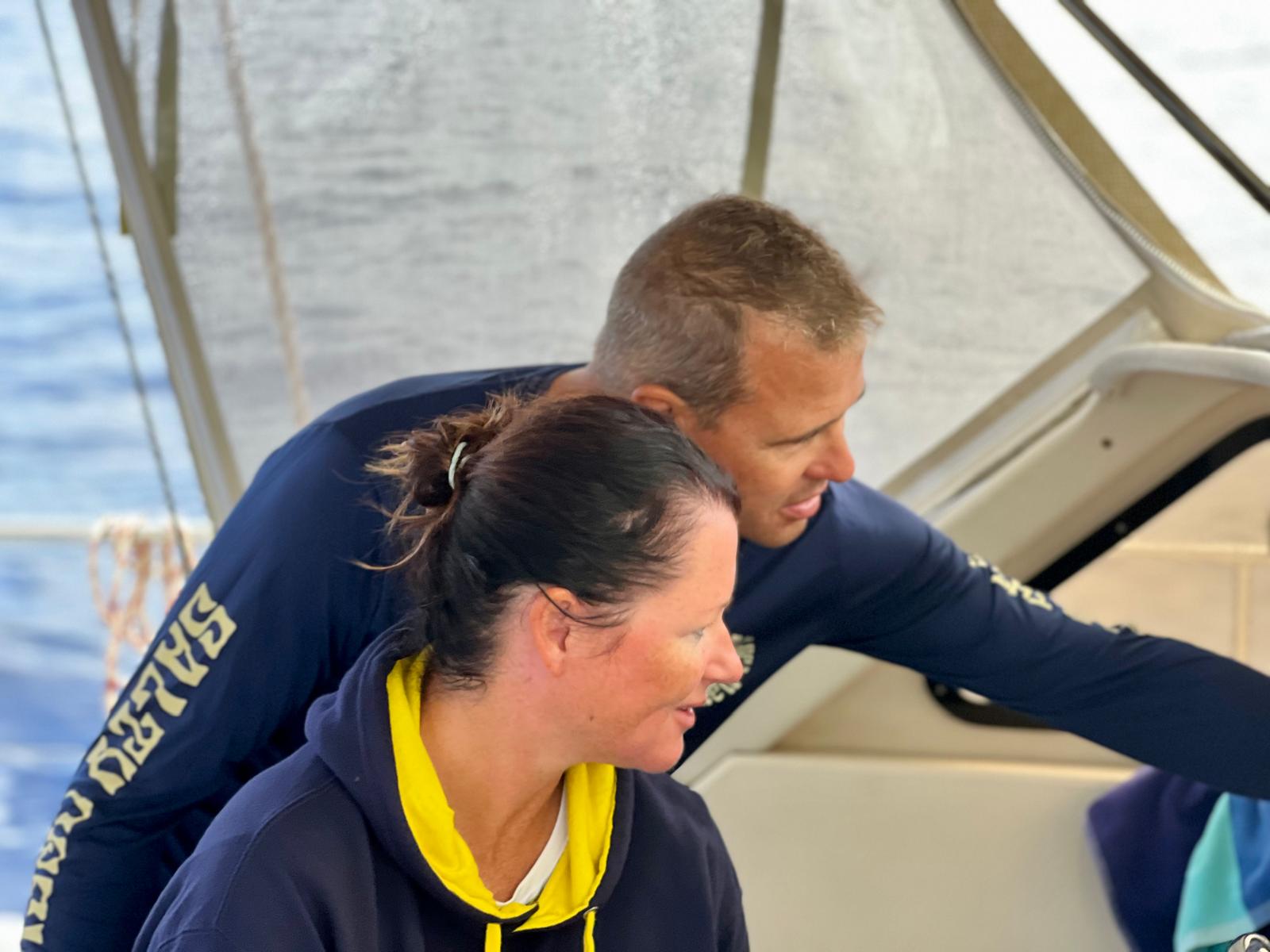
On our boat, I take the helm and Jeroen handles the lines. When something needs to happen quickly, clear instructions matter. But because Jeroen does not hear quite as well, we sometimes had to raise our voices to understand each other. I hated the shouting. An instruction could sound stern or condescending to me, even when it was not intended that way at all.
I had to learn that, in those moments, Jeroen was giving a practical instruction without meaning anything personal by it. Understanding that was sometimes easier than feeling it.
Our Bluetooth headsets have helped us enormously. Being able to hear each other calmly makes a real difference.
When I write, I can draw on that feeling: how tension changes a conversation, how a sentence lands with the other person and how you can misunderstand each other while trying to achieve the same thing. From an experience I recognise, an entirely different scene can then develop.
That is why the question of how much really happened is not always easy to answer. Sometimes an event is invented, but I understand a character’s reaction because of something I have felt myself.
Karin read along and helped me grow
Karin was my first reader, and I loved that she wanted to read along as the story took shape. Until then, most of it had existed inside my own head. Now there was someone I could talk to about the characters, someone who could tell me how the story came across to her.
She helped me think about the structure and pointed out where the pace could pick up, where there was room for more suspense and which expressions appeared more often.
I learned a great deal from those observations. When you write a story yourself, you know what you mean and what is going to happen later. As a reader, you see things differently. Something that seemed obvious to me could still raise questions for her, while an explanation I thought was necessary sometimes turned out to be clear already.
With her comments beside me, I reread passages, removed sentences and tried different ways of telling things. Gradually, I discovered how to make the story stronger.
It also made writing more enjoyable to share. I could let her into something I was spending so much time on and getting so much pleasure from, and her reactions made me eager to keep writing.
Where our journey ends and the novel continues
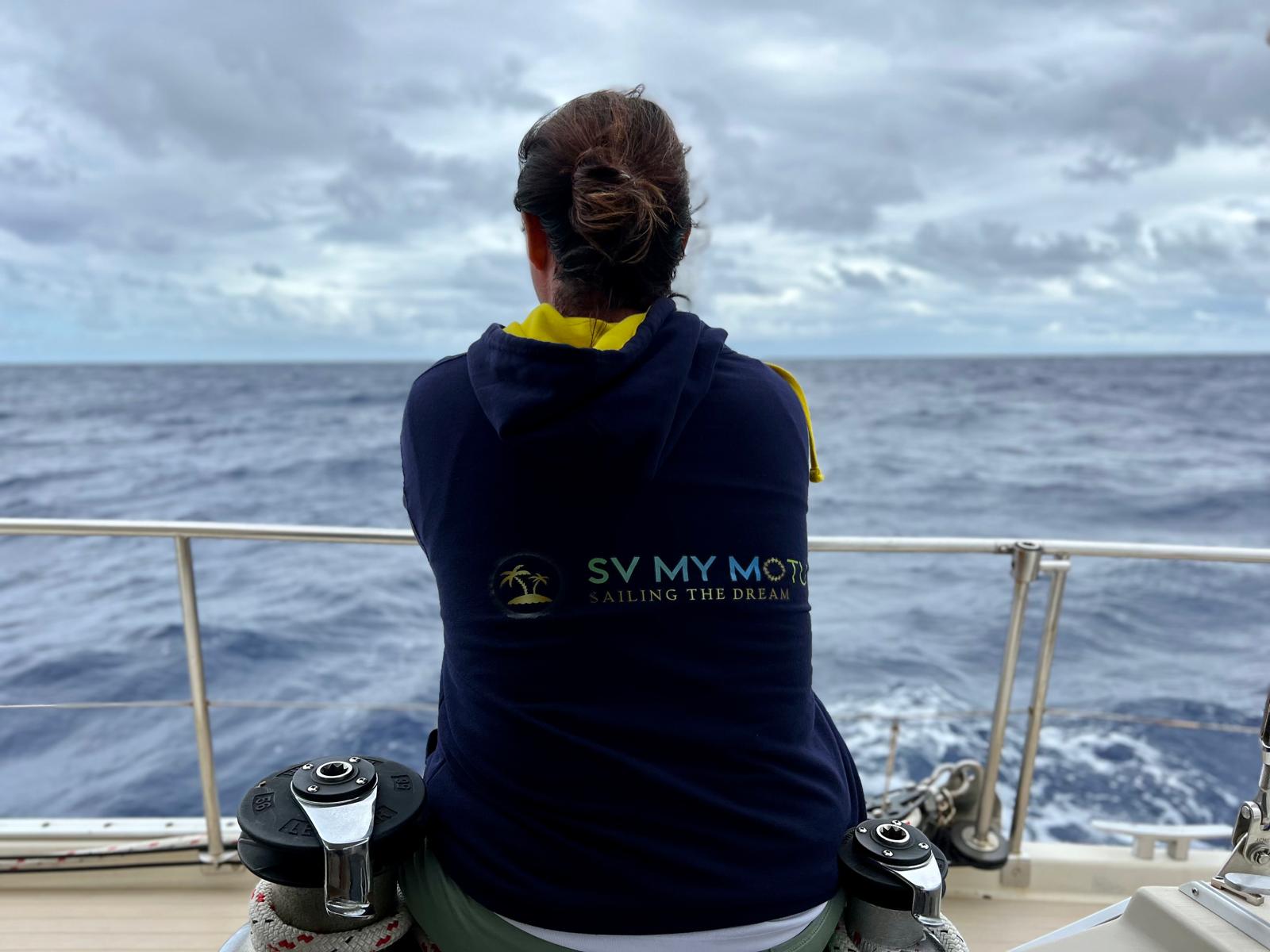
Writing our blogs and writing Wild Side have both become part of our lives, but they give me different kinds of pleasure.
In the blogs, I try to describe our experiences in a way that lets you travel with us for a little while. With the novel, the adventure often begins when I do not yet know how something will turn out. A conversation can take an unexpected direction, or a character can do something that makes me reconsider what happens next.
It became a process of writing, reading back, doubting and trying again. With stories from our travels in the back of my mind, Karin’s comments beside me and a growing curiosity about the people coming to life on my screen.
So, how much of us is in Wild Side?
Enough to recognise something now and then. A thought, a reaction or a moment on board.
But Saar and Pim have developed lives of their own. And believe me, that gives me a wonderful amount of freedom as a writer. ❤️
Perhaps you have been reading our blogs for a while and are curious to discover what happens when I let my imagination loose in that familiar world. If so, I would love to invite you to sail along with Saar and Pim too.
MESSAGES ON BOARD
Leave a message
Share a thought, question or greeting. Aagje reads every comment before it appears here.
Loading comments…