
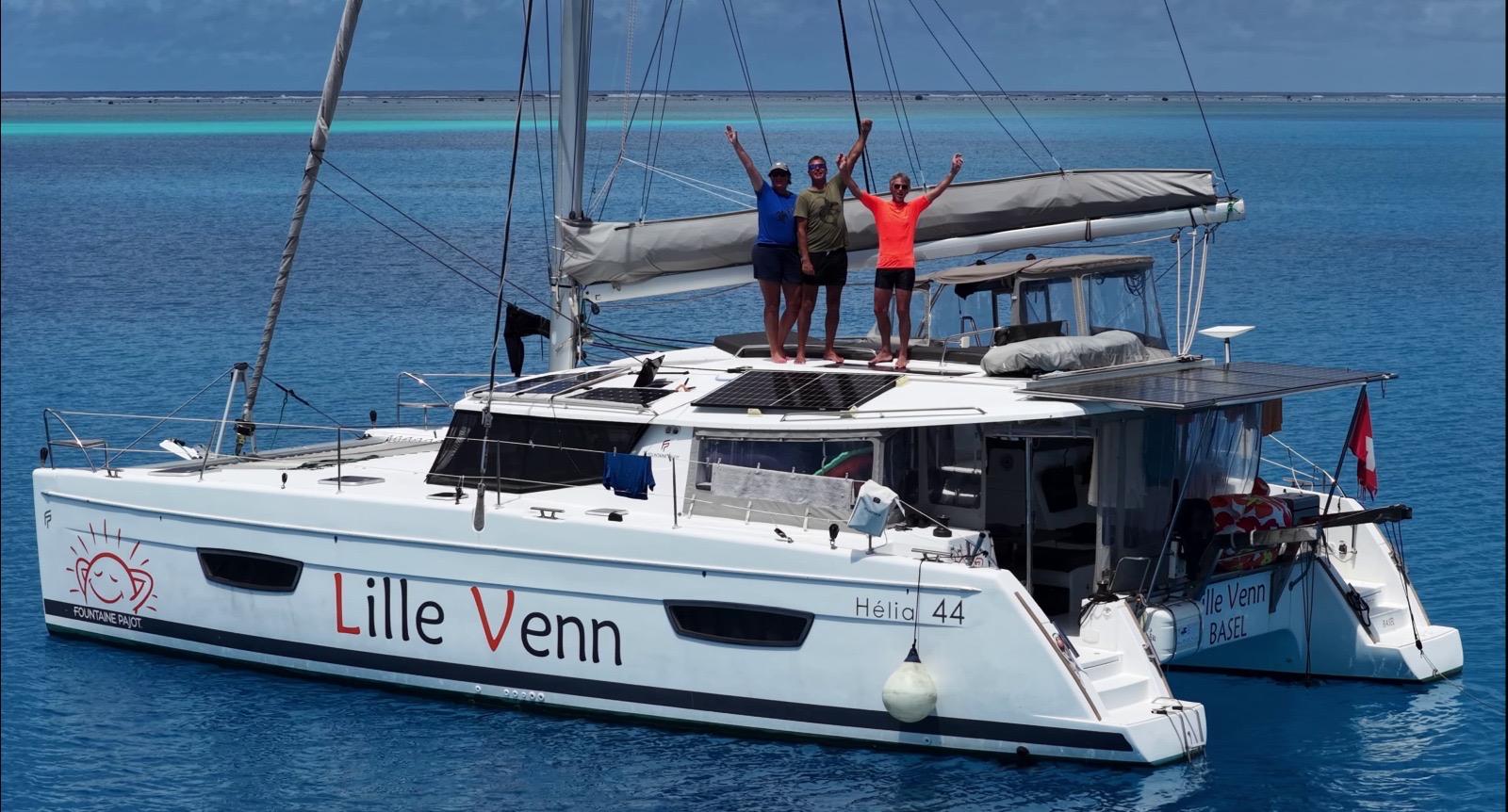
How do you describe a place where you can drop anchor in the middle of the ocean, with no land around you, while beneath the boat lies a world you could keep watching forever? You have to zoom in quite a long way on the chart before Minerva Reef becomes anything more than a name surrounded by endless blue. We have been here for almost two weeks now, and there are still moments when we look at each other and say: are we really here?
It is a place where you can walk across the reef at low tide, only to find it covered in water a few hours later, where the ocean surrounds you on every side and so much is happening beneath the surface that you hardly know where to look first. And the more you learn about Minerva, the more extraordinary it feels that we get to spend our days here.
My Motu stays in Fiji
Before we reached this remarkable place, there was still plenty of work to do in Vuda. My Motu would be staying in Fiji for the coming months, including cyclone season, and leaving our floating home behind was not something we could do without preparing her properly. As we could not enter the marina straight away, we started tidying, cleaning and stowing everything as securely as possible while we were still outside the harbour. The genoa came down, the mainsail and mizzen were fully furled, and the side panels of the bimini were cleaned and brought inside, along with the cockpit cushions. The dinghy found a place on the aft deck, and gradually the outside became emptier while the inside became fuller.
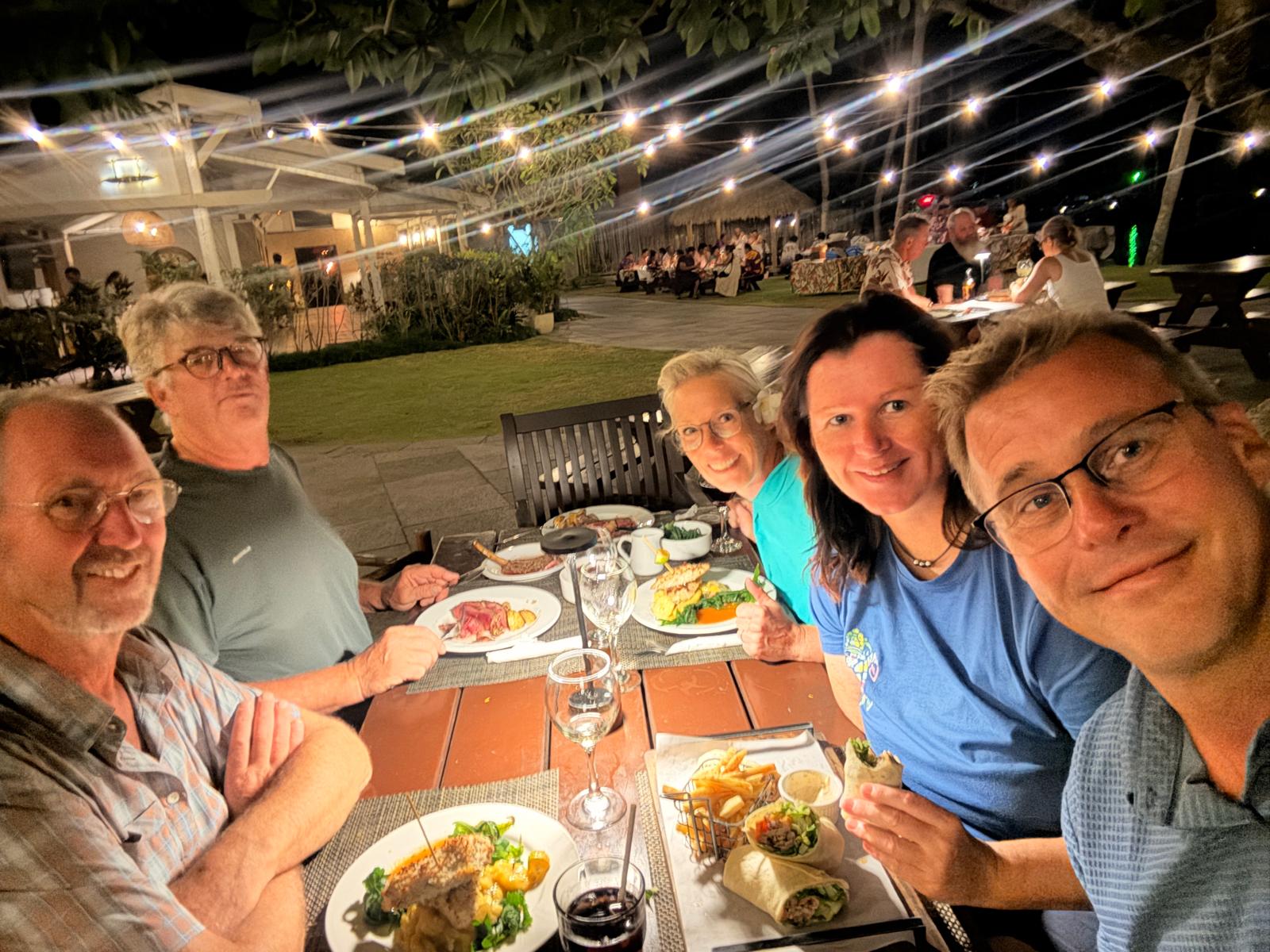
Luckily, we had already put our suitcases aboard Ralph’s boat in Kadavu, because there would hardly have been room for them among everything we had packed away. It is a strange feeling, preparing your own home for a period when you will not be there. You take another walk around, check one more thing, and immediately think of something else you might have forgotten.
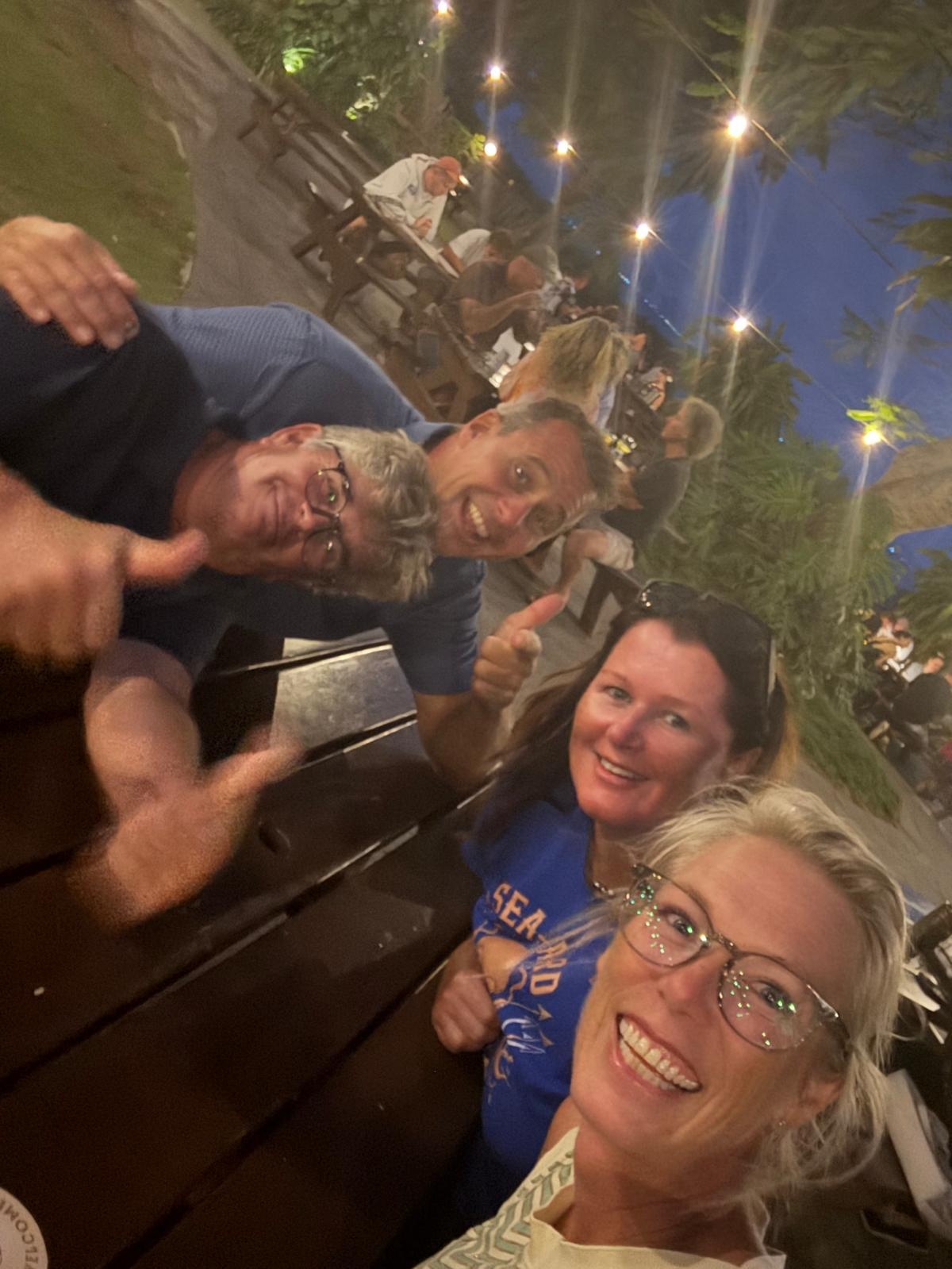
Fortunately, there was more to Vuda than lists of jobs. Damaris and Rudolf from Caroussel were there too, and from the moment we arrived, I took a break from cooking. Every day we went out for a meal together at the marina, spending hours chatting about our travels, our plans and everything else that comes up when you see each other again. After a day of cleaning and carrying things around, it was lovely to sit down and spend the evening together.
On 1 October, we were able to enter the marina and finish the last few jobs. The engine, generator and toilets were flushed, the SUP boards went inside, and we checked everything that might come loose. Once the marina inspection was done as well, there was little left to do except trust that we had prepared everything properly.
On 3 October, at a quarter past six in the morning, we climbed into a taxi to the airport. We were going sailing, but My Motu was staying behind. It felt a little as though we were secretly going on holiday without her.
A different boat and a familiar blue companion
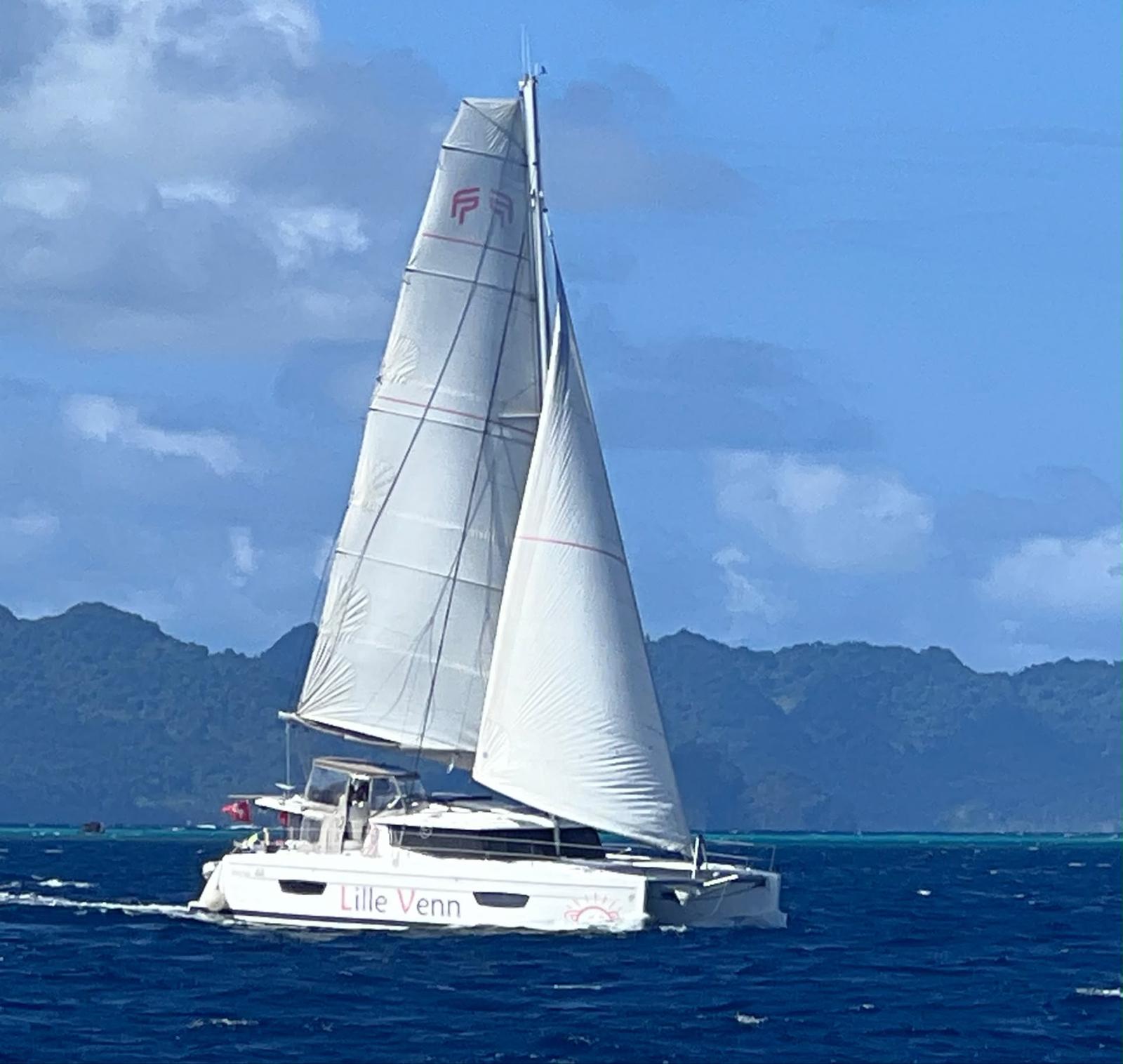
In Suva, we stepped aboard Lille Venn. Barbara was in Switzerland, so there would be three of us making the passage: Ralph, Jeroen and me. After the final shopping, we went to immigration and customs to clear out, where we were told that we then had to leave within an hour. That made the schedule very straightforward: anchor up and off we go.
And we could go to Minerva Reef! All three of us had been hoping for this, although the weather conditions had not looked favourable for quite some time. Knowing that we could now make it there made our departure even more special.
Our first experience of sailing on a catamaran was quite an introduction. With around twenty knots of wind, waves of two and a half metres and a close-hauled course, I quickly discovered that Lille Venn moved very differently from My Motu. Our own boat heels and moves through the waves in a way that has become reasonably predictable to me, but the movements here sometimes caught me completely by surprise. The water slamming against the underside between the hulls was particularly impressive. You know where the noise is coming from, but some of those bangs still made me look up.
Walking through the boat felt as though I had been drinking heavily, despite not having touched a drop of alcohol. My legs were expecting My Motu’s movements, and Lille Venn clearly had other ideas. During the day I managed reasonably well, but once darkness fell and the horizon disappeared, my familiar blue companion made another appearance: the bucket. It turned out that the one aboard Lille Venn was blue too. Apparently, some things are the same everywhere.
That night, my world was not much bigger than my seat, the bucket and the hope that my watch would soon be over. I was so relieved when I could finally go to bed. I spent most of the following day sleeping, while Jeroen and Ralph, who fortunately felt absolutely fine, kept an eye on everything. Around five o’clock, I came back up and announced, “I am back.” And thankfully, I really was. After something to eat, I felt human again, and that night I was back on watch as usual.
Meanwhile, the waves settled down, and we enjoyed beautiful sailing weather for the final day and a half. Fortunately, that gave me plenty of time to enjoy the passage towards a destination that was getting closer and closer, yet remained completely invisible on the horizon.
Arriving with no land in sight
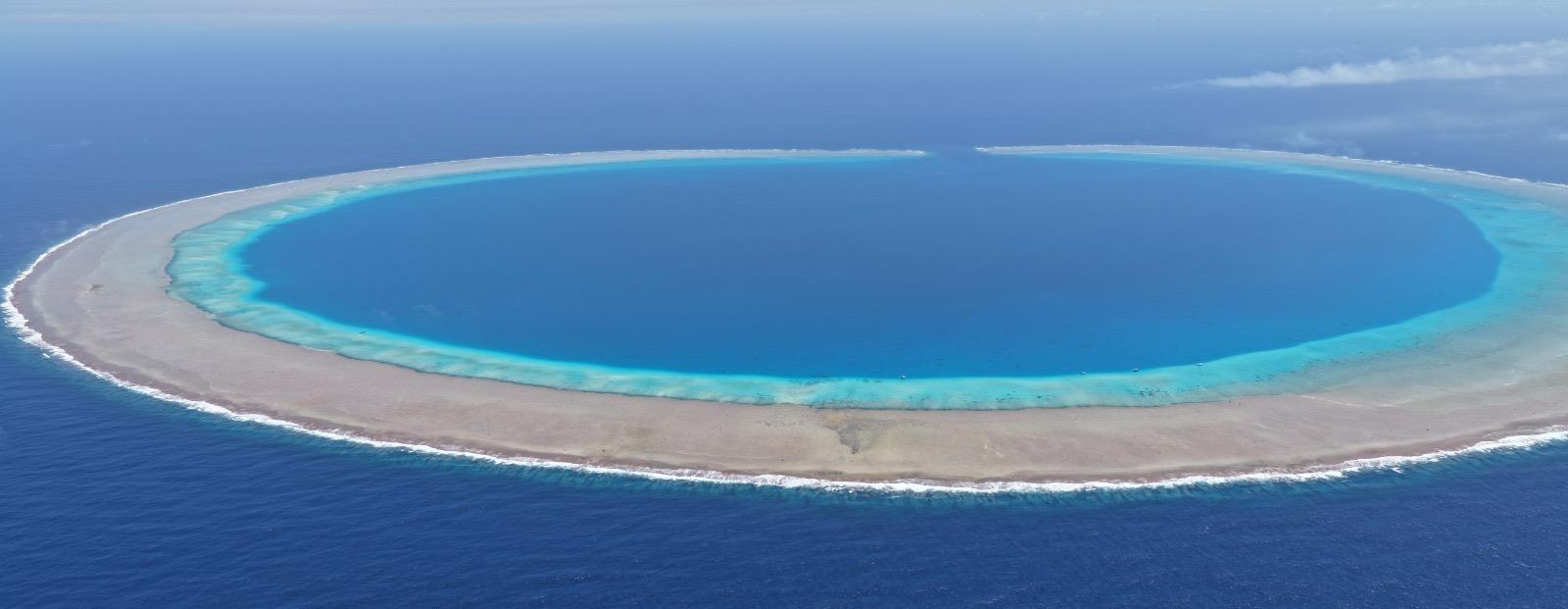
That is what makes arriving at Minerva so extraordinary. You look for land, but no island appears. No mountain, no trees, no coastline slowly drawing closer. Only when you see the waves breaking along the reef does this almost invisible destination begin to take shape. Beyond it lies the lagoon, sheltered from the ocean waves by a rim that largely disappears beneath the water at high tide.
What we usually call Minerva Reef is actually made up of two separate reef systems: North Minerva and South Minerva. The northern reef forms an almost complete ring around a lagoon, while the southern reef, with its two connected lagoons, resembles a large figure of eight. These are atolls without the familiar sight of a palm-fringed beach, a village or a patch of land where you can go ashore for a while.
The reef breaks the ocean waves, providing shelter inside the lagoon, but the sea still makes its presence felt. At high tide, more swell can roll across the reef, and the wind can also build waves within the lagoon itself. Here, the tide determines not only when you can walk across the reef, but also how much of the surrounding ocean you feel aboard.
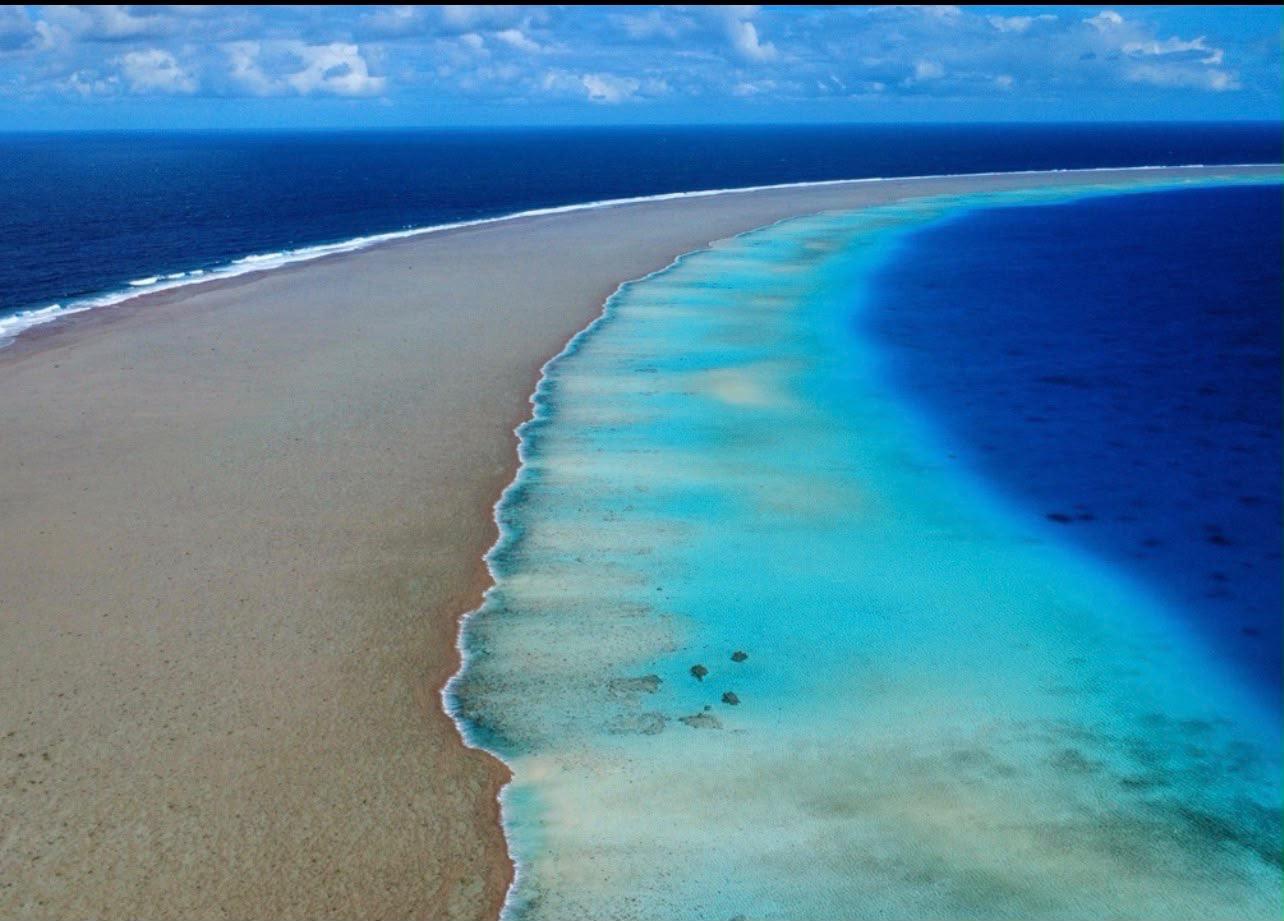
Around nine in the morning, we sailed in and dropped anchor. After all the movement of the passage, we suddenly found ourselves lying peacefully, surrounded by water in every shade of blue. Jeroen and I did not spend very long admiring it from the deck, because as soon as we could, we were in the water ourselves.
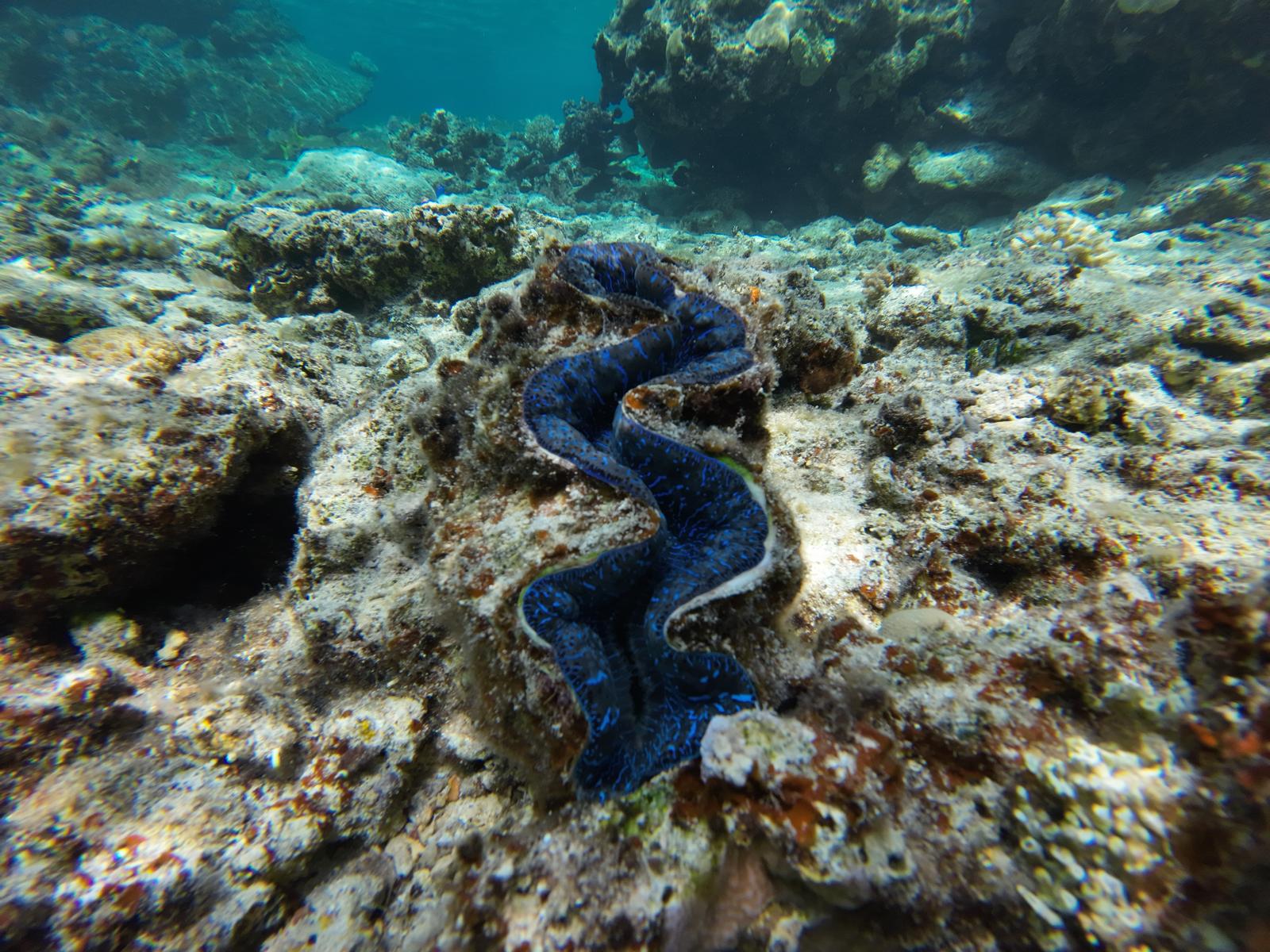
And what a world opened up beneath us.
Beneath the surface, you never stop looking
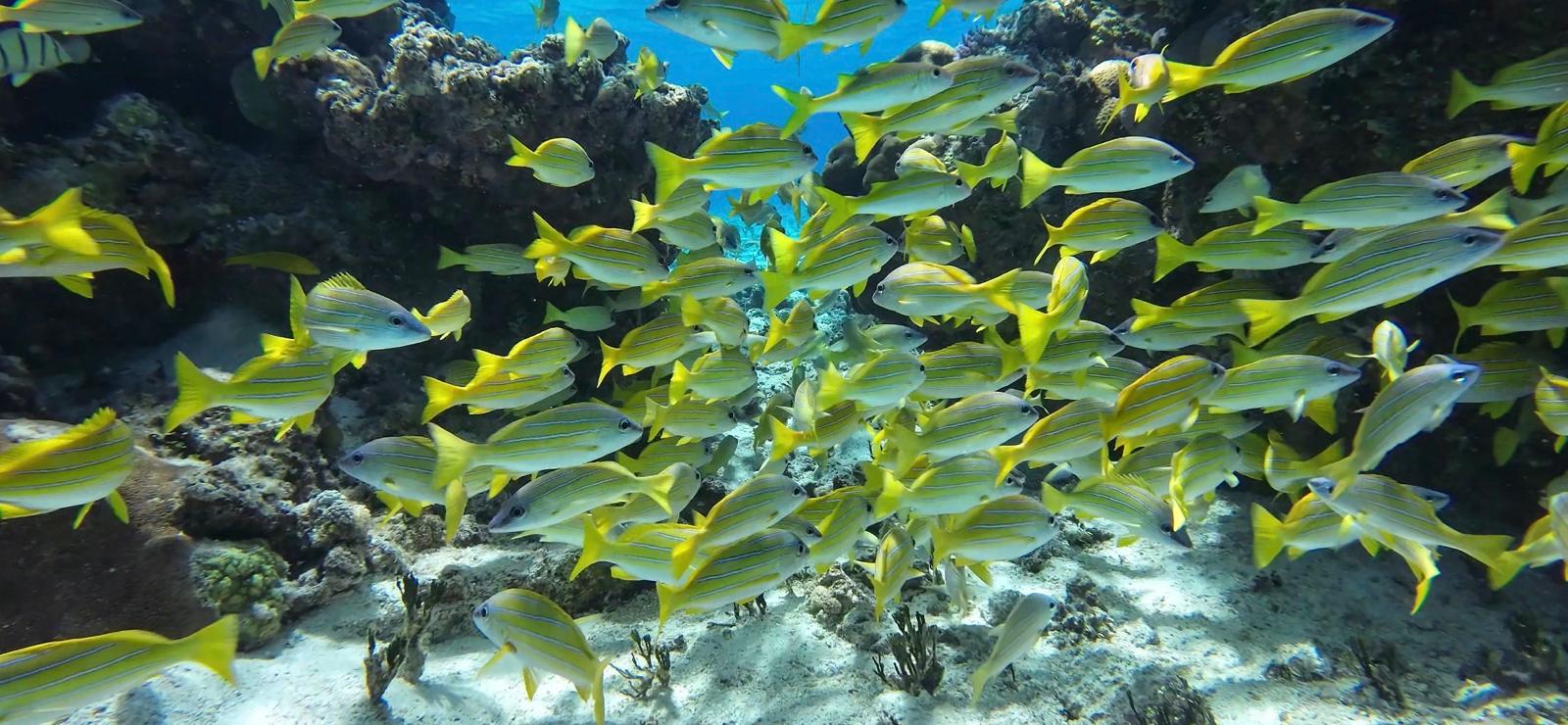
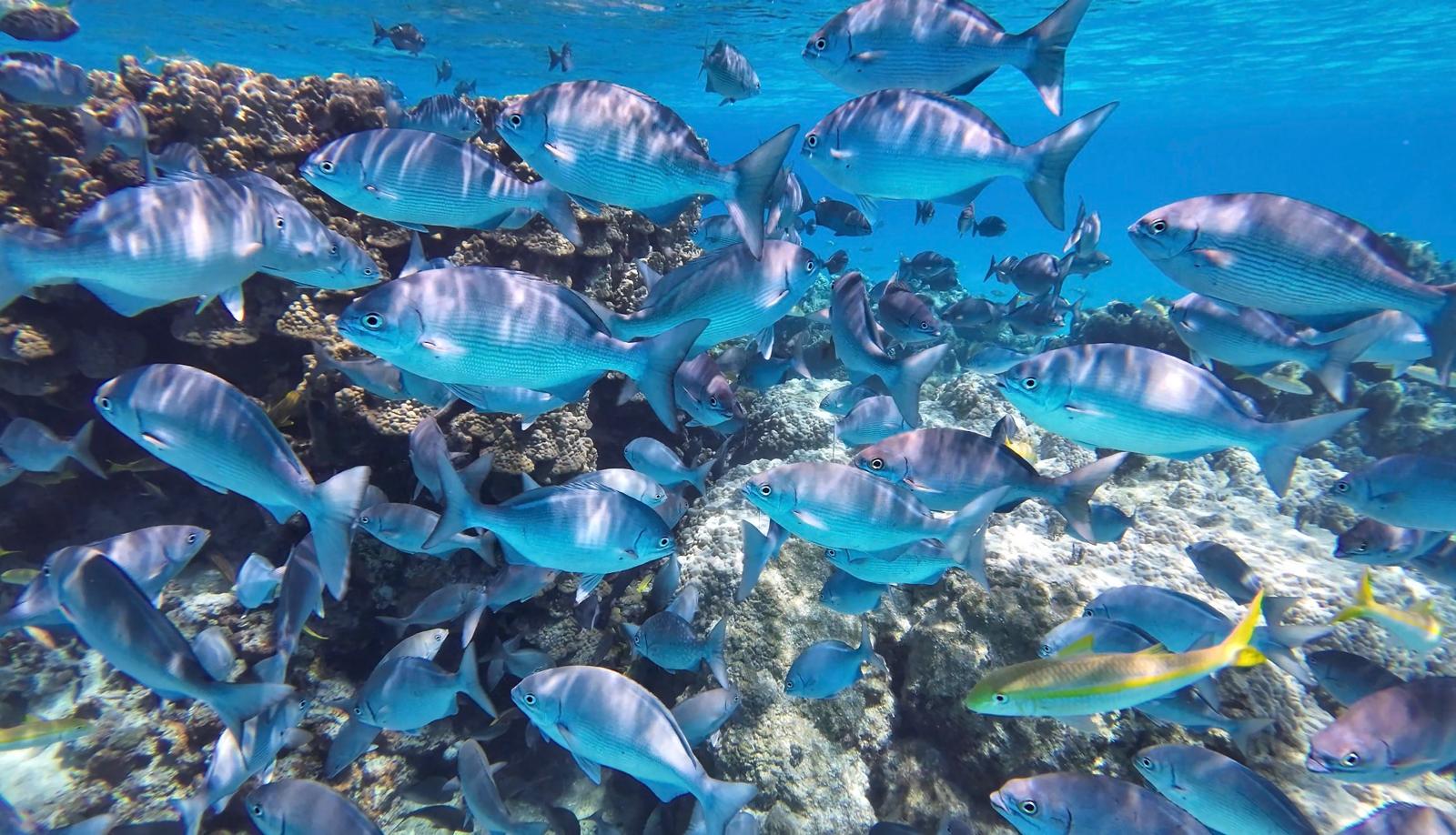
On days with little wind, the water was calm enough for us to snorkel outside the reef as well. There, we swam above canyons and along steep drop-offs, with the deep blue of the ocean beside us. Large schools of barracuda and trevally moved along the reef, changing direction together as their flanks flashed in the sunlight. Enormous groupers swam among them, some even bigger than the sharks we saw. You wanted to look everywhere at once, because something was always moving somewhere.
Naturally, there were sharks too, and anyone who knows me a little will know that I prefer to admire them with a comfortable amount of space between us. From a distance they are beautiful, but when they become curious and come closer, my admiration grows a little less relaxed. We estimated the largest at almost three metres. At that point, I look at the shark, then at the dinghy, then back at the shark, while my heart gets a head start on a serious workout.
A few times, I decided I had seen quite enough and was back in the dinghy surprisingly quickly. This turned out to be rather convenient for the men: they no longer had to tow the boat behind them and could explore the canyons more freely while I kept watch from above the water. So my fear of sharks does have its uses after all.
At low tide, we could walk across the exposed reef, all the way to the outer edge where the ocean waves were breaking. Behind you, the boat lies in the lagoon; ahead of you, the waves roll in; and beneath your feet is a landscape that will disappear underwater again within a few hours. We rarely made very quick progress, because there was something to discover in every pool.
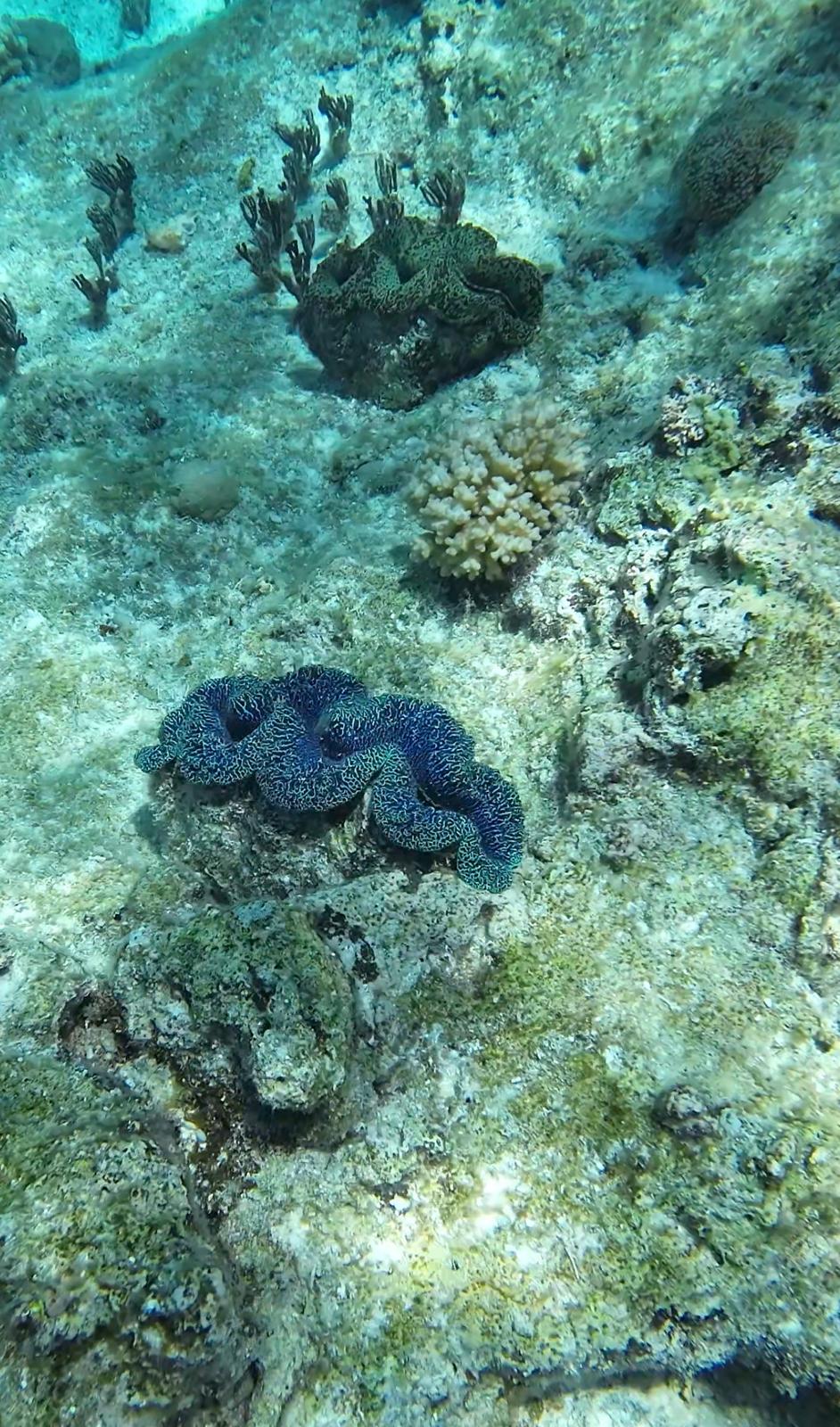
The giant clams were particularly beautiful. Their mantles were vivid blue, purple, turquoise and green, with patterns you could spend ages examining up close. Just when I thought one could not possibly be more beautiful, I would find myself leaning over another a few metres farther along. I certainly did not have to look very hard for inspiration for Dot’s underwater world.
A reef with an eventful past
Walking here and looking out across the water, it is difficult to imagine how many stories belong to this remote place. Even its name refers to a shipwreck: the Australian whaling ship Minerva was wrecked on the southern reef in 1829, and the reefs were later named after her. That barely visible rim, which now provides us with shelter, has caught several ships disastrously by surprise over the years.
One of the most moving stories is that of the Tuaikaepau, a Tongan vessel that struck South Minerva in 1962 while on passage to New Zealand. The seventeen people aboard found shelter in the wreck of a Japanese fishing boat that had been lost there earlier. For more than three months, they struggled to survive on the reef with limited supplies and a shortage of drinking water, waiting for help that never seemed to come.
Eventually, Captain Tevita Fifita set off towards Fiji with his son and another man aboard a makeshift craft they had built themselves. They reached Kadavu, but his son drowned just before they made it ashore. The other two were able to raise the alarm, and the New Zealand air force rescued the survivors who remained on the reef. Four men had already died there.
Kadavu, where we had been so recently, putting our suitcases aboard Ralph’s boat. That familiar name suddenly brings this history closer. For us, Minerva is a place where we are happy to stay a little longer, with a well-equipped boat, food, drinking water and contact with the outside world. How different that same endless horizon must have felt to people stranded here, not knowing whether anyone would ever find them.
And as though Minerva did not already have enough extraordinary stories, in the early 1970s someone even tried to establish a country here. American businessman Michael Oliver had sand brought in to create land above the water at North Minerva, and in 1972 the Republic of Minerva was proclaimed. Tonga, however, claimed the reefs and brought the initiative to an end that same year.
I try to imagine someone standing here, looking at the breaking waves and thinking: this seems like a good place for a country of my own. We already find it remarkable that we can drop our anchor here.
A speedboat in the middle of the ocean
Between all the swimming and exploring, we had some unexpected visitors one day. Jeroen was standing on the aft deck when he suddenly spotted a speedboat approaching. He rubbed his eyes to make sure he was seeing it right. A speedboat, here at Minerva Reef? We were hundreds of kilometres offshore, so it certainly was not the sort of boat you expected to see.
But his eyes were not deceiving him. It turned out to be the Tongan coastguard, whose mother ship was waiting outside the reef. They asked us to move to the southeastern part of the lagoon because they were going to carry out exercises and hydrographic surveys. There we were, in the middle of the ocean, with nothing but water around us, and somehow we were still in exactly the wrong spot.
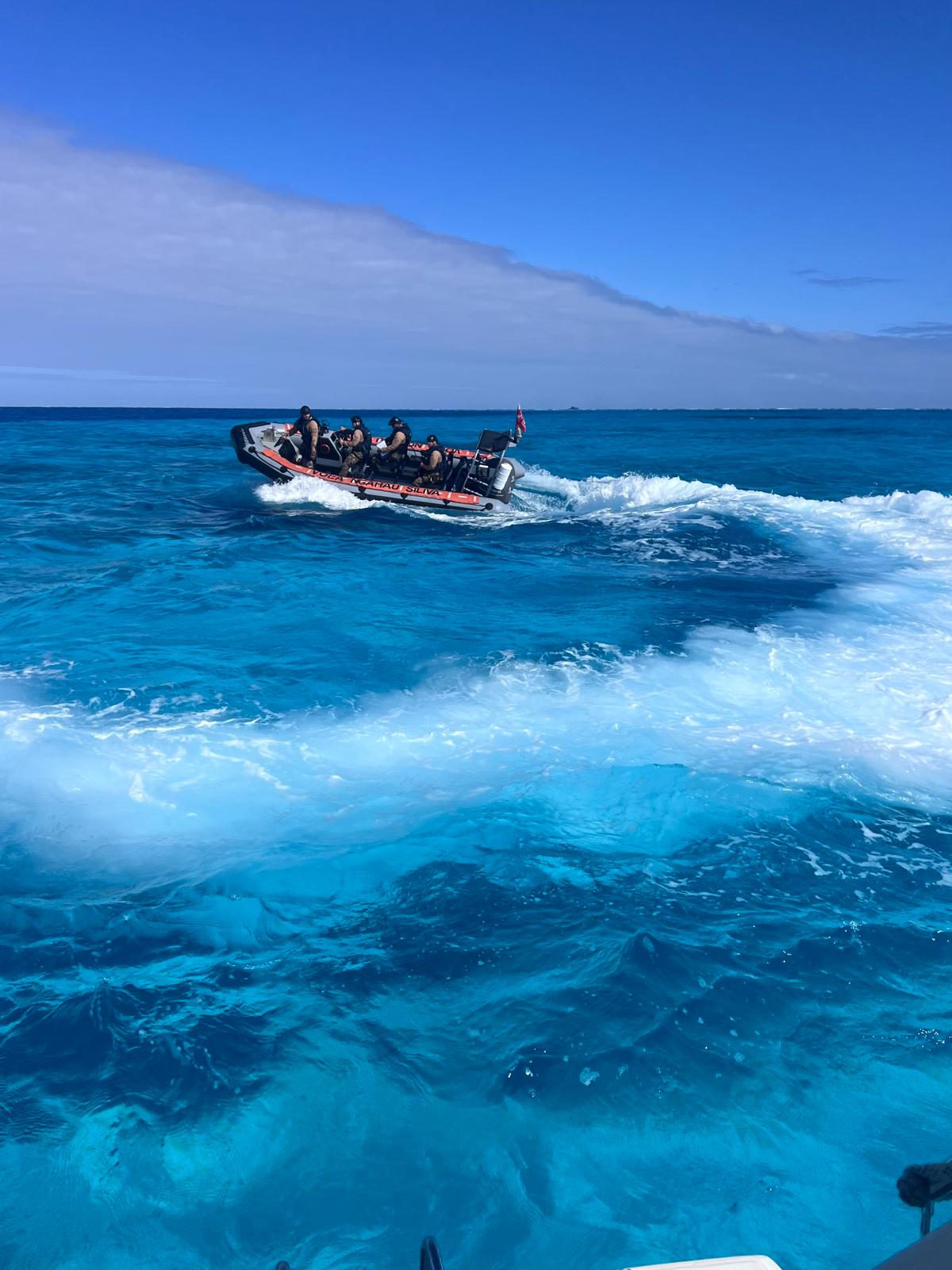
Tonga’s patrols here fit into the history of the reefs. Fiji has also laid claim to Minerva, and over the years this tiny place on the chart has repeatedly been the subject of disagreement between the two countries. Reading about that history gives a visit like this a little more context.
For us, it mostly meant lifting the anchor and moving a little farther along. Apparently, even in one of the most remote anchorages of our journey, you occasionally have to make room. Luckily, the view was just as beautiful, and we got to admire Minerva from a different angle.
Our days between the reef and the ocean
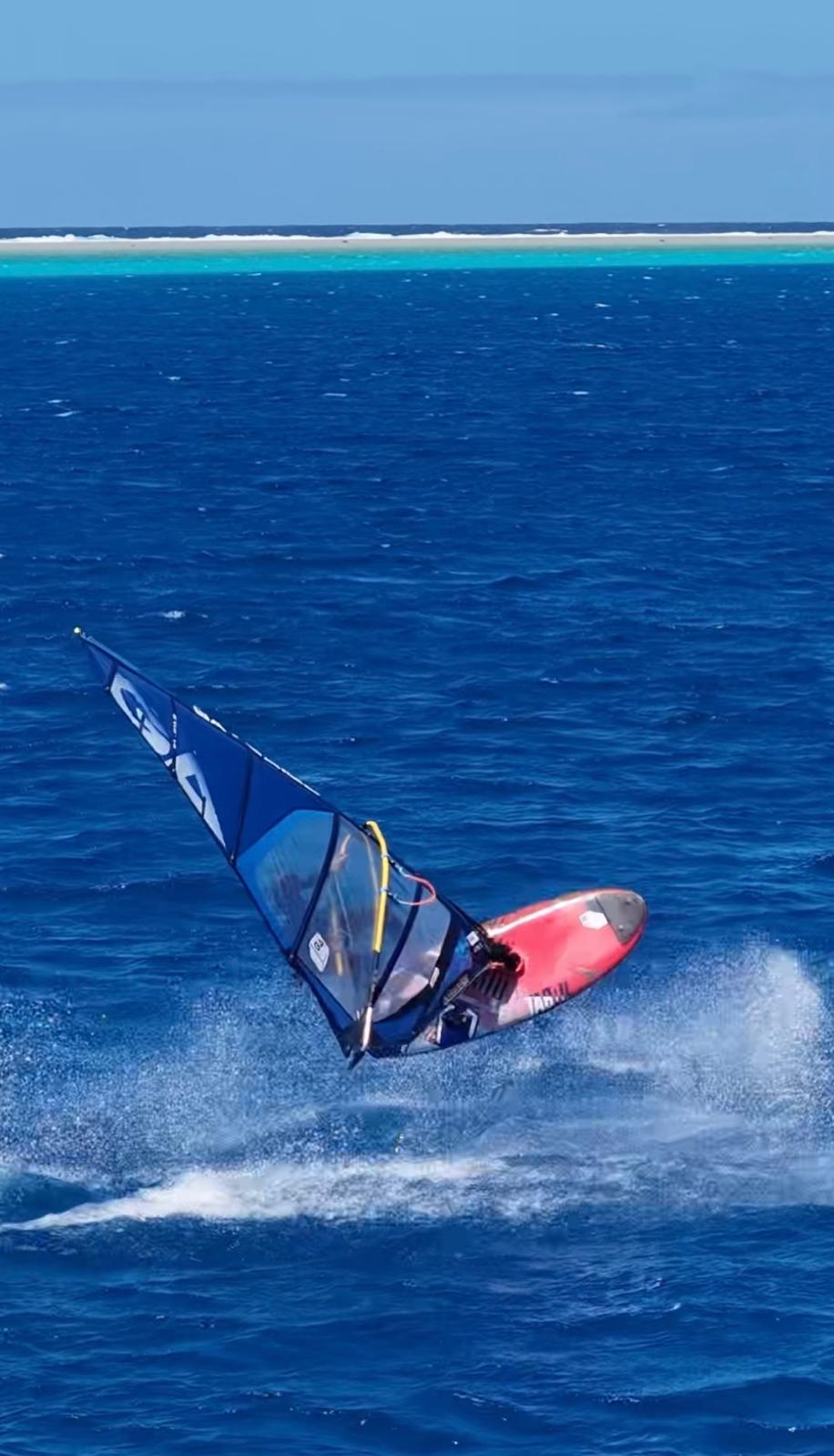
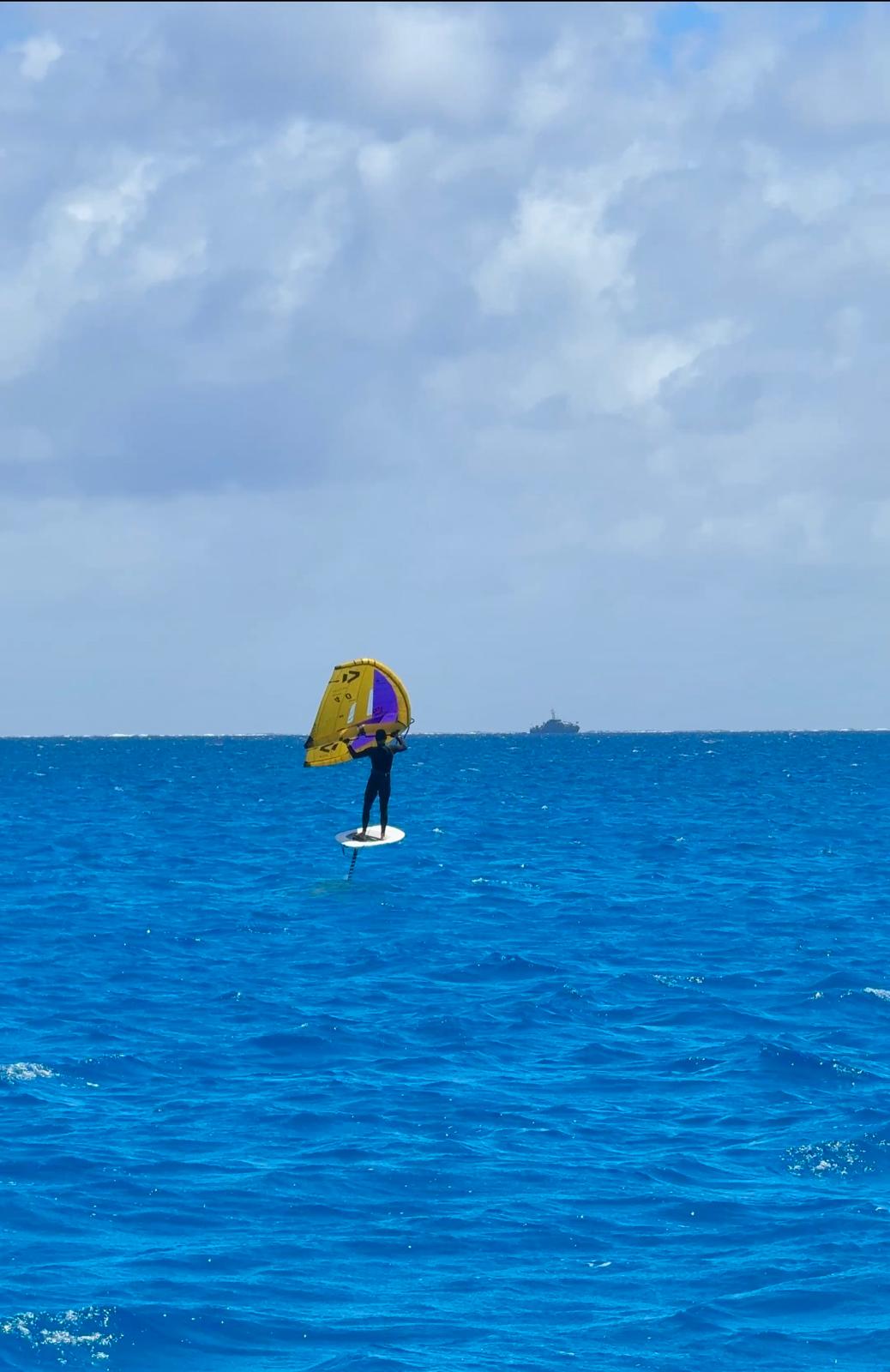
When the wind picked up, our activities naturally changed. Jeroen enjoyed windsurfing, while Ralph went kitesurfing and wingfoiling. On calm days, we disappeared beneath the surface with our snorkelling masks; on windy days, the men skimmed across the lagoon. And in between, there was time to work, eat together and follow the weather forecasts for the passage to New Zealand.
That is another special side of Minerva: for many sailors, it is a stopover on the journey north or south, somewhere to catch their breath and wait for the weather to allow the next passage. Between those distant destinations, a temporary gathering of boats can suddenly form, each with different stories behind them and another adventure ahead.
More boats have arrived now, and together we are waiting for a suitable moment to continue. We are keeping a close eye on the weather too. New Zealand is waiting, along with a very different chapter, but for now we are still enjoying this place we had so hoped to visit.
Sometimes I stand on deck and look at the waves breaking in the distance while Lille Venn lies quietly at anchor. It remains difficult to grasp that such a low reef can provide enough shelter for us to live here, sleep, cook and simply go about our days, with the ocean surrounding us on every side.
Soon, Minerva will disappear behind us, and there will be nothing but water on the horizon again. But whenever I look at that tiny spot between Fiji and New Zealand on the chart from now on, I will see the colours of the lagoon, the giant clams in the pools and the schools of fish along the outer reef. And somewhere among them, I will see myself climbing into a dinghy rather quickly.
That, too, is part of our Minerva.
See more in our Gallery
And because words can only show part of what we have discovered here, we would love to take you a little farther in our Gallery. There, you will find more photos and videos from our days at Minerva Reef, from walking across the exposed reef to exploring the colourful world beneath the surface. Come and have a look, because some encounters are best shared through the images themselves.
A lovely spot for my books in Amersfoort
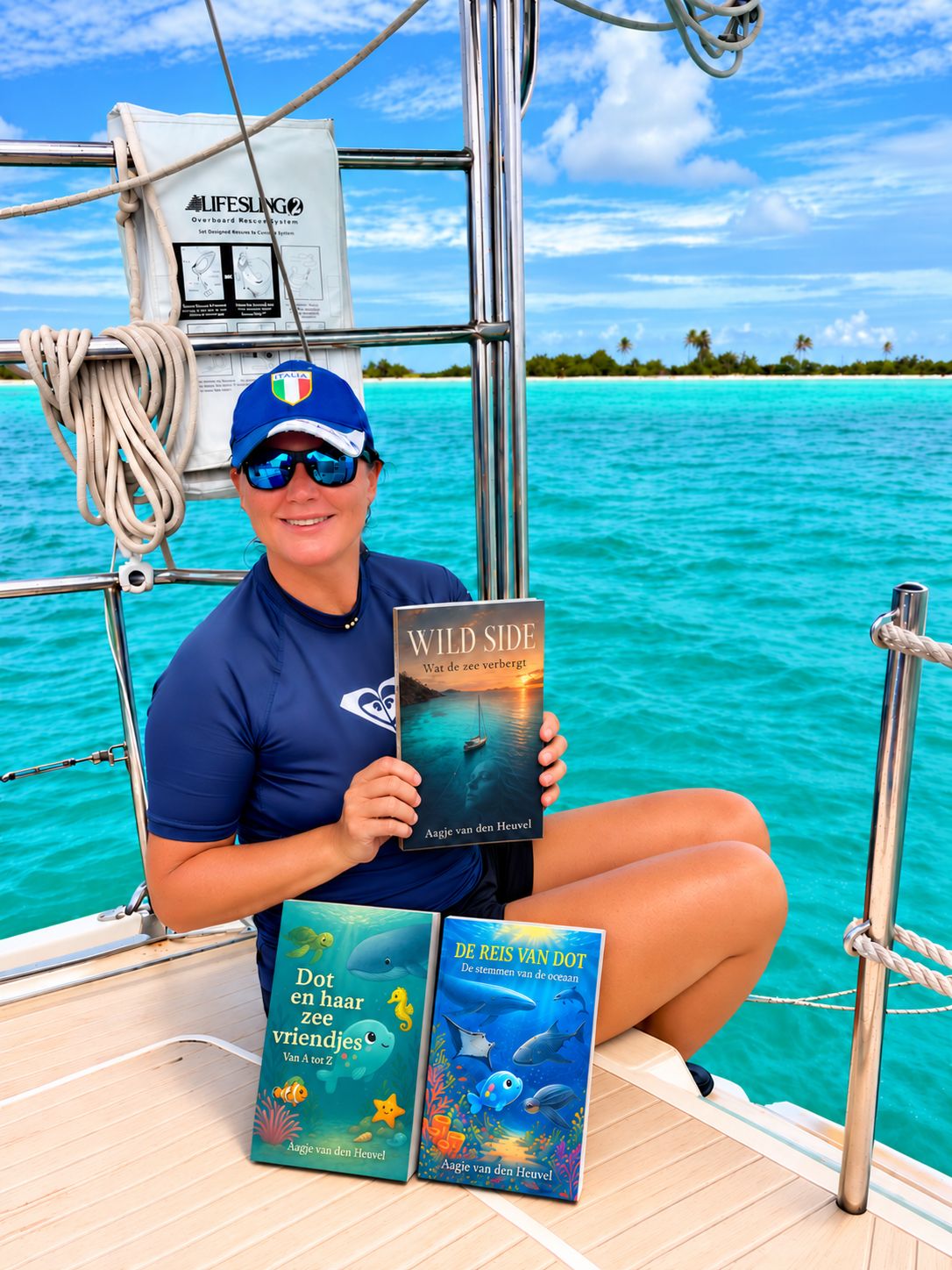
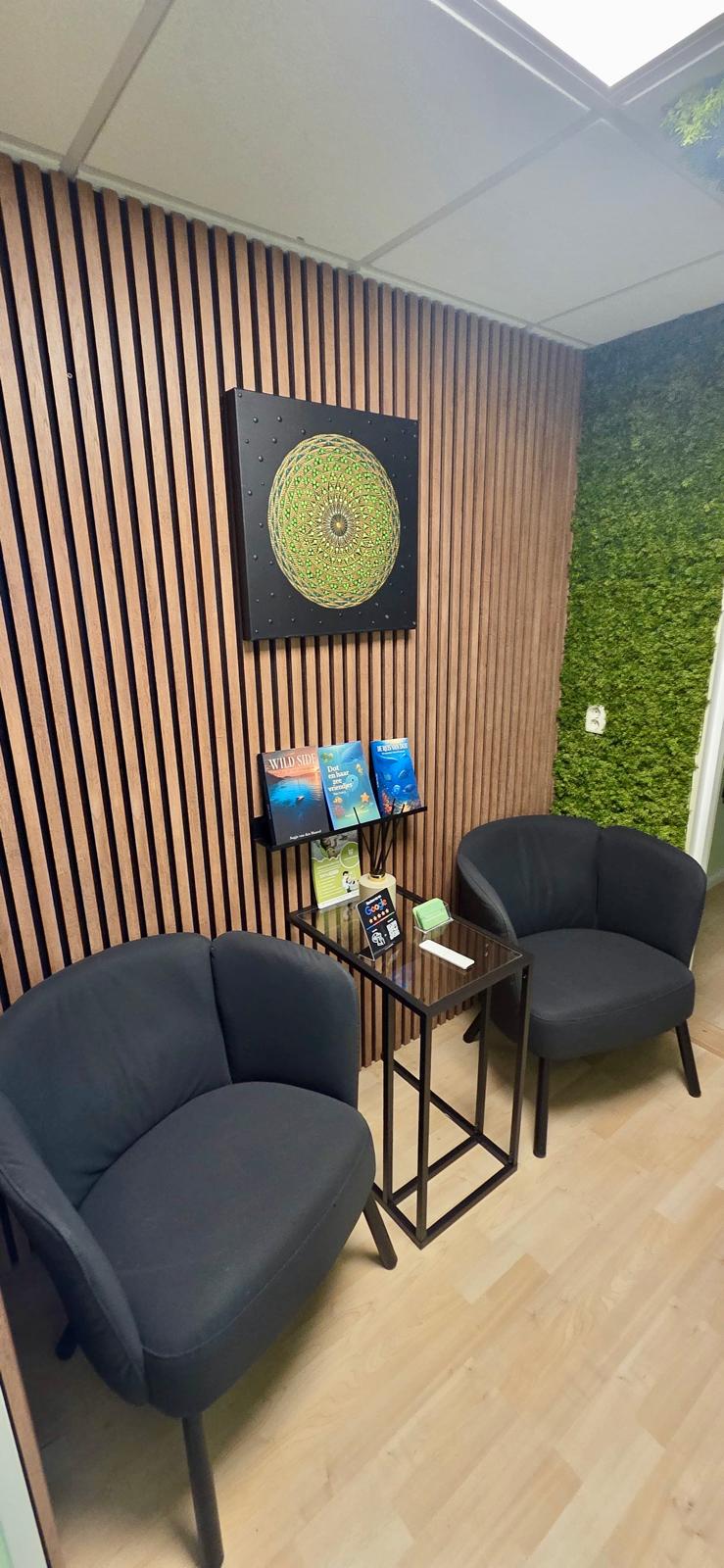
And one more thing that makes me very happy: while we are sailing on the other side of the world, my books have found a lovely spot in Amersfoort too. Wild Side, Dot en haar zeevriendjes and De reis van Dot – De stemmen van de oceaan are now also available to buy at Mondzorg Amersfoort, at Wiekslag 229.
Achmed has created a special display for them in his waiting room. It is incredibly kind of him to showcase my books this way and help my stories find their way to new readers. Thank you, Achmed, for this lovely gesture and your support. I am so grateful! Now there is a little piece of our ocean world to discover in Amersfoort too.
MESSAGES ON BOARD
Leave a message
Share a thought, question or greeting. Aagje reads every comment before it appears here.
Loading comments…