
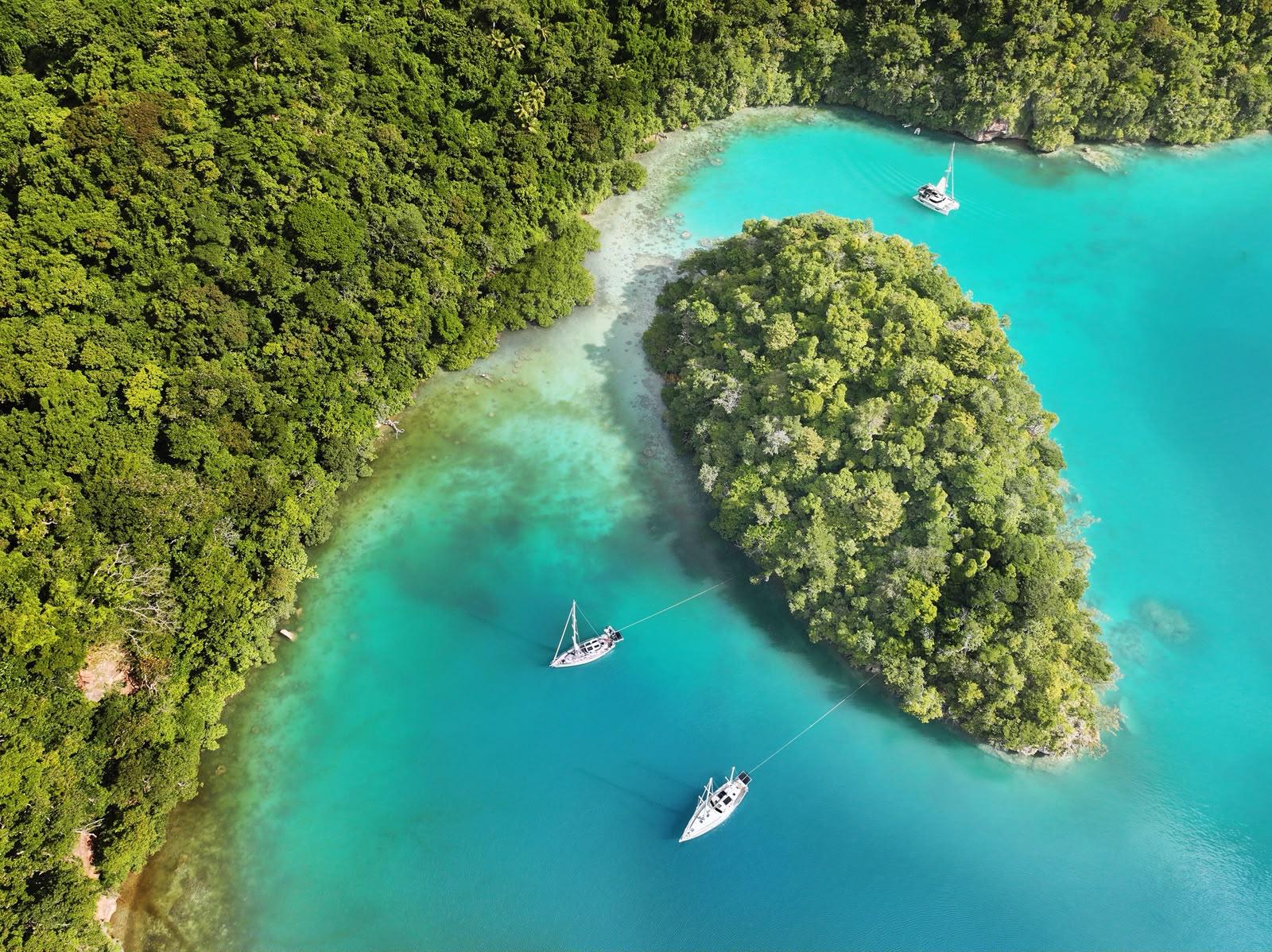
As soon as Tess boards the plane to Australia, calm returns on board My Motu. Just a few hours ago, the boat was filled with stories, laughter, and the enthusiasm of someone discovering Fiji for the first time. Now it is just the two of us again.
It remains remarkable how quickly a boat adapts to the people living on it. For a week, My Motu was the setting for pleasant conversations, shared outings, and all the impressions Tess gathered during her first introduction to Fiji. As soon as she leaves, the atmosphere changes again naturally. Jeroen and I effortlessly pick up our familiar rhythm. We always love having visitors on board, but enjoy the peace and quiet just as much when we continue sailing together. Our life on board changes constantly. Sometimes we sail with guests; for years we shared this adventure with Rajesh, and now it is just the two of us again. Every phase has something special, and it is precisely that variety that makes this life so beautiful.
Our first destination is Savusavu. Not for a tropical getaway or a pleasant lunch by the water, but for something far less romantic: a visit to immigration. We are allowed to stay in Fiji for another two months, and for that, we only need the official stamp. As soon as it is in our passport, our next adventure can begin.
Or well... almost, anyway.
Because first we have to go grocery shopping.
A whole. Lot. of. Groceries.
Not only for ourselves, but also for Barbara and Ralph van Lille Venn . They are located together with Flora . We are now at Ogea and have sent them a shopping list. We are happy to set off for them. As our own shopping cart slowly fills up, their favourite products also disappear one by one among our groceries.
Over the next few days, we slowly transform into professional grocery haulers. We walk from supermarket to supermarket, browse the fruit and vegetable market, and drag bags full of provisions back to the dinghy. Once on board, perhaps the biggest job begins: finding a place for everything. After all, on a sailboat you can't just open an extra kitchen cupboard. Every bag of rice, every can, and every bottle has to be in exactly the right spot. Only when the last groceries have been put away, and My Motu is ready for weeks at sea again, do we look at each other with satisfaction.
So... we can hit the road again.
In between all the grocery shopping, we also meet Umberto, a Dutchman who has been sailing his catamaran through Fiji for years. It is one of those encounters where you think it will be just a short chat, but before you know it, you are standing there listening, captivated, for quite some time.
Umberto talks about the special bond he has built with Fiji. Years ago, he sailed around here for nearly three years with his mother, who was already ninety at the time. As he speaks about her, you can still see how much she meant to him. His mother is now buried on Ogea, a place that has taken on an even deeper meaning for him as a result.
The bond with the local population has also only grown stronger over all those years. So strong, in fact, that the residents have gifted him a piece of land. Not because he ever asked for it, but as a token of appreciation and because they feel that he now belongs to their community.
It is one of those encounters that makes us realize once again that travel is so much more than beautiful anchorages or impressive landscapes. Ultimately, it is the people you meet along the way and the stories they share with you that capture a place in your heart.
A few days ahead, the weather forecasts finally seem to be cautiously heading in the right direction. In about a week, a nice weather window could very well open up to set course for the northern Lau Group. Of course, by now we know better than anyone that long-term weather forecasts are far from always accurate. Nevertheless, we are already starting the preparations. It is better to be ready if the weather suddenly does cooperate.
That is why we are moving My Motu to our familiar anchorage at Cousteau Resort. Here, close to the pass, we actually already feel a bit like we are underway. As soon as the right weather window presents itself, all we have to do is weigh anchor and we can leave almost immediately.
If the forecasts hold true, we will hoist sails towards Namena Island tomorrow. From there, we will have a much more favorable sailing angle for the crossing to the northern Lau Group.
The next morning, Umberto stops by for a cup of coffee. We chat a bit more about his remarkable stories and wish each other a safe journey. These are the kinds of small farewell moments that seem so natural, but which are precisely what make sailing life so special. You never know exactly where or when you will meet again.
Not much later, we weigh anchor. Slowly, the contours of Savusavu disappear behind us. The wind is favorable, and My Motu glides relaxed over the deep blue water towards Namena Island. The crossing takes less than four hours. The wind is fresh, but fortunately, the sunshine makes it just pleasant enough not to put on a jacket.
As is often the case, Jeroen has his own way of spending such a crossing. He casts a fishing line, keeps a close eye on the sails, and immerses himself in technical videos on YouTube in between. There is always something new to learn or a clever idea to apply on the boat later.
I am usually at the helm. While keeping an eye on the course, I listen to my audiobook. Meanwhile, my eyes wander almost constantly over the water's surface, searching for fins, birds, flying fish, and, if we are lucky, larger sea creatures.
It is funny how, after a few years at sea, you learn to read the water better and better. Where I used to see only waves, I now recognize more and more often that a small ripple on the water is not caused by the wind or a wave, but by something swimming just below the surface. Sometimes it turns out to be a false alarm; sometimes something does indeed dart away beneath the water's surface. That is precisely why I can hardly take my eyes off the ocean.
On the AIS, we see that several sailboats have the same destination. During our previous visit, we were anchored here all alone. That is why we both look up in surprise when we sail into the bay. This time, there are about eight sailboats scattered across the anchorage. Yet, it feels anything but crowded. There is plenty of space, and the tranquility Namena is known for still surrounds us everywhere. Just a few minutes later, the anchor is dropped, and we enjoy this beautiful spot in Fiji once again.
The days on Namena are flying by. Jeroen and I decide not to go back to the snorkeling spots we visited with Tess this time. The outer reef is so vast that we are actually curious to see what else there is to discover.
As always, our interests underwater are just slightly different. Jeroen mainly hunts for larger fish species and secretly always hopes to encounter sharks. I find that impressive too, but I honestly admit that I am a bit more cautious about it. Especially larger species like hammerhead sharks, bull sharks, and tiger sharks are not something I necessarily want to encounter alone with just the two of us. In a group, together with a dive instructor, it just feels different. Or maybe I just think that a shark has more people to choose from to see who looks the tastiest. 😄
My fear of deep water has actually never completely disappeared in all those years. That might sound strange, because by now I swim almost anywhere. Still, I often pull the dinghy behind me while snorkeling. It probably provides a false sense of security, but the idea that I can always return straight to the boat reassures me. And honestly... that is enough for me.
Fortunately, the chance of encountering large sharks here is much smaller than, for example, in French Polynesia. Instead, we mainly enjoy the enormous schools of tropical fish swimming among the soft and hard coral. The water is so clear that we can effortlessly see the bottom thirty meters below us.
But as soon as we swim a little further from the coast, the landscape beneath us suddenly changes. The colorful seabed gives way to a deep blue abyss where the edge of the reef seems to disappear abruptly. Jeroen swims on without hesitation. I linger for a moment, gripping the dinghy line firmly. Only then do I swim after him. That feeling may never completely disappear... and actually, it doesn't need to.
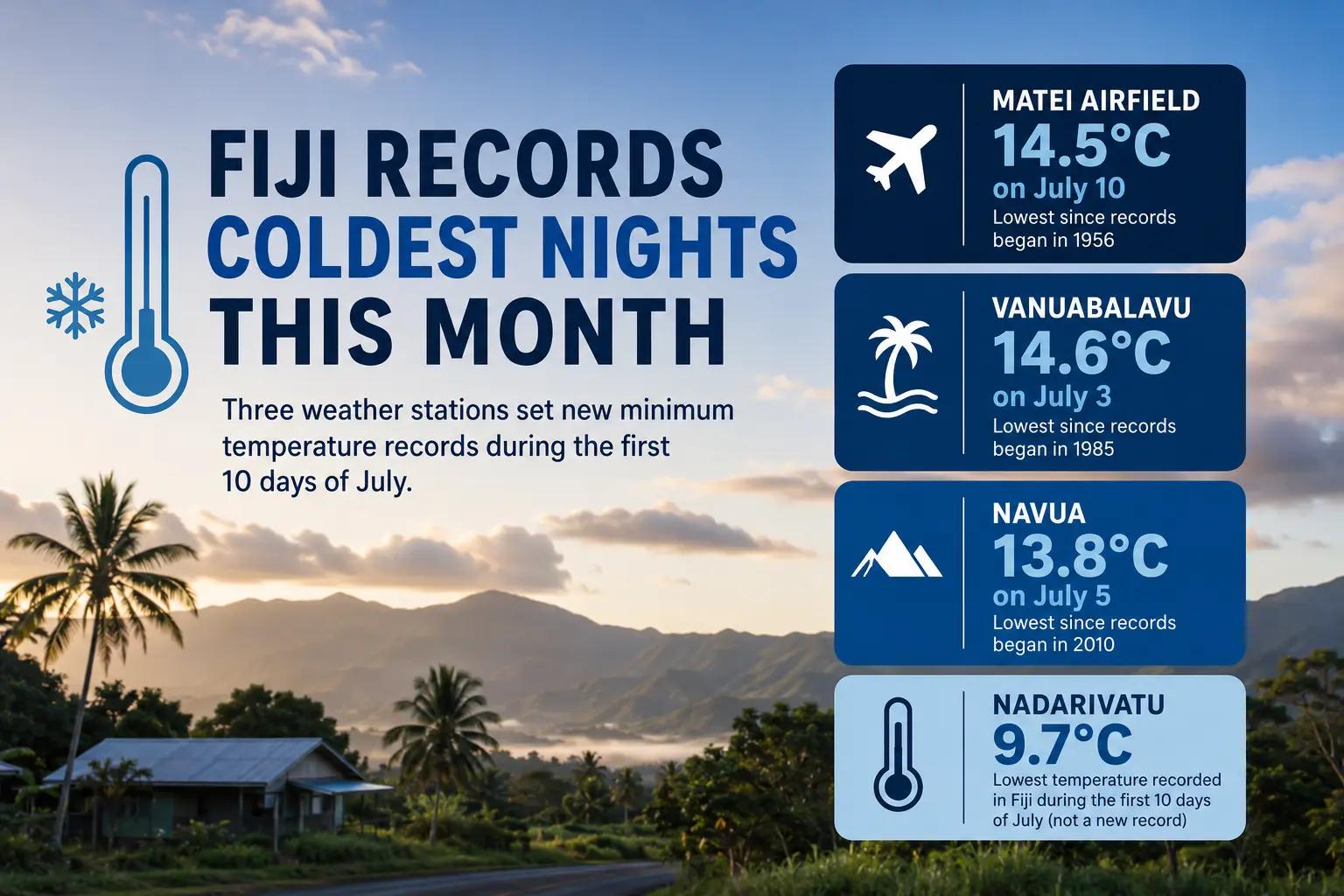
The days on Namena are flying by. During the day, we spend as much time as possible in and on the water, but as soon as the sun sets, we notice that this Fiji winter is different from all the previous ones. For the first time since leaving the Netherlands, we crawl under a thin duvet again in the evenings. During the day, at 23 to 24 degrees, it is still lovely and the water still invites snorkeling, but the nights are surprisingly chilly. Later, we even hear that this is the coldest July since records began. By now, we start every morning with the same ritual: a cup of coffee, checking the latest weather maps, and hoping that the predicted weather window holds . Fortunately, the forecasts still seem to be pointing in the same direction. The weather window we are hoping for seems to be getting closer and closer. Very cautiously, we are starting to believe that it might actually happen.
But three days before we want to leave, an official warning from the Fijian authorities suddenly appears.
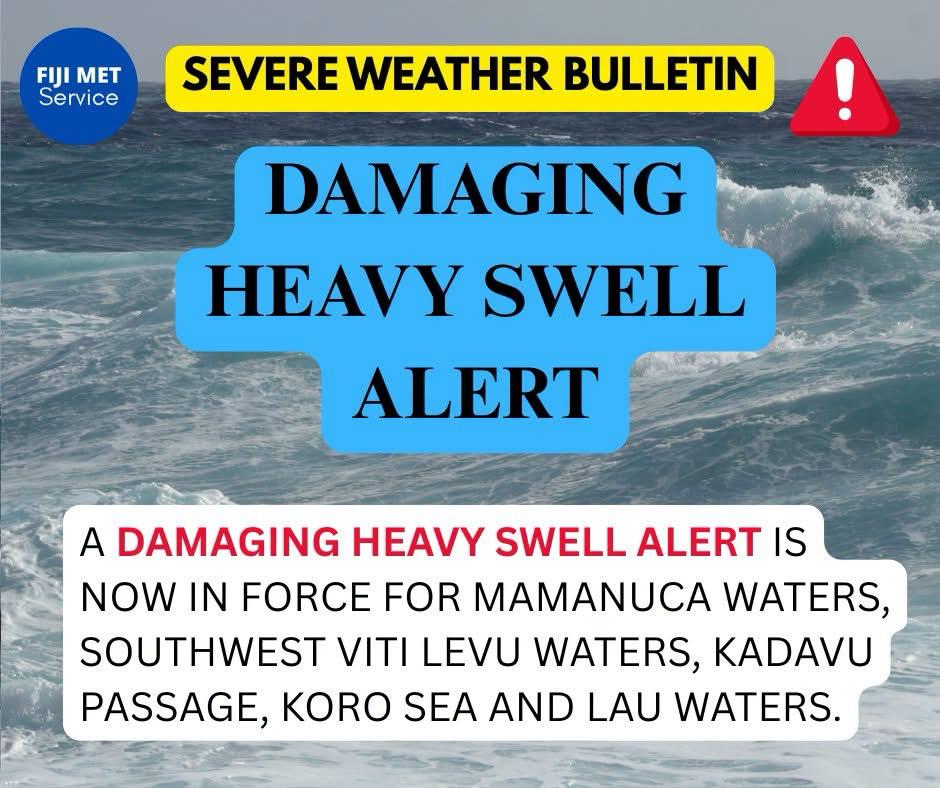
An ocean swell of four meters is expected, and both large and small vessels are strongly advised not to sail due to the powerful swell and dangerous currents near the coasts and reefs.
I honestly admit that I am quite shocked by that.
We have waited weeks for this. The boat is completely ready, we are in exactly the right spot, and in my mind, we are actually already underway. And then suddenly you read a warning like this. The doubts start immediately. Have we overlooked something? Is this another one of those moments when we have to postpone our plans?
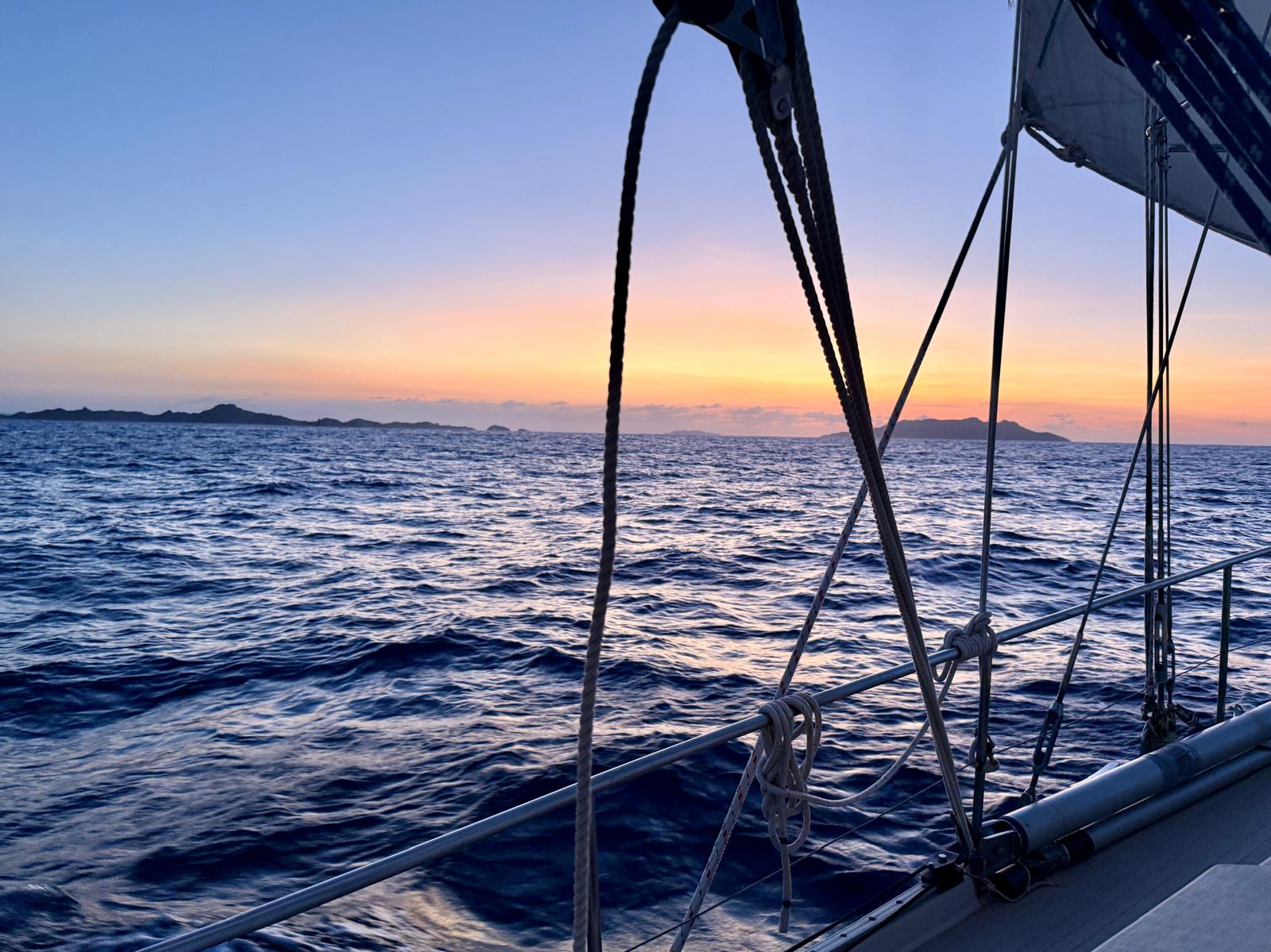
As is often the case, Jeroen remains remarkably calm. While I run through all sorts of scenarios in my head, he calmly reviews the various weather maps once more. According to him, it still looks good and there is no reason to adjust our plans immediately.
Nevertheless, we decide to ask one more person for their opinion: Ralph. By now, we have sailed together so much that we fully trust his judgment. He, too, does not expect any dangerous conditions, at most a somewhat uncomfortable stretch of sea.
That gives confidence.
We therefore agree to leave as planned. But with one clear agreement: as soon as the ocean shows anything different from what the weather charts predict, we will turn around and divert to Taveuni.
At sea, the weather always has the last word.
The evening before, we hesitate for a moment. Perhaps we should leave tonight already, as there seems to be a bit more wind then. In the end, we decide to stay another night after all. Looking back, we are incredibly glad we did. Several times I wake up to the roar of the wind through the rigging. As I lie in bed, I can only think: How nice that we are still safely behind the reef and not out there at sea.
The next morning, the world looks completely different. The wind has decreased exactly as predicted. At eight o'clock, we weigh anchor. There is a lovely ten to fifteen knots of wind, the sea is remarkably calm, and the sun is shining brightly. The conditions really couldn't be better than this.
As soon as we sail out of the pass, we hoist all sails. Once all the sails are nicely filled, we switch off the engine, and from that moment on, the wind takes over completely. As soon as we set course for Vanua Balavu, the real enjoyment begins.
The upwind course is perfect. My Motu accelerates effortlessly to seven to eight knots and glides smoothly through the water. Suddenly, those 115 nautical miles don't feel so far at all anymore. These are the days every sailor dreams of. The boat seems to sail almost by itself, and everything feels effortless.
The evening before our departure, Barbara calls briefly. She tells us enthusiastically about the place where Lille Venn and Flora lying at that moment. According to her, it is so beautiful that it would actually be a shame if we didn't go there. Her advice is therefore clear: Come this way.
That sounds tempting, of course, but it does mean we have to adjust our plans. As soon as we reach Vanua Balavu, we would have to sail another twenty nautical miles or so inside the reef. If we choose to go around it, that adds about thirty nautical miles.
We therefore agree to wait until we are underway to make a decision. First, let's see how the crossing goes and how we feel in the morning. Ultimately, the ocean will determine whether plans are feasible or not.
In the course of the afternoon, we start doing some tentative calculations. We are still sailing at a beautiful speed, and if it stays that way, we will arrive at the original pass around two o'clock in the morning. That means waiting for hours until first light before we can safely sail inside.
Slowly, another plan is starting to sound increasingly attractive.
Although there is indeed a long ocean swell en route, the waves remain surprisingly absent. The conditions are so much better than the warnings had led us to believe. If we sail another thirty nautical miles towards the southwest pass, we would arrive there around eight o'clock in the morning. Exactly at daylight.
Suddenly, everything falls into place. The wind continues to blow steadily between ten and fifteen knots all night, later slowly decreasing to eight to ten knots. Yet My Motu continues to glide effortlessly through the water at about five knots. There are no splashing waves battering the hull, no tiring watchkeeping where you have to be constantly alert, and no endless series of sail changes. In fact, during the entire crossing, we only have to tack once.
If someone were to ask us what 'champagne sailing' looks like, we would give this crossing as an example. Rarely have we experienced a night trip that went so relaxed.
When the first rays of the sun slowly turn the horizon golden, I wake Jeroen. On My Motu, we have a simple rule: anything that can be operated from the cockpit, we do alone. But as soon as one of us has to leave the safety of the cockpit, the other is always on deck. For the last time during this crossing, we have to tack one more time. Because the preventers have to be released and reattached, we always do that together. After that, we steer My Motu towards the broad southwestern pass of Vanua Balavu.
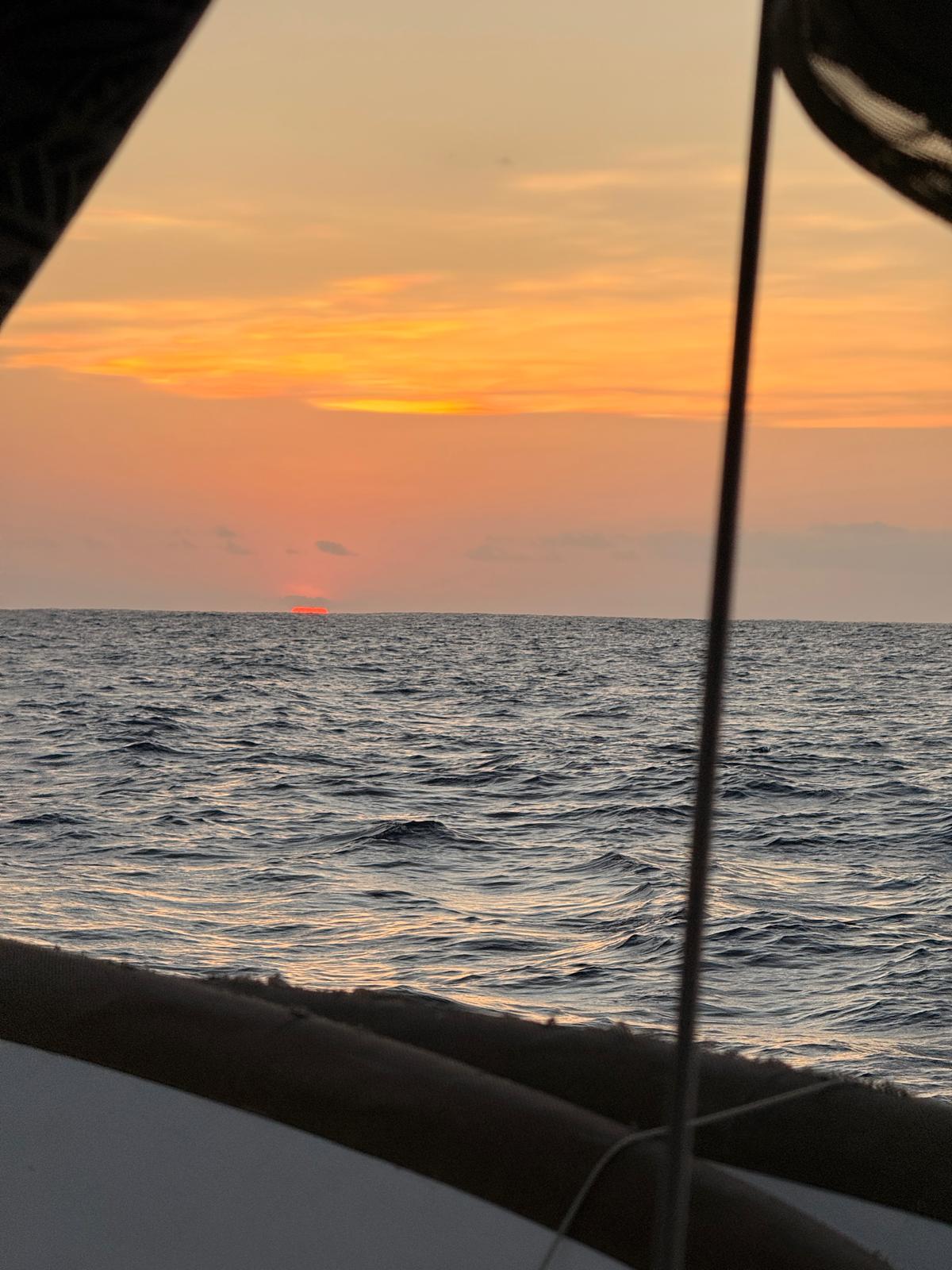
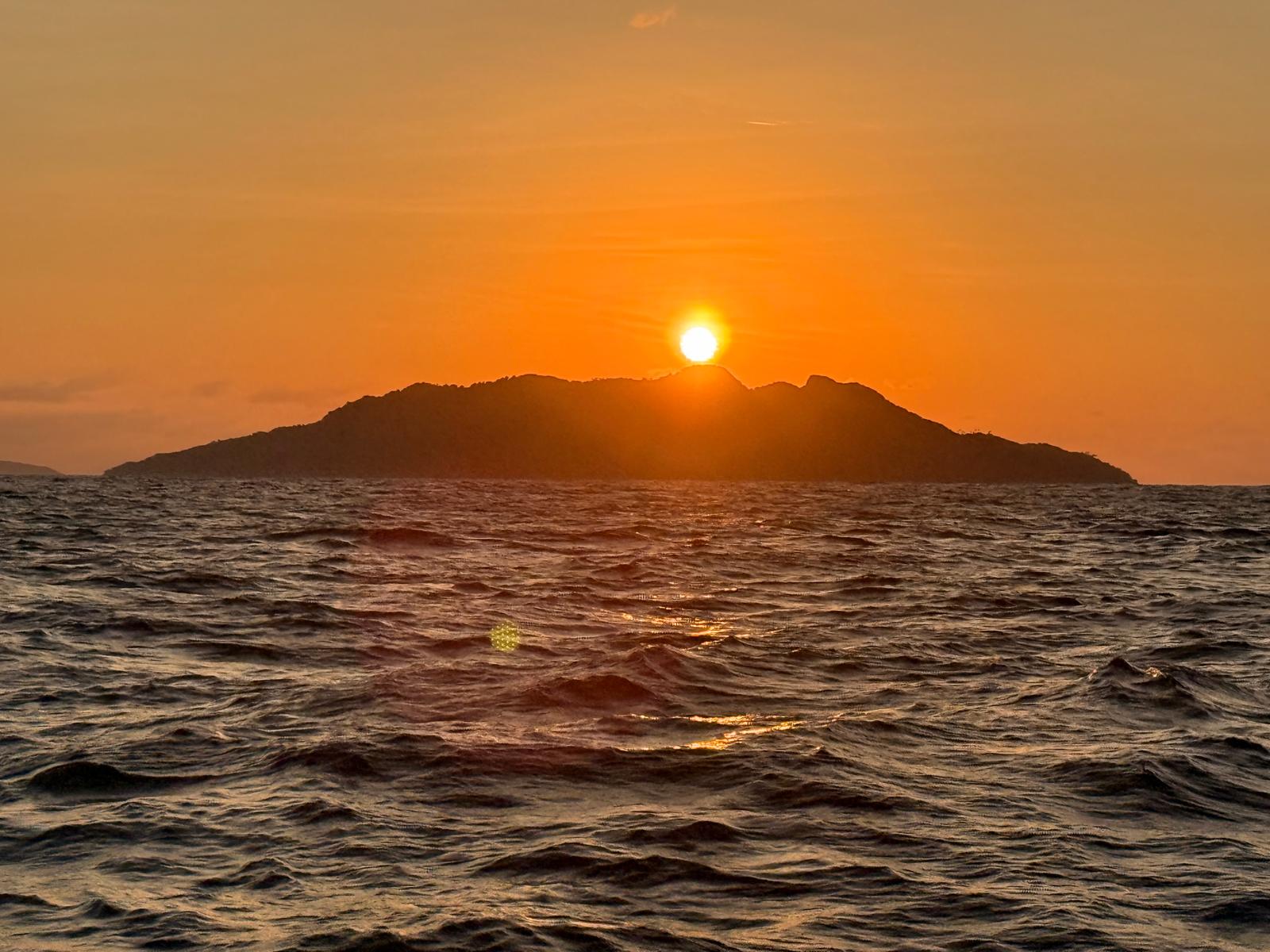
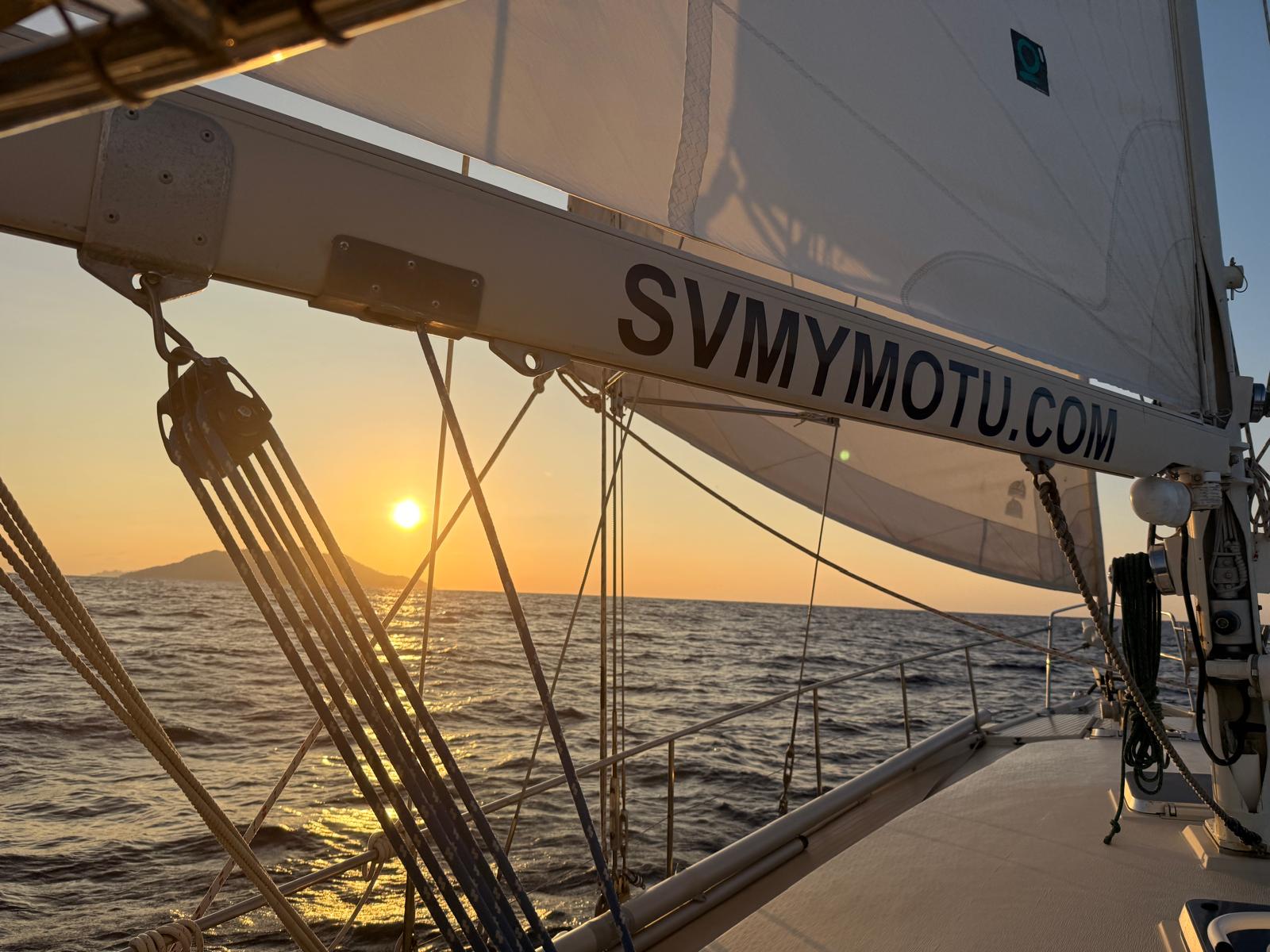
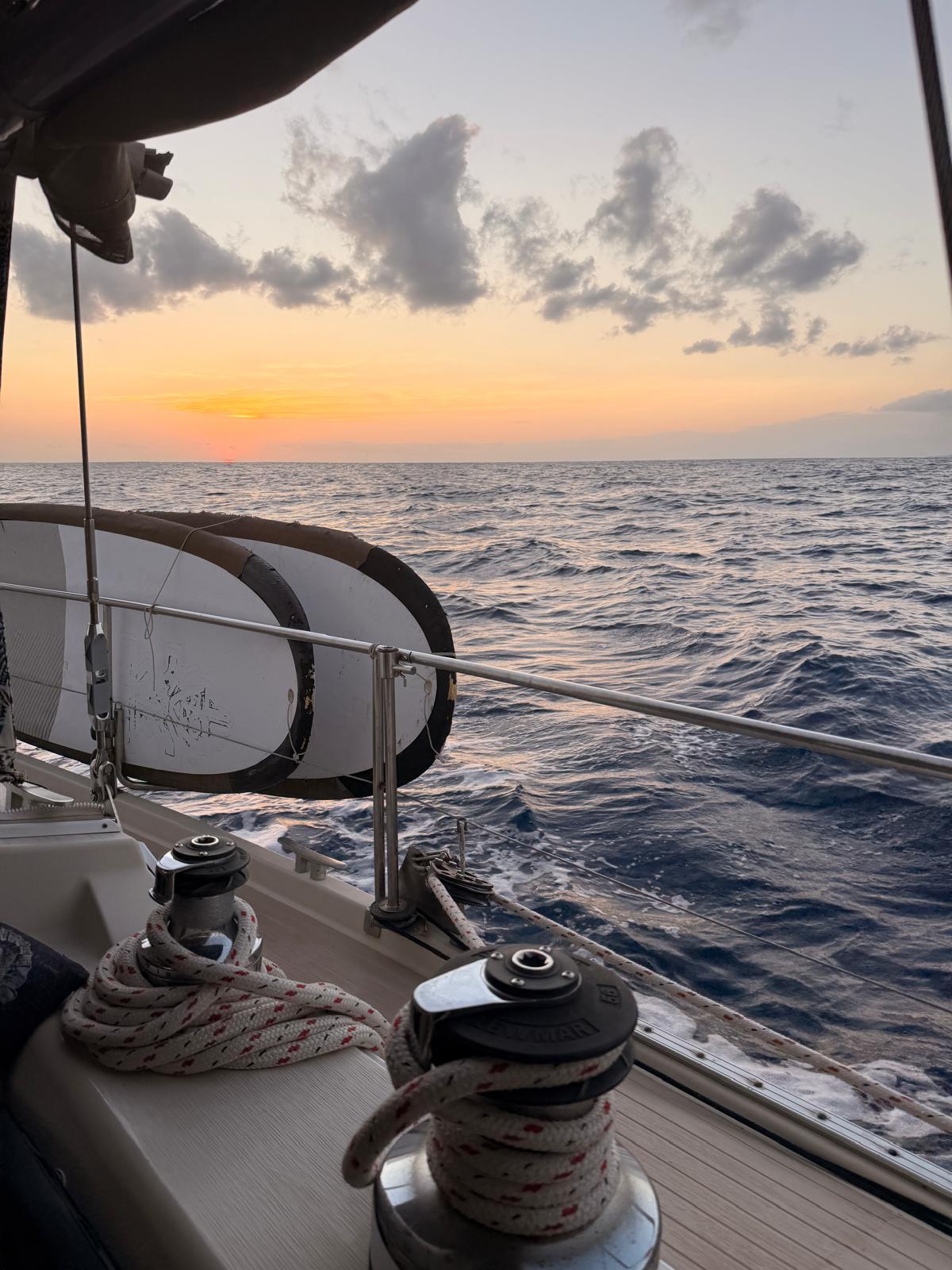
This might just remain one of my favorite moments of a night trip. As the sun slowly climbs higher, I see the contours of the landscape becoming increasingly clear. Birds fly back and forth, flying fish dart out of the water, and otherwise there is mostly... silence. Especially after such a relaxed crossing, that feels almost unreal.
We know that Vanua Balavu has been on our port side for some time, but the southwest pass lies quite a bit further out. The wind is slowly decreasing, exactly as predicted.
The pass turns out to be surprisingly simple. As soon as we are through the reefs, we furl the sails and switch the engine back on. Then we turn ninety degrees to port and sail the last five nautical miles calmly to the anchorage.
When we are through the pass, we send Barbara and Ralph a message that we are safely inside and need about another hour. As we sail into Susui Village bay a little later, we see Ralph already on the roof of Lille Venn stand, with his drone in the air to capture our arrival.
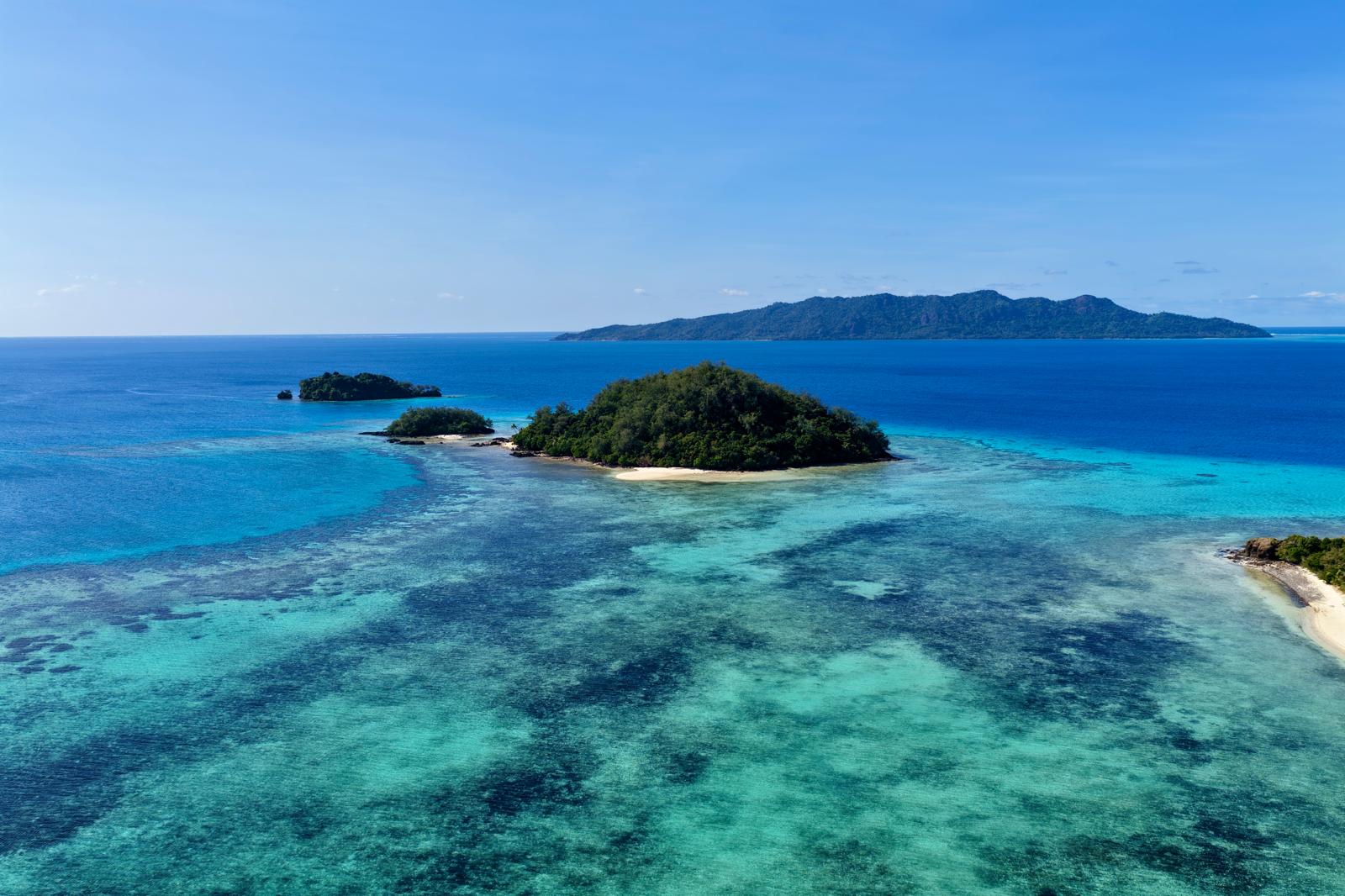
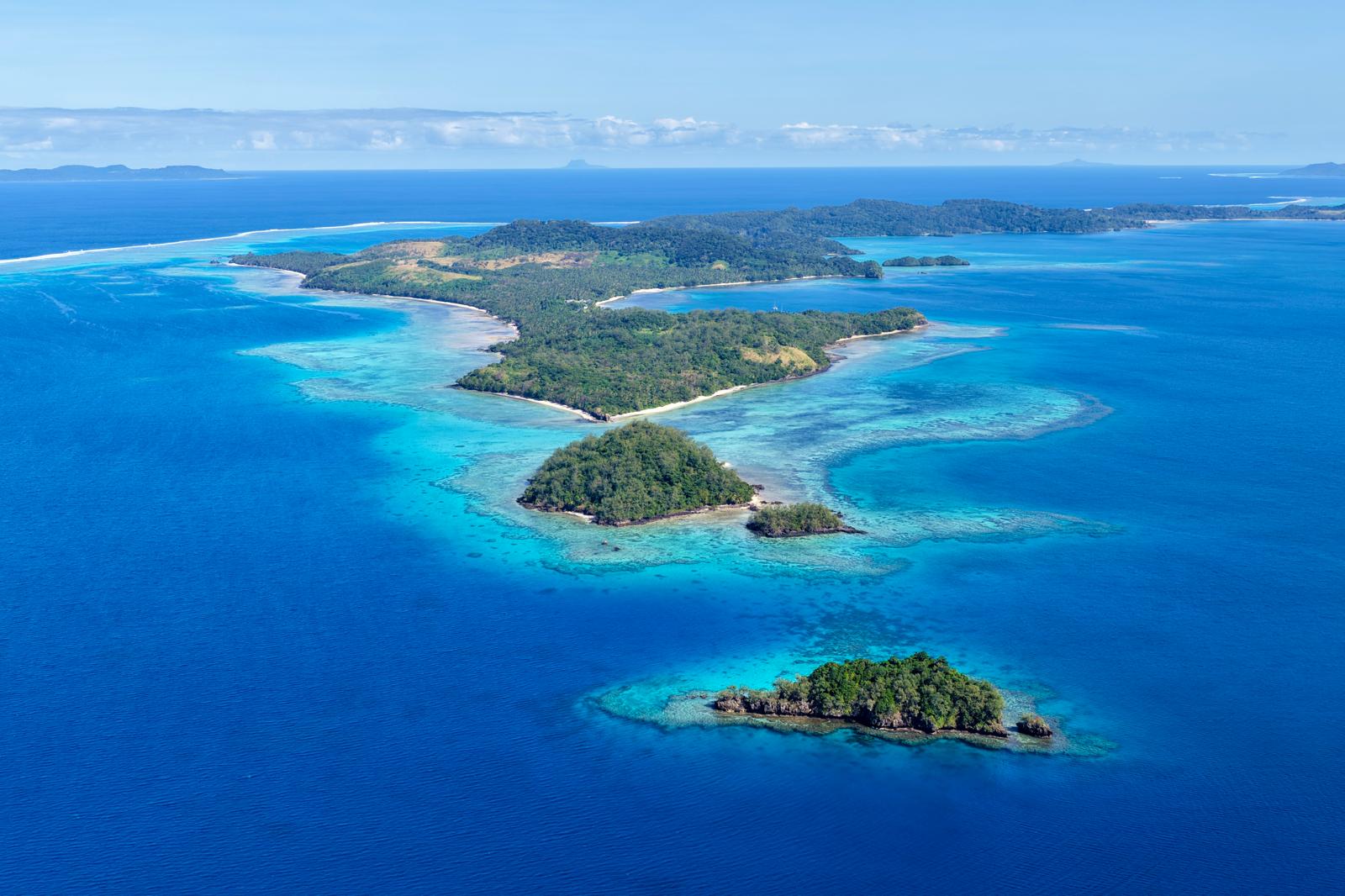
The anchor has barely touched the bottom when Barbara and Ralph come laughing to meet us in their dinghy. We catch up for a bit, and Barbara enthusiastically tells us that she has organized a fun evening with us tonight and Flora .
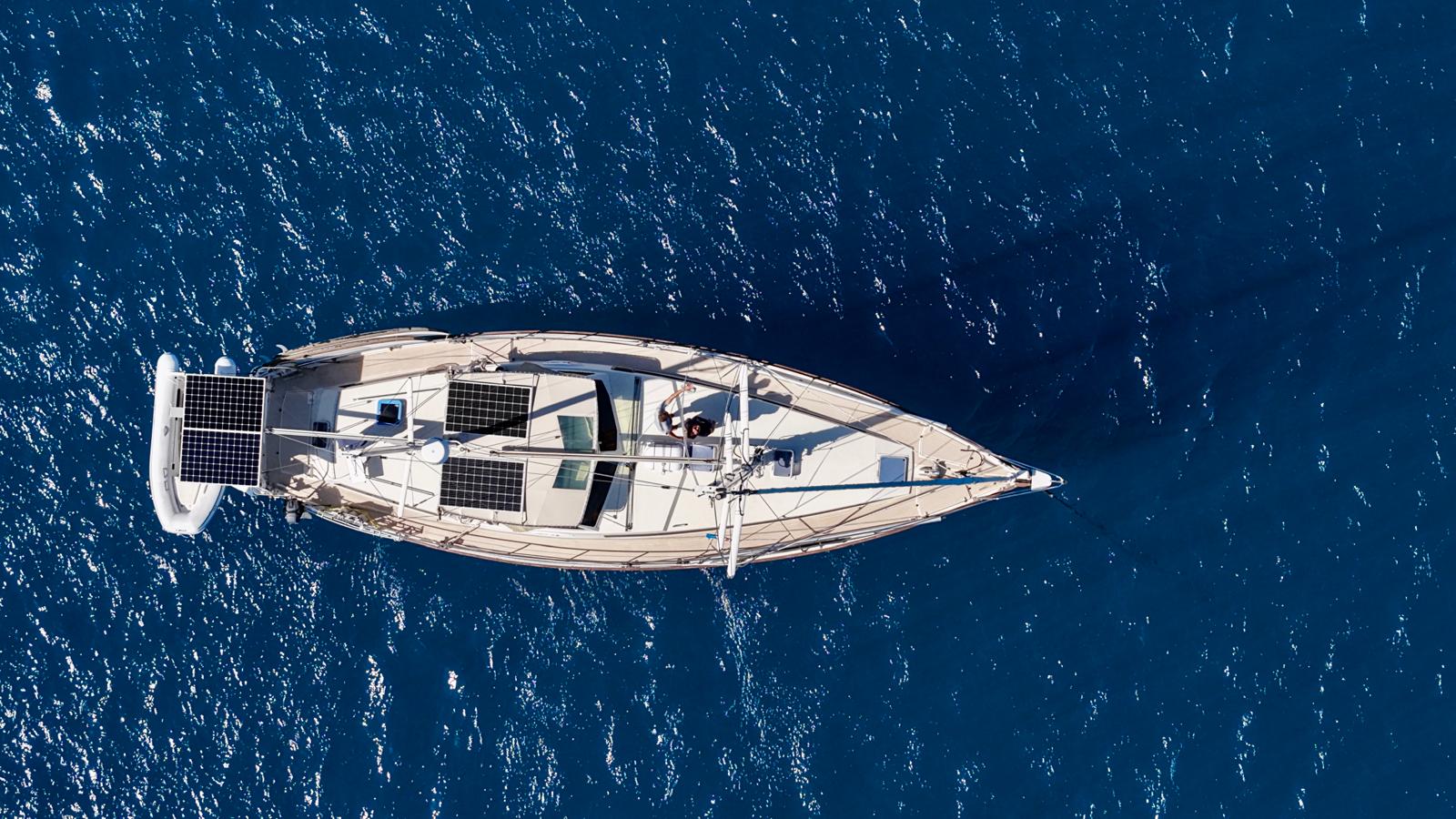
But first, Jeroen and I have something else to do. Before we join the others, Jeroen and I will first get into the dinghy heading towards the village. As on every Lau Island, we first pay a visit to the chief to our sevusevu to offer. With the bundle of kava roots under our arm, we walk to his house, where we are kindly received.
After a brief conversation, we offer the kava and the chief gives us a warm welcome. We receive his blessing to anchor here, swim, and visit the island. However, he asks us for one thing: fishing is not allowed in this bay. Naturally, we are happy to respect that.
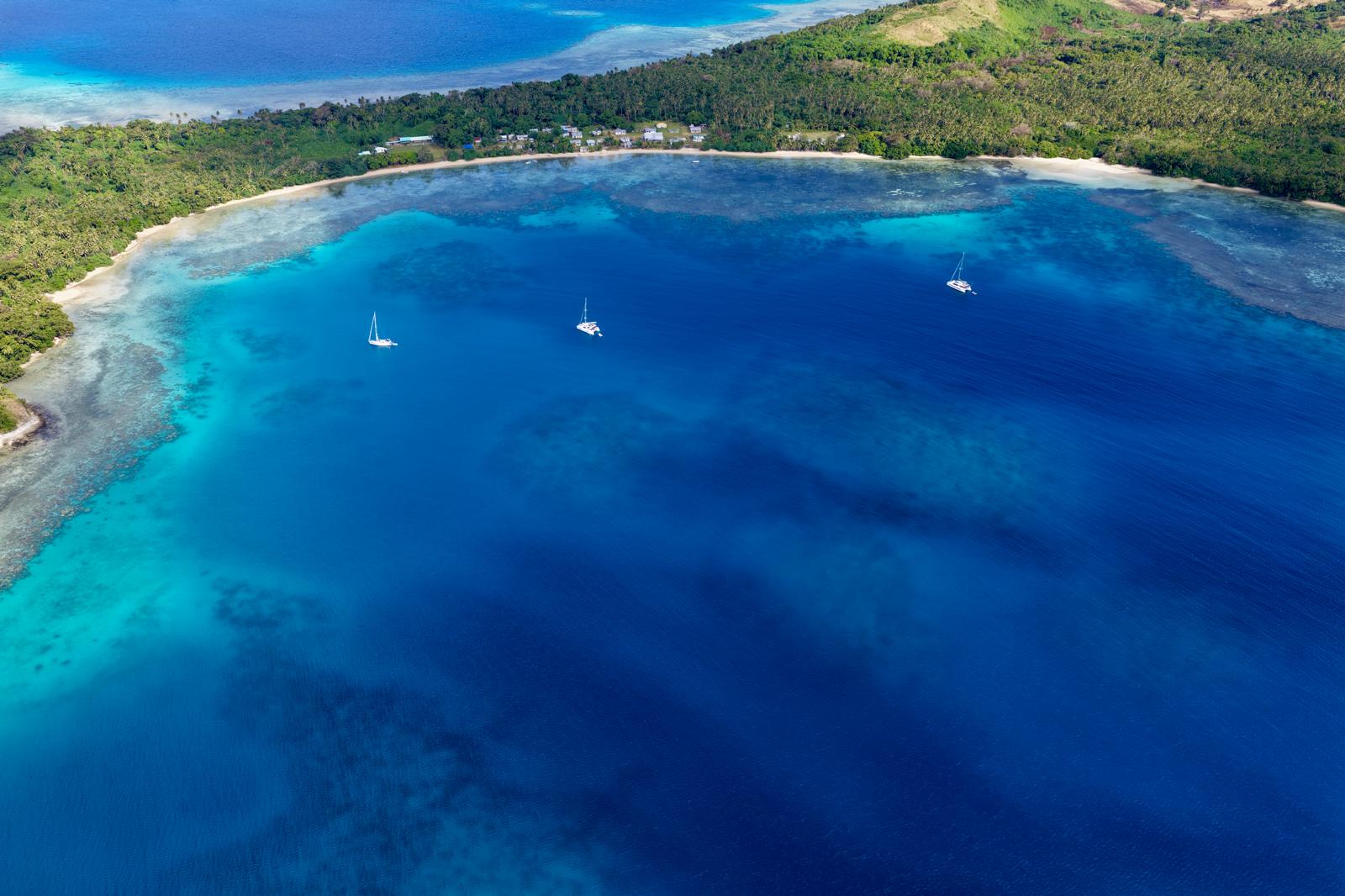
Not even five minutes later, we are already walking back to the dinghy. The formalities are behind us, and we can go enjoy everything Vanua Balavu has to offer.
That afternoon, the six of us boarded Lille Venn on. Barbara has once again cooked a delicious meal for us, and Wiebke closes the evening with a delightful homemade dessert. We catch up on the past few weeks, laugh a lot, and then Jeroen and I learn a new game: Mexican Train , a fun game of dominoes that quickly leads to some competitive moments and plenty of laughter. The evening flies by. Although everyone has had their own adventures over the past few weeks, as soon as we are together it feels like we saw each other just yesterday.
In the days that followed, a wonderfully regular rhythm quickly established. Almost every morning, Barbara, Wiebke, and I swam about a kilometer and a half together. Not in a swimming pool with neat lanes or along a sandy beach, but straight over living coral, among hundreds of tropical fish.
I regularly catch myself looking down much more often than ahead. There is something to see everywhere: brightly colored reef fish, unique corals, or a curious turtle that at first seems to be watching us attentively, but then decides that we are a bit too exciting and quickly swims away. Along the way, we frequently point out beautiful things we see to each other. Because of this, I sometimes completely forget that we are actually on a substantial morning swim and not just looking at the underwater world. The fact that something like this has become almost a daily routine remains special every time.
While we swim in the morning, the men regularly head out with their wingfoils or paddleboards to explore the surroundings further. At the end of the day, we find each other again almost naturally. Sometimes for a game, other times simply to have a cup of coffee together, catch up, or sit comfortably on board one of the boats. Without us making any plans, a rhythm develops naturally that feels surprisingly familiar very quickly.
Our last afternoon in Susui Village unfolds just a little differently than the previous days. During our usual morning swim, Barbara, Wiebke, and I are already deciding which snacks we want to make that afternoon. You see, the program includes something you might not immediately expect on a remote island in the Lau Group: watching football together.
Eugene recently asked me if football is actually popular in Fiji. The answer is: A little bit . Among the locals, rugby and cricket are without any doubt the most popular sports. Rugby, in particular, is much more than just a game here. Almost everyone has a favorite player or team, and as soon as there is an important match, all of Fiji seems to be rooting for it. Among cruisers, things are just a little different.
Back on board, Jeroen was already busy with the dough for a focaccia, while I made aioli. Only... when I saw the dough, I actually already knew it wasn't going to turn into a focaccia anymore. Fortunately, all is well and truly lost. From that dough, I baked two delicious loaves and then quickly made new dough for a real focaccia.
While the first two loaves are in the oven and the dough for the focaccia is rising, Jeroen and Ralph head out together on the paddleboards. I stay on board to finish baking the focaccia. Exactly at ten past one, it comes out of the oven golden brown. With fresh, warm focaccia bread, we step into the dinghy heading Lille Venn , where the match has already been underway for about fifteen minutes.
We all gather around Ralph's iPad for the match. Switzerland – Argentina . Commentary blares loudly across the water via the speakers, and soon the players are cheering passionately. Naturally, it doesn't take long before the first arguments erupt. According to almost everyone on board, the red card for the Swiss player is completely unjustified. Within a few minutes, everyone is vehemently interfering with the refereeing. As if the referee could still hear us from the other side of the world. 😄
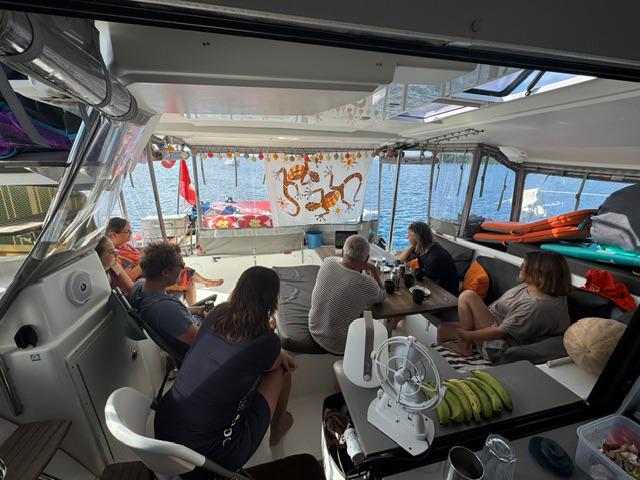
I am not a die-hard football viewer myself, but that is precisely why I perhaps enjoy everything that happens around the match the most. The cheering, the grumbling about the referee, the differing opinions, and the playful teasing back and forth make the afternoon at least as enjoyable as the match itself.
These are the kind of unexpected moments when you realize how special life among cruisers actually is. In the middle of a remote island in Fiji, you suddenly find yourself watching football with Swiss, Germans, and Dutch people, while outside, tropical fish swim beneath the boats.
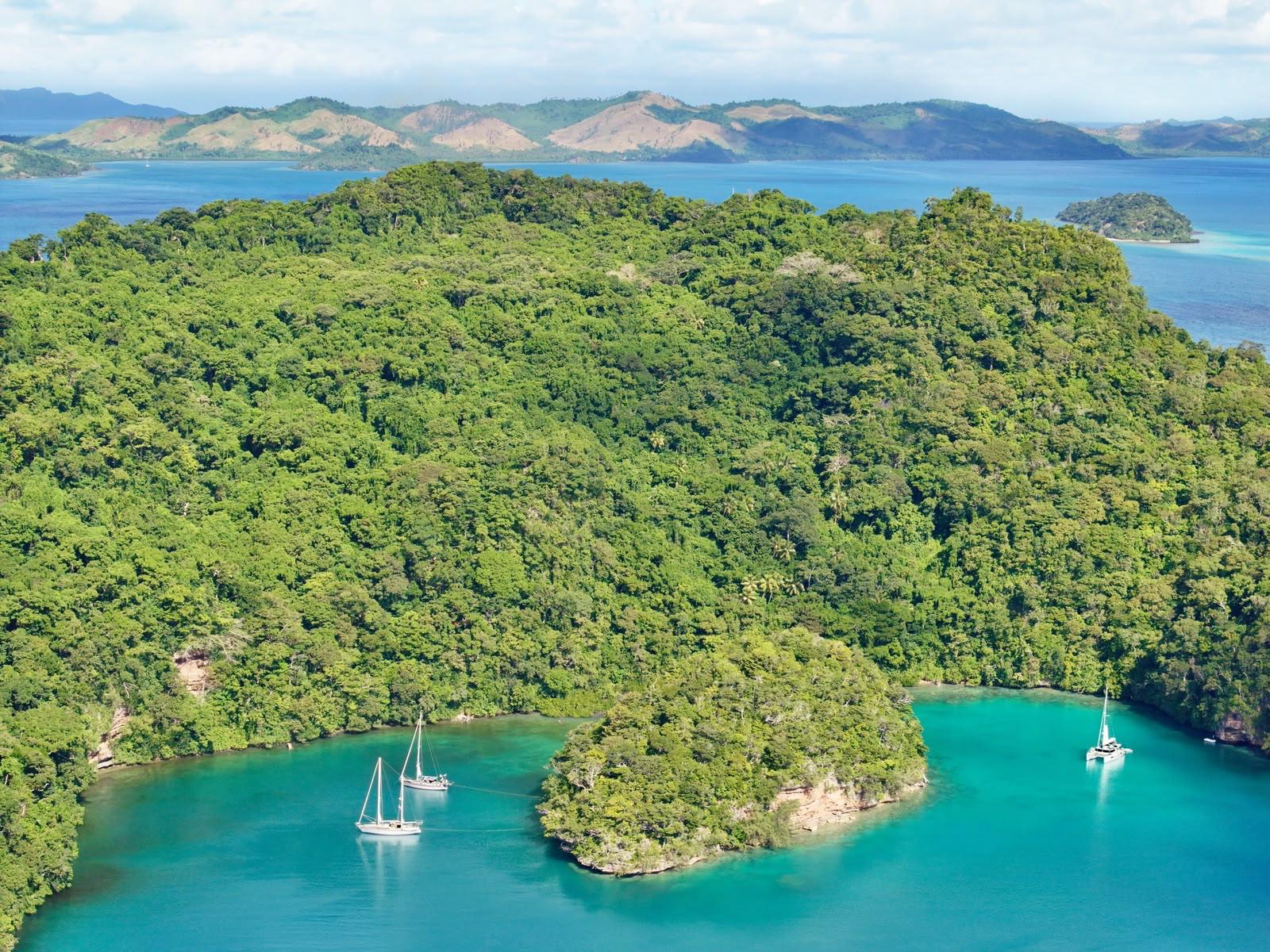
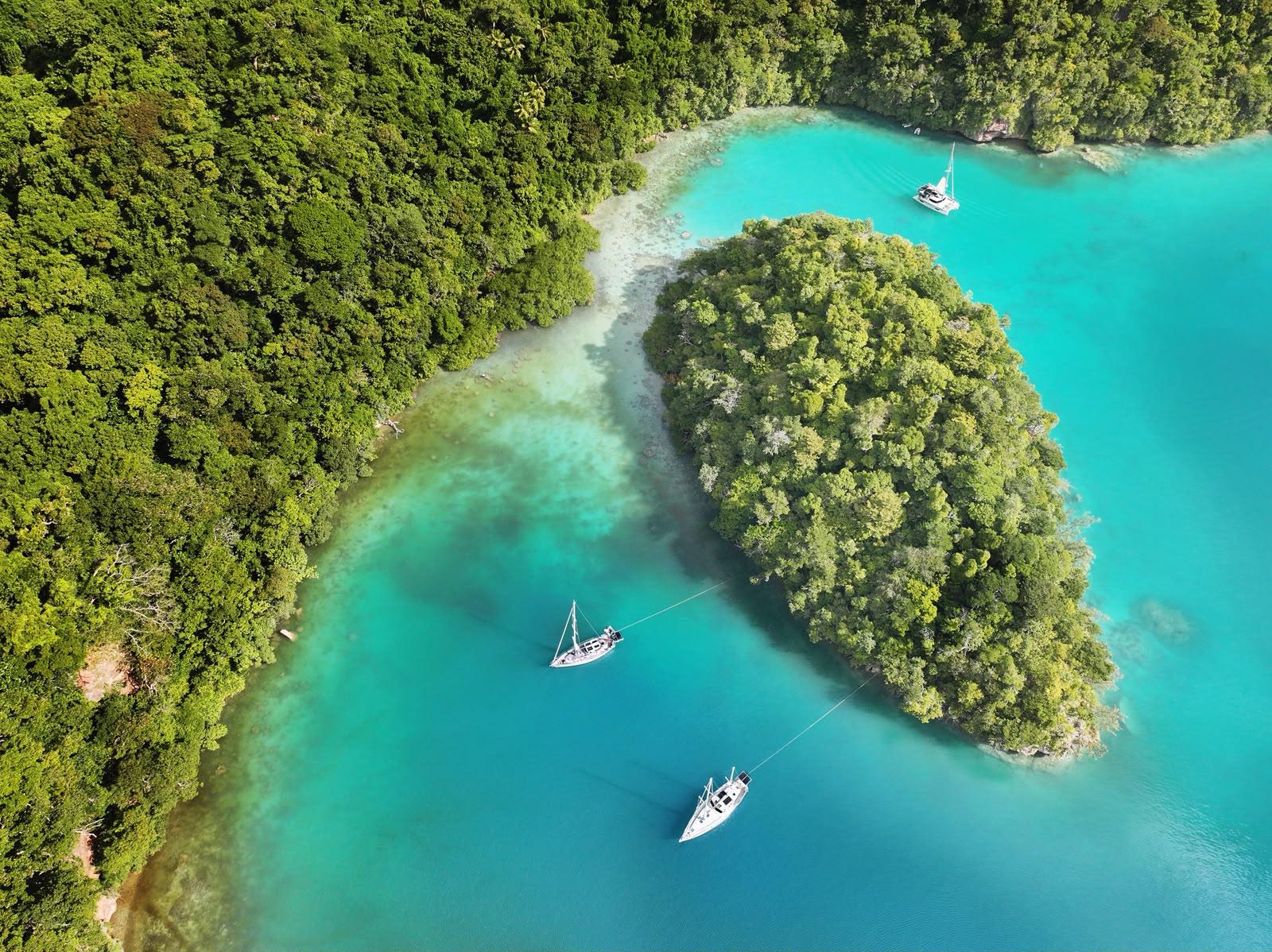
Not even a few days after we arrived in Susui Village, the next period of bad weather is already announcing itself. Together with Lille Venn and Flora We therefore decide to sail to Mbavatu Harbour, a sheltered bay on the northwest side of Vanua Balavu.
Fortunately, there is little sign of bad weather during the crossing. Under a bright sun and with winds of about eighteen knots, we sail to our new anchorage in just over two hours. Flora sails in the lead, followed by Lille Venn and behind that My Motu . It is such a relaxed trip where everyone just enjoys the sailing on their own.
Even before we reach the narrow entrance, our eyes fall on a beautiful sandy beach surrounded by coral. We should go snorkeling there sometime later , I think to myself immediately.
As soon as we sail into the bay, the landscape changes completely. High, densely vegetated hills rise around us, and large bats circle above the treetops. The water is virtually mirror-smooth, and the outside world seems to vanish in an instant.
My first thought?
Wow... it looks like we're sailing right into the jungle.
Together with Lille Venn and Flora We pick out a nice spot to anchor. Then, using the dinghy, we run extra lines to sturdy trees along the shore. All three boats are now not only anchored, but also secured to the bank with multiple lines. It takes a bit of work, but once everything is taut, we know we are well-positioned here for the strong winds expected in the coming days.
And it is blowing hard. Outside Mbavatu Harbour, the wind blows between twenty and thirty-five knots for almost our entire stay. Deep in the bay, we notice surprisingly little of this. Occasionally, a short gust comes through the hills, but otherwise, our boats lie virtually motionless behind their anchors and lines.
We notice just how big the difference is as soon as we sail the dinghy to the small beach just outside the shelter of the bay to snorkel. Suddenly, there is plenty of wind there. It is as if someone has opened a door to the weather we barely notice at our anchorage.
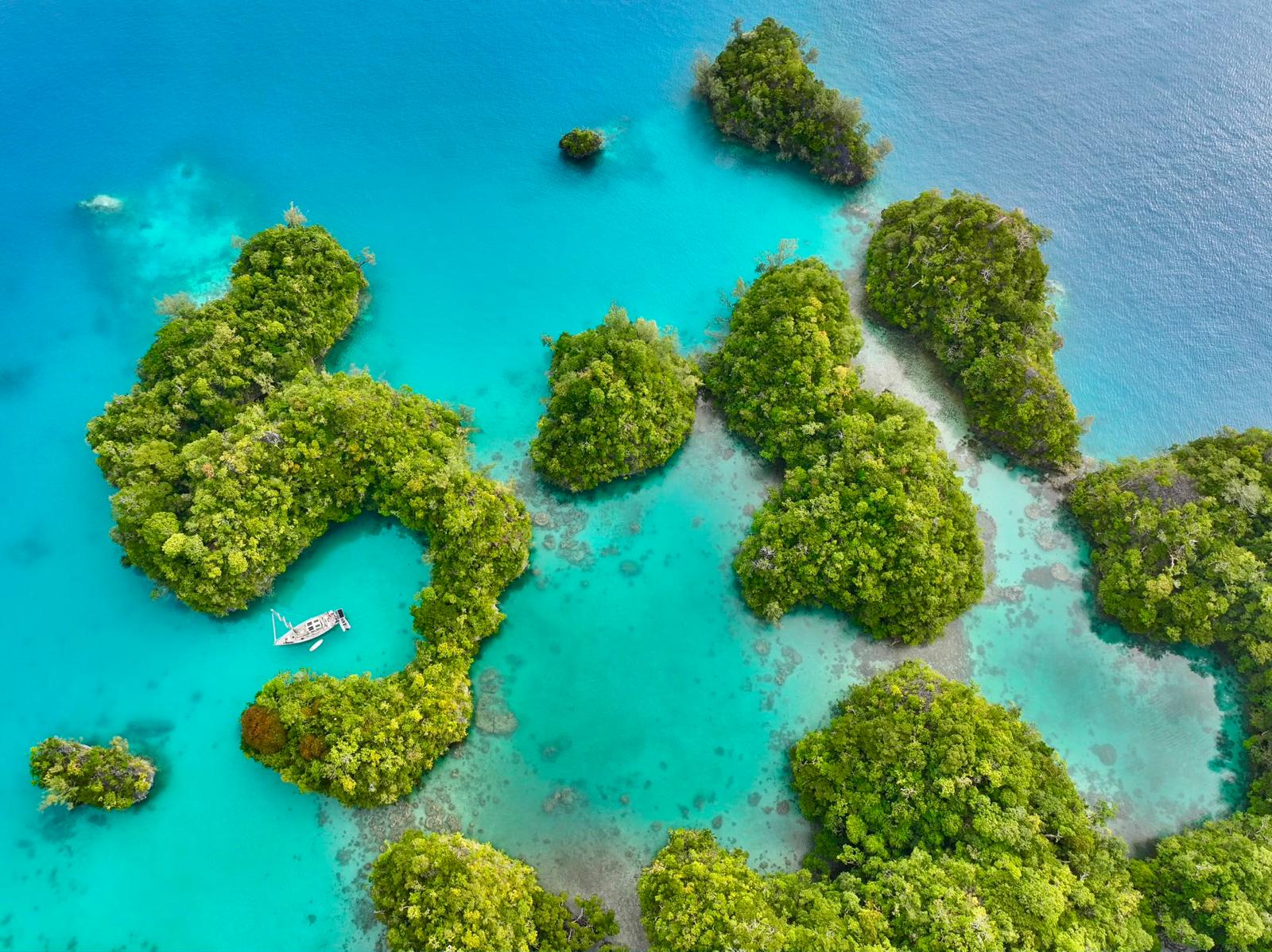
Mbavatu Harbour used to be a port for ships calling at the Lau Islands. The old harbour building and a number of moorings in the bay still serve as a reminder of this. The next morning, Jeroen and I decide to grab our paddleboards and paddle over there.
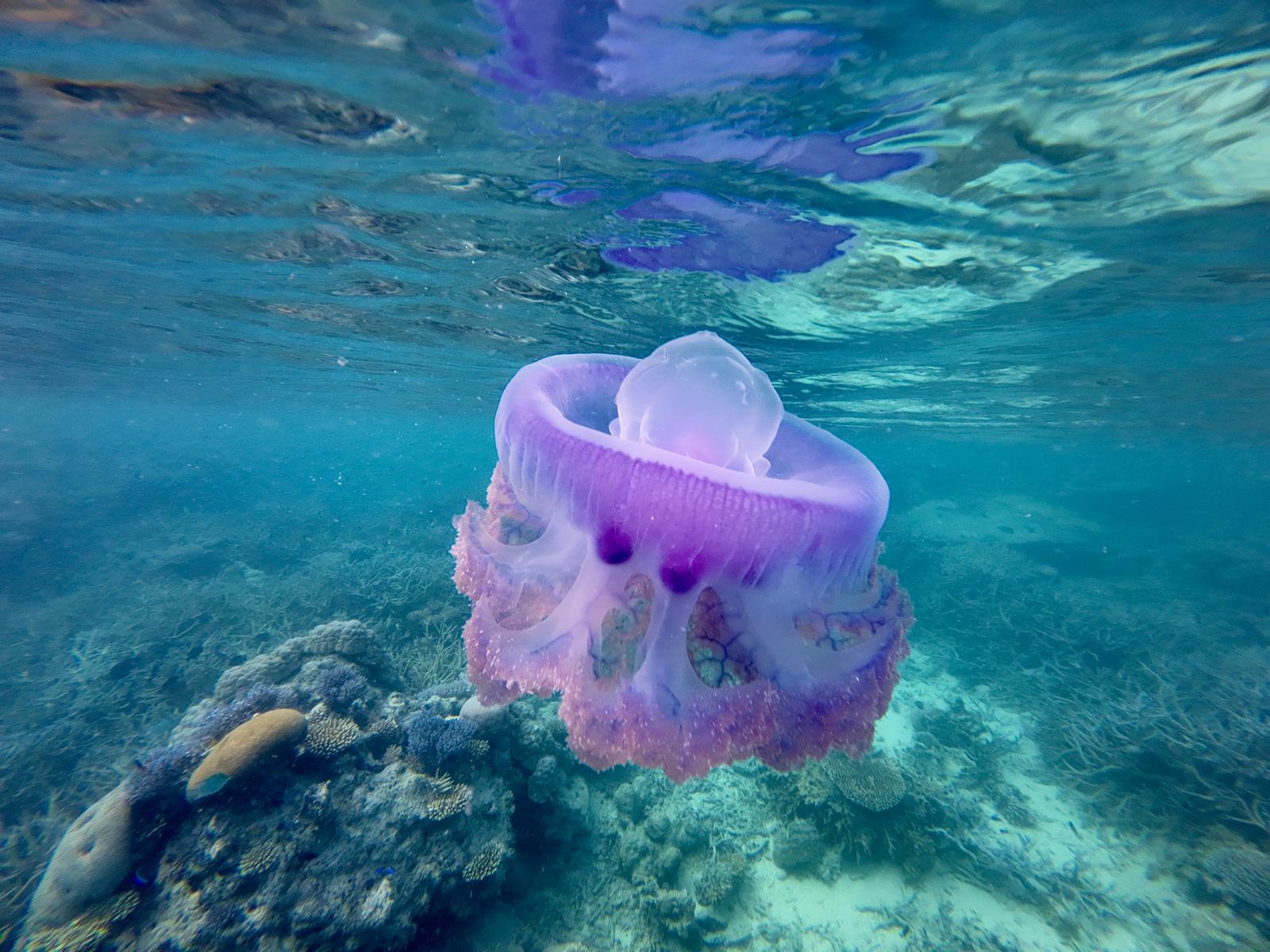
It is about a nautical mile. We will sail past briefly on the way. Lille Venn , but Ralph is busy with his sail and stays on board. Jeroen and I paddle on together. There are only a few small ripples on the water from the wind, and along the way we see a particularly striking number of jellyfish.
Up close, the old harbor building looks surprisingly good. Inside, everything is empty, but on the outside, the building still appears sturdy and reasonably well-maintained. The old moorings are also still there. We do not know if they are still inspected or maintained, and in any case, we certainly wouldn't just tie our boat to them.
Besides paddleboarding, we also try to use our time here to do some more walking. On a sailboat, you are active all day, but that doesn't automatically mean your fitness level stays up. Your leg muscles, in particular, do not always get the exercise on board that they are used to getting on land.
Via NoForeignLand we find a walking route that begins with a long staircase. At the bottom stands a sign with all kinds of information, and one number immediately stands out:
271 steps.
On the first day, Jeroen and I walk up the stairs and back down. Just to wake up our leg muscles again. Of course, we count the steps along the way, and sure enough: there really are 271.
The next day we do exactly the same thing.
Meanwhile, Jeroen and Ralph face a completely different challenge. The record is also listed on the board at the bottom of the stairs: someone once ran up the 271 steps in just 58 seconds.
Well...
Put something like that on a board, and of course you can just wait for Jeroen and Ralph to turn it into a competition. 😄
The men start keeping track of their times and try to reach the top faster and faster. The record of 58 seconds remains safely out of reach, but eventually they manage to bring their time down to 2 minutes and 11 seconds . Not bad for two men who had mainly started walking to get their fitness back up to par.
The stairs leave them wanting more, and Jeroen and Ralph regularly head out together in the days that follow. During one of their walks, they discover a beautiful route to a viewpoint overlooking the Bay of Islands. According to the men, Barbara and I absolutely have to see it too, so not much later, the four of us set off.
After the 271 steps, we reach a top of a vast stretch of grassland where cows and sheep graze. From there, we walk on to the other side of the bay. The route is not particularly difficult, although we still have to climb quite a bit for the final stretch.
Along the way, we pass an orange tree. Naturally, Ralph spots the most beautiful specimens hanging just a little higher, and before we know it, he is in the tree. A moment later, we can continue our walk with a few freshly picked oranges.
After about an hour, we reach the viewpoint and look out over the Bay of Islands. The light blue water is interrupted by limestone rock formations that immediately remind us of the 'mushrooms' we saw earlier in Fulaga. Between the rocks lie reefs and sheltered patches of water where you could endlessly sail through in a dinghy in search of beautiful snorkeling spots. Behind them, the deep blue ocean stretches to the horizon.
From here, we suddenly notice again just how much wind there really is. We speak to people anchored in the Bay of Islands, and they tell us how much trouble the strong gusts are causing them. Their boats are constantly rocking back and forth, while we on the other side of the hills haven't felt almost any of that same wind for days.
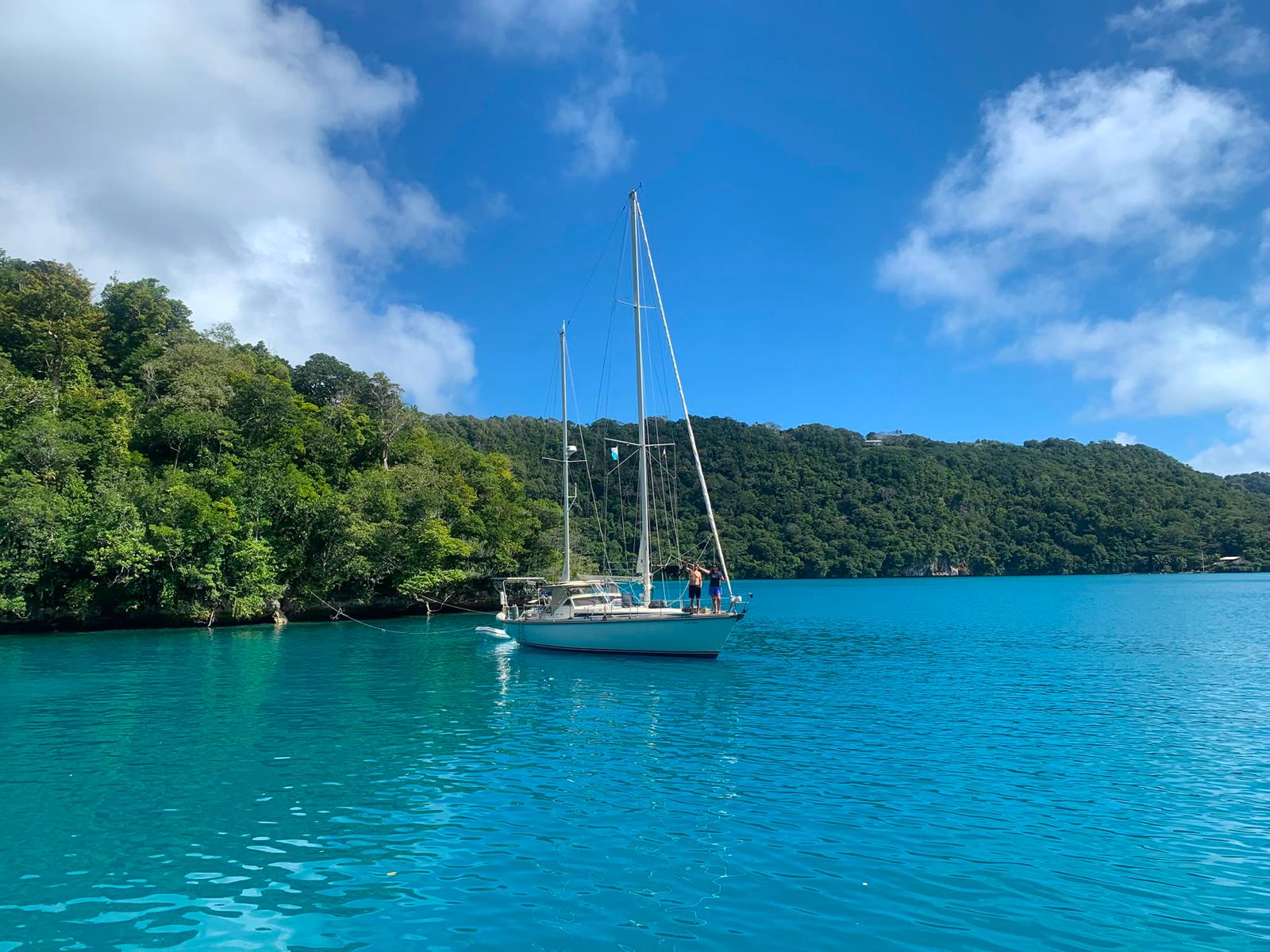
Once again, we realize how lucky we are with our place in Mbavatu Harbour.
Meanwhile, Jeroen and Ralph are enjoying their hiking adventures more and more. One day, the usual paths are apparently no longer adventurous enough. Armed with their machetes, they decide to trek straight through a patch of jungle and forge their own route.
When I see those two leave together, I have to laugh. Two grown men who turn back into two mischievous boys within a few minutes. Machetes in tow, jungle before them, and both at least as enthusiastic as if they were ten years old again.
We opt for a slightly quieter adventure that day.
While Jeroen and Ralph make their way through the jungle somewhere among the trees, Wiebke, Barbara, and I bring out our own things. Wiebke with her knitting, Barbara and I with our dot art. And so, an afternoon of our now familiar nature unfolds once again. Dotting & Knitting Club .
The days in Mbavatu Harbour fill themselves up almost automatically in this way. We walk, paddleboard, and snorkel when the wind permits, and I finally have plenty of time to paint again. Outside our sheltered bay, the wind blows strongly for days on end, but deep among the green hills of Mbavatu, that sometimes seems like a world away.
MESSAGES ON BOARD
Leave a message
Share a thought, question or greeting. Aagje reads every comment before it appears here.
Loading comments…