
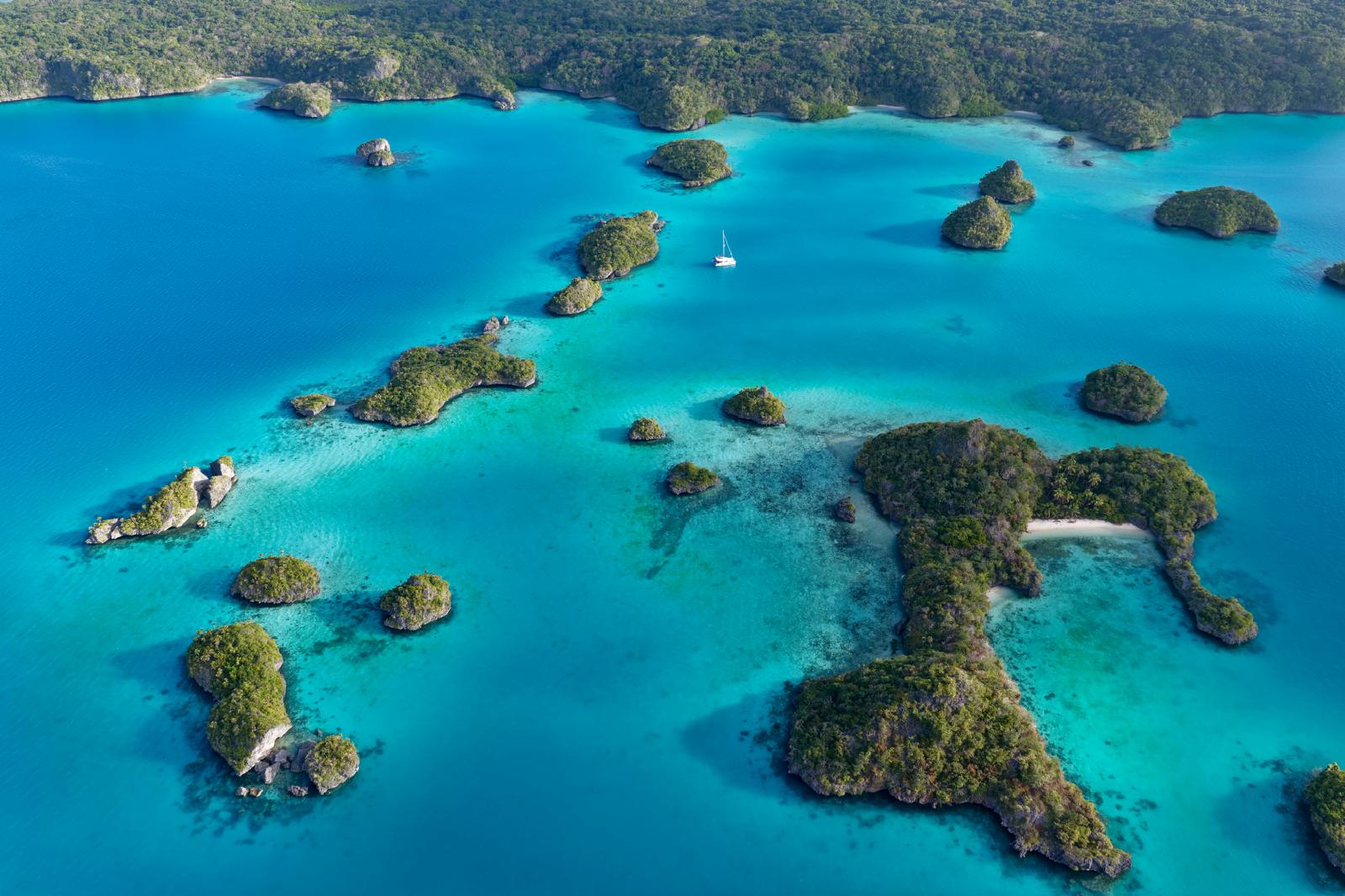
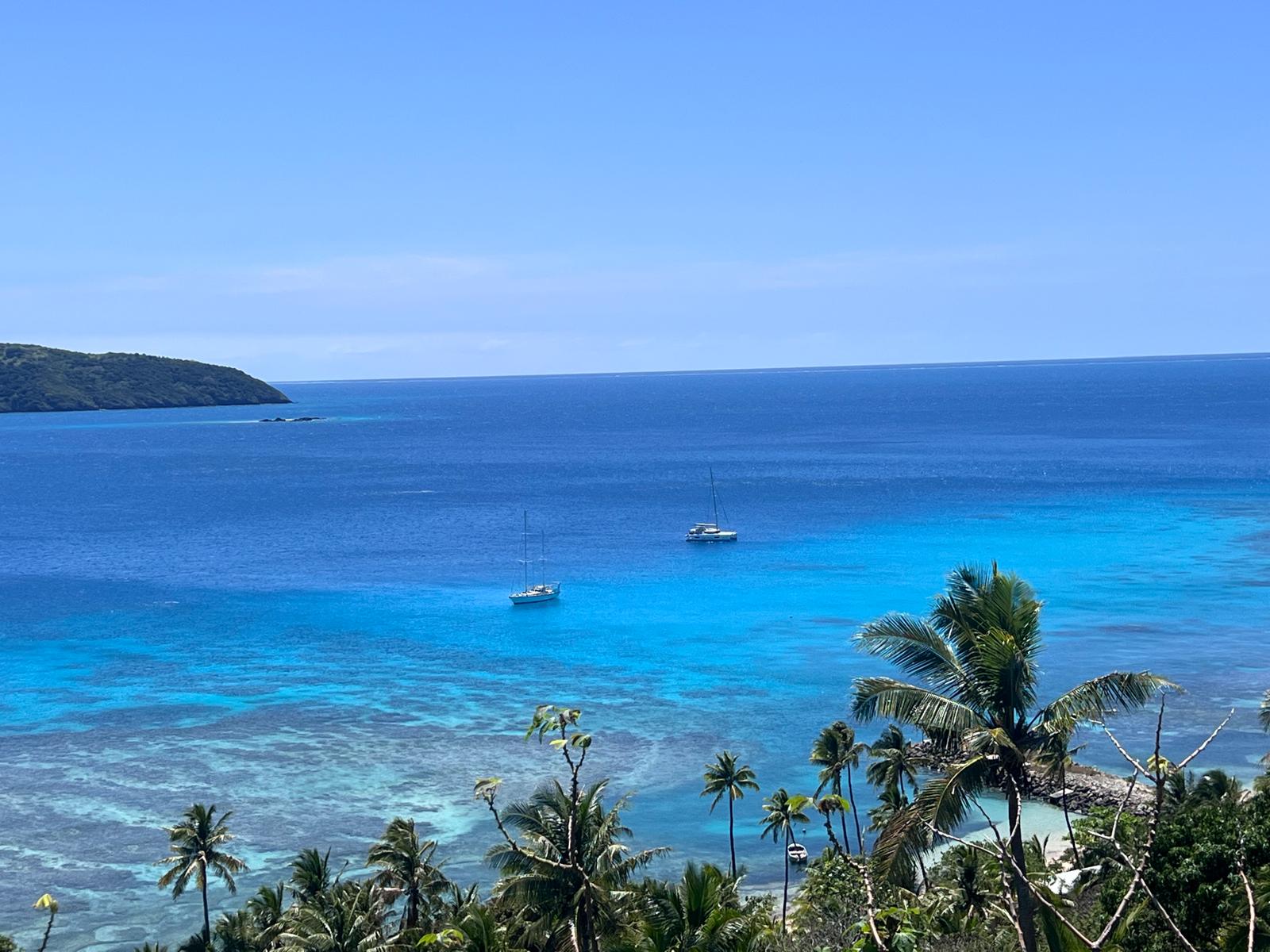
At 5:50 in the morning, we lift our anchor. It is still early, so early that the day has barely begun, but to us, it feels as though something is coming to an end. Ten minutes later, we sail through the pass of Fulaga, and as the lagoon slowly disappears behind us, I turn around for one last look. We have only just left, and already I miss it.
Actually, that feeling started much earlier, because sometimes saying goodbye begins long before you actually leave. You are still there, waking up in the same place, looking out over the same water and seeing the same little islands surrounding you. The people you have spent the past weeks drinking coffee with, sharing meals, laughing, snorkeling, being creative and playing games with are still there, and the dinghy is still floating behind My Motu. At first glance, nothing has changed, and yet everything feels different. Not because the place has changed, but because you know that soon you will be leaving.
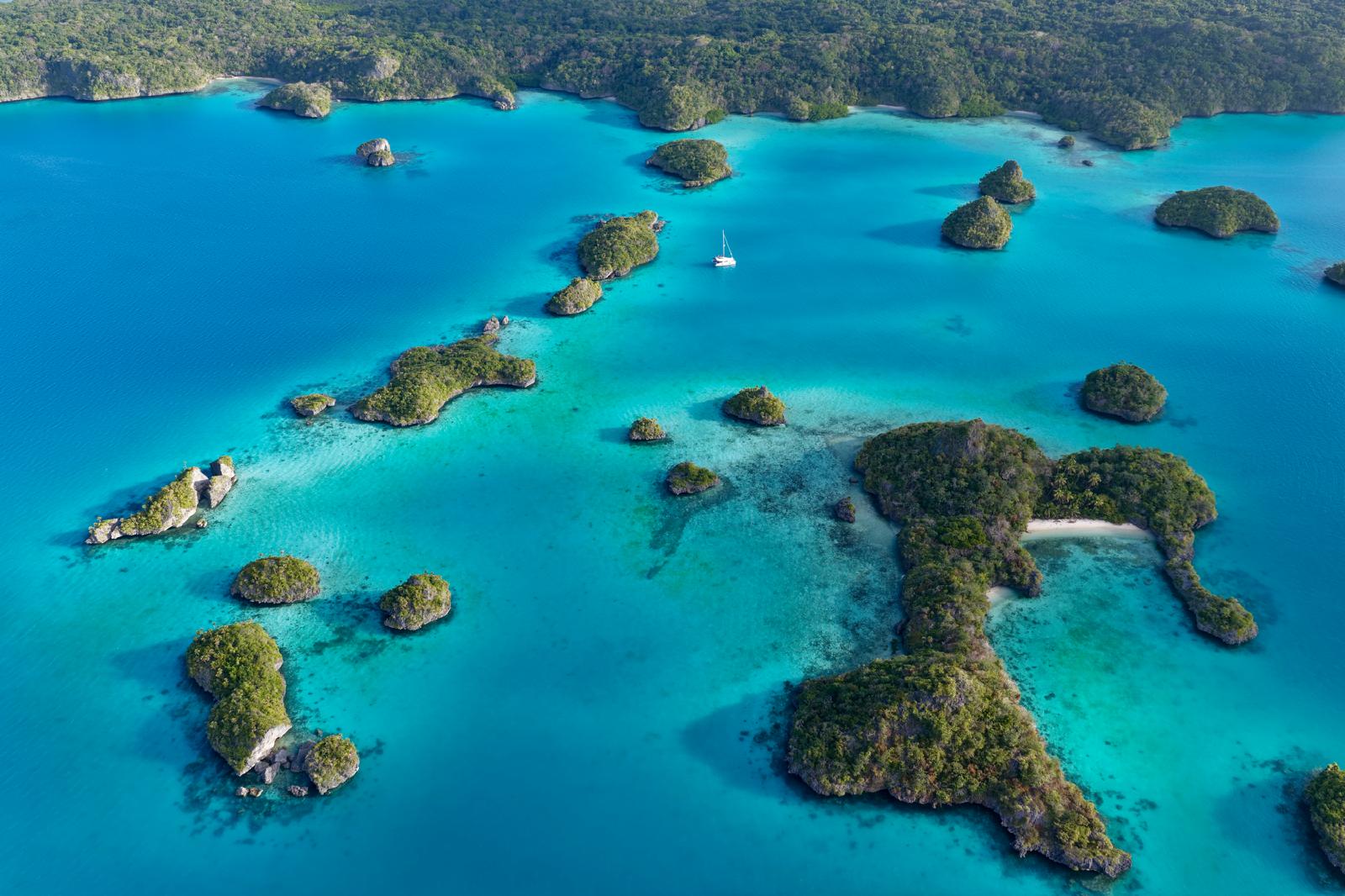
Fulaga has stolen our hearts, just as the Tuamotus did earlier in French Polynesia. Some places are beautiful to visit and then leave behind, but others somehow find their way into your heart without you even noticing. You cannot really say when it happens. Perhaps it is the overwhelming beauty of nature, perhaps the people you meet, the rhythm of life you naturally settle into, or simply all those small, ordinary moments that hardly seem special on their own. Most likely, it is a combination of everything.
We were not ready to leave. That is probably the simplest way to describe it. We did everything we could to postpone our departure for as long as possible. Just a few more days, one more weekend, a little longer. As though leaving the anchor on the seabed could somehow stop time as well. But eventually, everyday reality began interfering with our little paradise. The refrigerators were getting empty, fresh fruit and vegetables had become little more than a distant memory, and somewhere beyond our beautiful lagoon, the calendar simply kept moving forward. The approaching cyclone season was beginning to influence our plans for the coming months. There were distances to sail, appointments already made and things that needed arranging, and unfortunately, none of them would magically move along with us simply because we were not quite ready to say goodbye.
And so, eventually, that morning arrives when staying is no longer really an option. At 5:50, the anchor comes up, and ten minutes later, we sail through the pass. Apparently, saying goodbye can be that simple. No grand moment when Fulaga tells us it is time to go, no music, no formal farewell and no sign announcing that a chapter is coming to an end. Just My Motu gliding through the water and an island slowly growing smaller behind us.
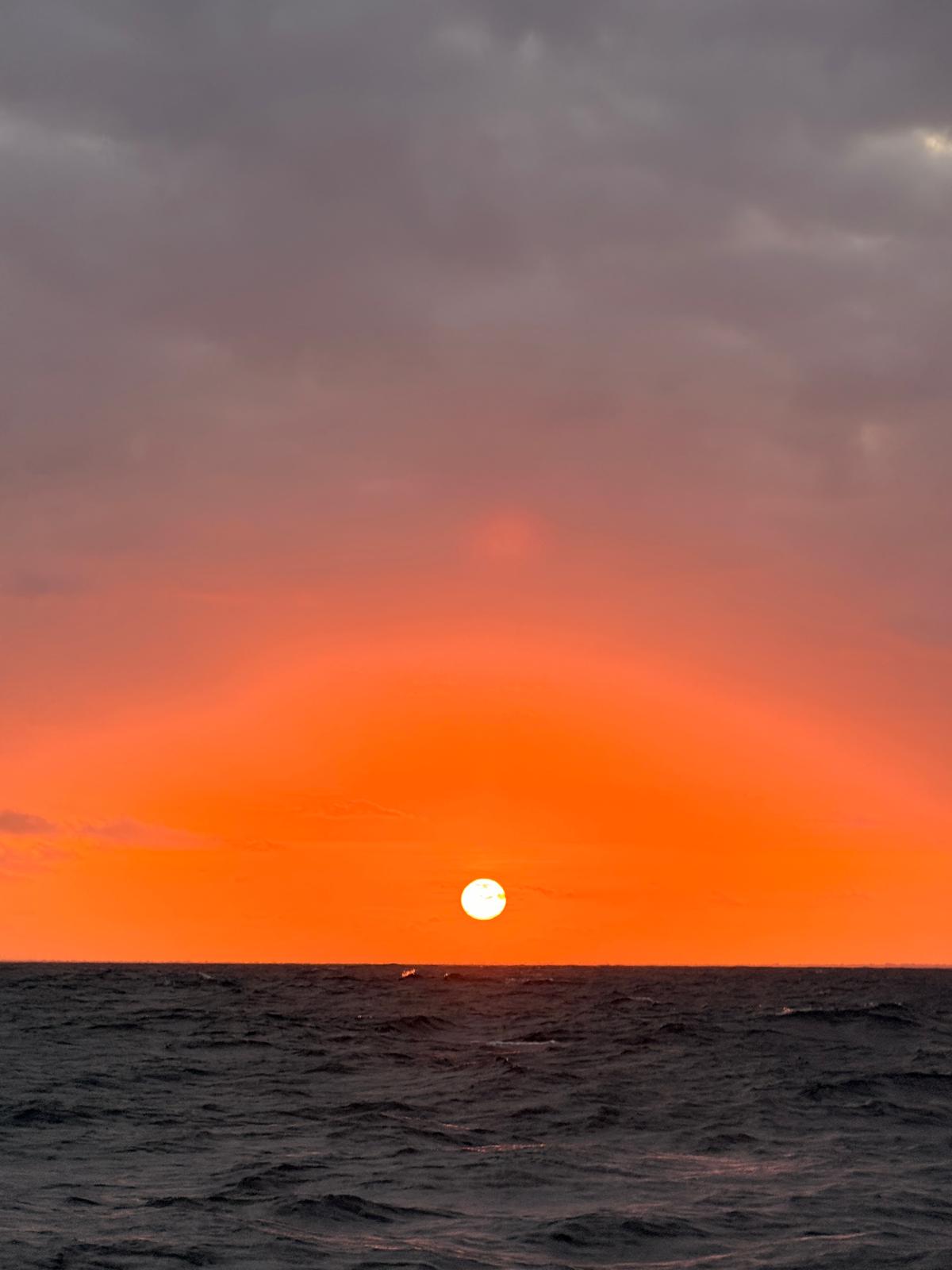
Yet perhaps the real goodbye had already begun days earlier, because during our final days, I caught myself looking a little longer at things I had previously taken almost for granted. A sunset that would have been just another beautiful sunset a few weeks earlier suddenly felt like something I needed to remember. The familiar view from the cockpit became something I tried to store in my memory, and ordinary moments suddenly acquired one little word that changed everything: last. The last coffee together, the last visit to the village, the last walk along the beach, the last dinghy ride through that unbelievably beautiful lagoon.
As long as something seems endlessly repeatable, apparently we do not feel the need to appreciate it quite so consciously. After all, there will always be another tomorrow, another sunset, another cup of coffee, another evening together and another opportunity to take a proper look. Until suddenly, that next time is no longer guaranteed, and you realize you are already beginning to miss something you have not even lost yet. Perhaps that is the strange thing about saying goodbye. You are still somewhere, but in your mind, you are already turning it into a memory.
Once we are through the pass, there is hardly any time left to keep looking back, because the ocean immediately reminds us that we are no longer sheltered by the lagoon. The waves are around two and a half meters high, with an occasional one rising even higher, but the wind is favorable, and we can hoist our sails straight away. Not much later, the engine is switched off again, and we are truly on our way to Kadavu.
And immediately, we remember what sailing on the open ocean feels like. My Motu rolls considerably from side to side, the waves do not all seem to come neatly from the same direction, and the wind is blowing almost directly from behind. After weeks in the shelter of Fulaga, it takes a little while to get used to all that movement again. Once we have had some breakfast, we both settle into our usual spots, and slowly, that familiar rhythm of a longer passage returns. Behind us, Fulaga becomes smaller and smaller, while the ocean surrounding us seems to grow larger and larger. I switch on my audiobook, make myself comfortable and, while the story continues in my ears, regularly gaze out across the water. Every now and then, I glance behind us until eventually there is almost nothing left to see of the place where we woke up that very morning.
Perhaps that is the most final moment of leaving. Not when the anchor comes up, or even when you sail through the pass, but when you look back one last time and the place you called home only hours earlier slowly disappears into the horizon.
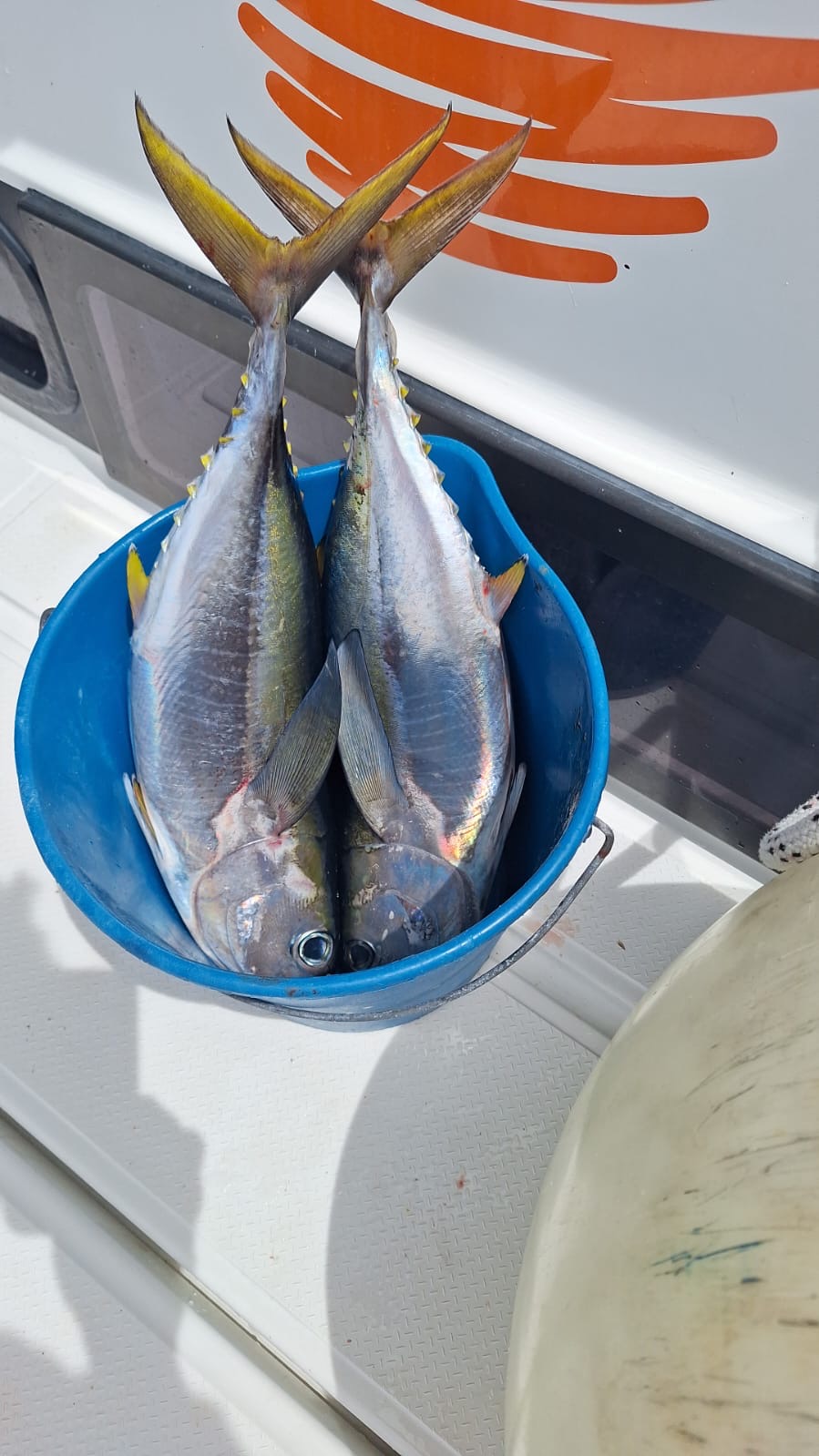
Of course, the fishing lines are out as well, because with Lille Venn sailing towards the same destination, the next important question naturally arises: who will catch the first fish? Well, certainly not us. A few hours later, Ralph sends a message saying that he has caught not one, but two beautiful yellowfin tuna. There is no way we can compete with that, but we certainly do not mind. Since Barbara is temporarily in Switzerland, Ralph has been joining us for dinner every evening, so we have a pretty good idea where some of that fresh tuna will eventually end up. Oooo, delicious! Suddenly, we have yet another reason to look forward to arriving in Kadavu.
The waves remain very noticeable throughout the day, and My Motu continues rolling from one side to the other, but as evening falls and our night watches begin, the sea gradually becomes a little calmer. This is especially welcome for whoever is trying to sleep below, because no matter how often we have done it, sleeping in a bed that constantly moves with you remains quite an experience. Jeroen takes the first watch, and when I relieve him later, we can adjust our course slightly, bringing the wind more onto our quarter rather than almost directly behind us. Immediately, the sailing becomes much more comfortable. Throughout the night, the wind continues to ease, and at one o'clock, Jeroen takes over again. I crawl into bed and quickly fall into a deep sleep.
Until Jeroen suddenly wakes me at around half past three.
He asks whether I can come and have a look because there is something ahead of us on the water that he cannot quite identify. Nothing appears on AIS, it cannot be an island, and yet something large seems to be lying directly in our path. Still half asleep, I climb into the cockpit, and together we stare into the darkness. Slowly, we begin to make out a little more, and it looks as though several large fishing vessels are gathered close together. None of them has AIS switched on, so we cannot identify them, see what they are doing or determine whether they are moving or stationary. One thing we do know: we have absolutely no desire to get any closer to find out. I suggest altering course to port, and shortly afterward, we change direction. I stay beside Jeroen for another ten minutes, keeping an eye on the vessels, and gradually we get the impression that they are indeed stationary. Once we are certain that we will pass them at a safe distance, I crawl back into bed and try to catch a little more sleep before my next watch begins.
At six o'clock, I take over from Jeroen again. The darkness slowly gives way to daylight, marking the beginning of our second day at sea. When Jeroen comes back up around nine, we decide to change sails and hoist our beautiful rainbow-colored gennakers. As soon as they fill with wind, everything suddenly looks cheerful again. The two enormous, colorful sails pull My Motu towards Kadavu, and we continue sailing like this for hours.
Only when we are about three hours away from our planned anchorage do we have to make another decision. The wind has dropped to around eight knots, and at our current speed, we will not arrive with enough daylight left. That is something we want to avoid. We prefer entering an unfamiliar anchorage while we can still clearly see what lies around us, so we lower the gennakers, set our other sails and start the engine. It is a shame to interrupt such lovely, peaceful sailing, but sometimes arriving safely matters more than sailing a few extra hours without the engine.
At 5:35 in the afternoon, we finally drop our anchor at Dravuni Island in Kadavu.
We have arrived.
After more than a day at sea, that remains a wonderful moment. The anchor drops, digs into the seabed, and slowly My Motu settles down again. The large ocean swell is gone, the engine can be switched off, and suddenly our world feels small once more. From an endless ocean stretching in every direction to a sheltered spot beside an island where life has simply carried on while we have spent the past year experiencing thousands of other things.
I head into the galley and make pancakes for dinner, and as he has done every evening since Barbara temporarily left for Switzerland, Ralph joins us. Naturally, we exchange stories about the passage. We tell him once again about the mysterious fishing vessels without AIS, Ralph talks about his catch, and those two beautiful yellowfin tuna will undoubtedly play an important role in our meals over the coming days.
And just like that, we are spending the evening in an entirely different place. That morning, we were still looking back at Fulaga, somewhere we did not really want to leave, and now we are anchored at Dravuni, eating pancakes with Ralph and looking out over Kadavu. Sometimes, it is almost unbelievable how quickly your world can change when you live on a sailing boat. A place where you have spent weeks living intensely, where people and routines have become familiar and where you were not quite ready to say goodbye, can disappear beyond the horizon in little more than a day. You miss it, while at the same time, a whole new world is already opening up in front of you.
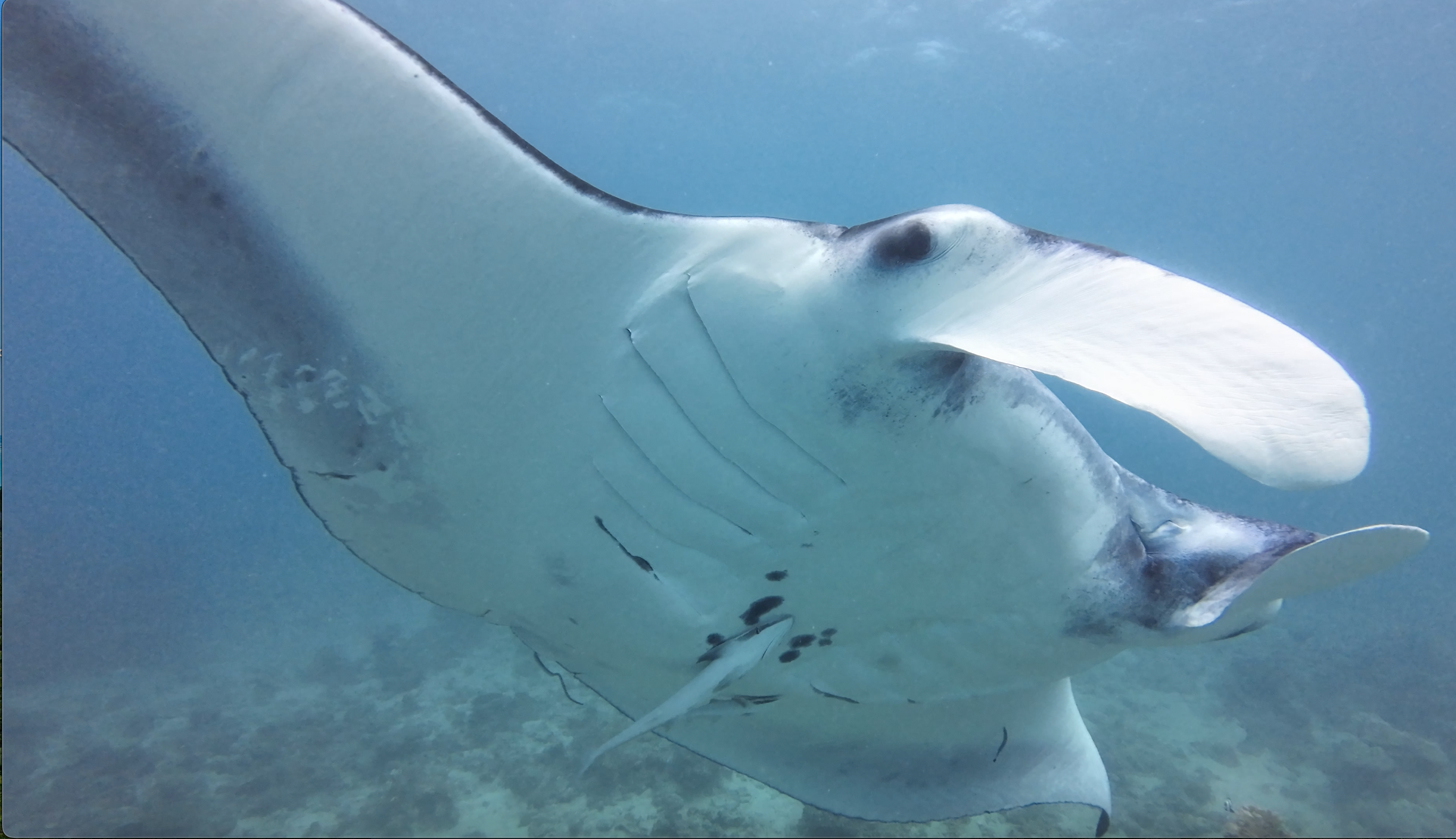
And Kadavu is not just another new world to us, because we have been here before. A year ago, we sailed around these islands as well, only back then, Rajesh was still with us. Just thinking about it brings back so many memories. Our encounters with the oceanic manta rays were absolutely incredible. Those enormous animals moving almost weightlessly through the water while we swam alongside them, sometimes coming so close that you almost forgot to breathe. They are the kind of moments you somehow know, even while experiencing them, will remain permanently stored in your memory. Naturally, we hope to meet them again, but even if we jump into the water at exactly the same spot and another enormous manta glides beneath us, it will never be quite the same.
Kadavu also holds a very different memory for us: Buliya. Whenever I think of that island, the first thing I see is not a tropical beach or swaying palm trees, but fire. I can almost hear the crackling flames spreading through the trees and bushes, smell the smoke again and picture the fire moving further and further across the island. The three of us were walking there at the time, and Rajesh was filming the scene with his drone, until the moment came when curiosity had to give way to safety and we hurried back to My Motu. Even there, we were not entirely safe, because burning pieces of ash were being carried by the wind towards the boat, eventually forcing us to move My Motu to a safer location.
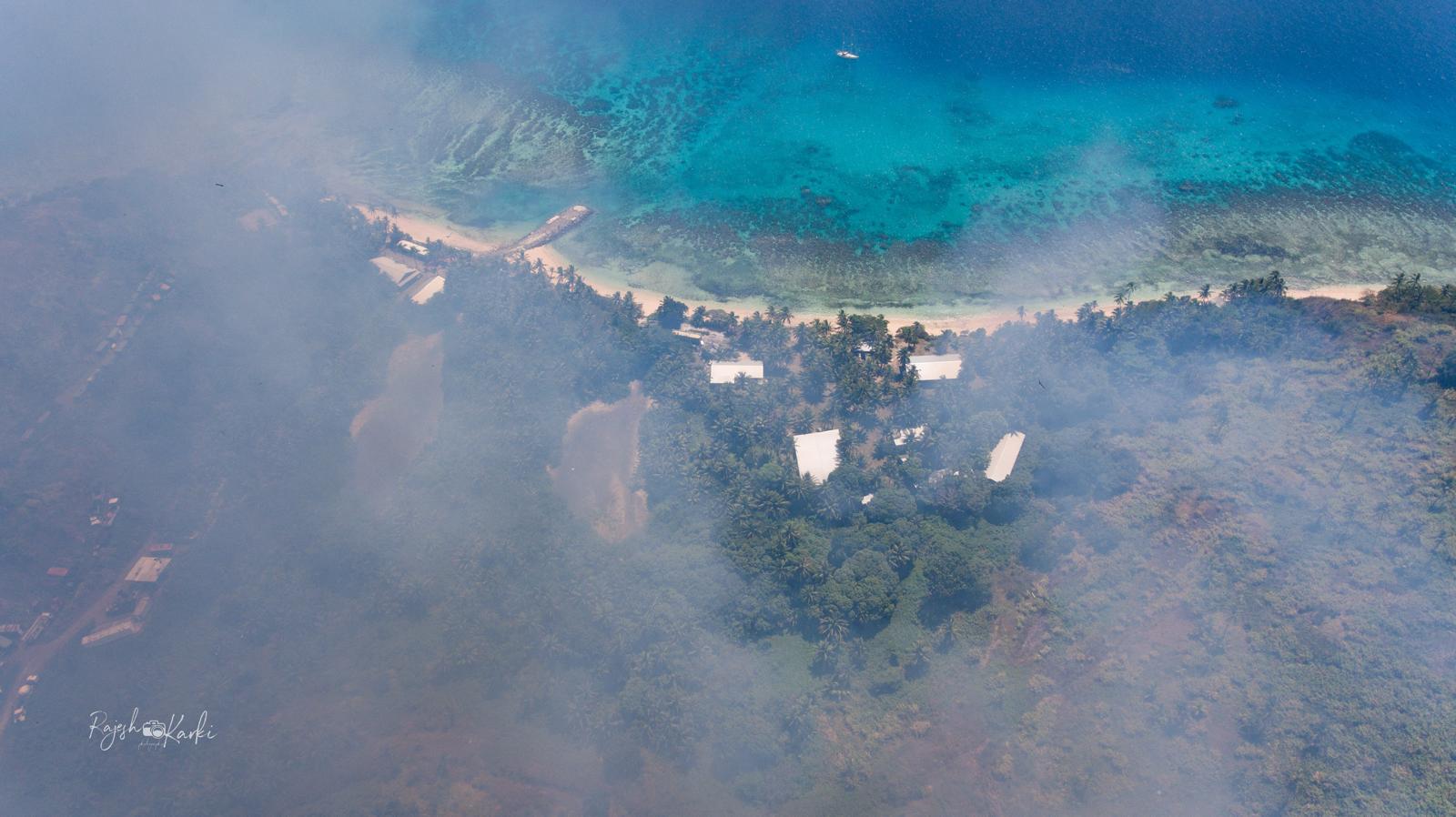
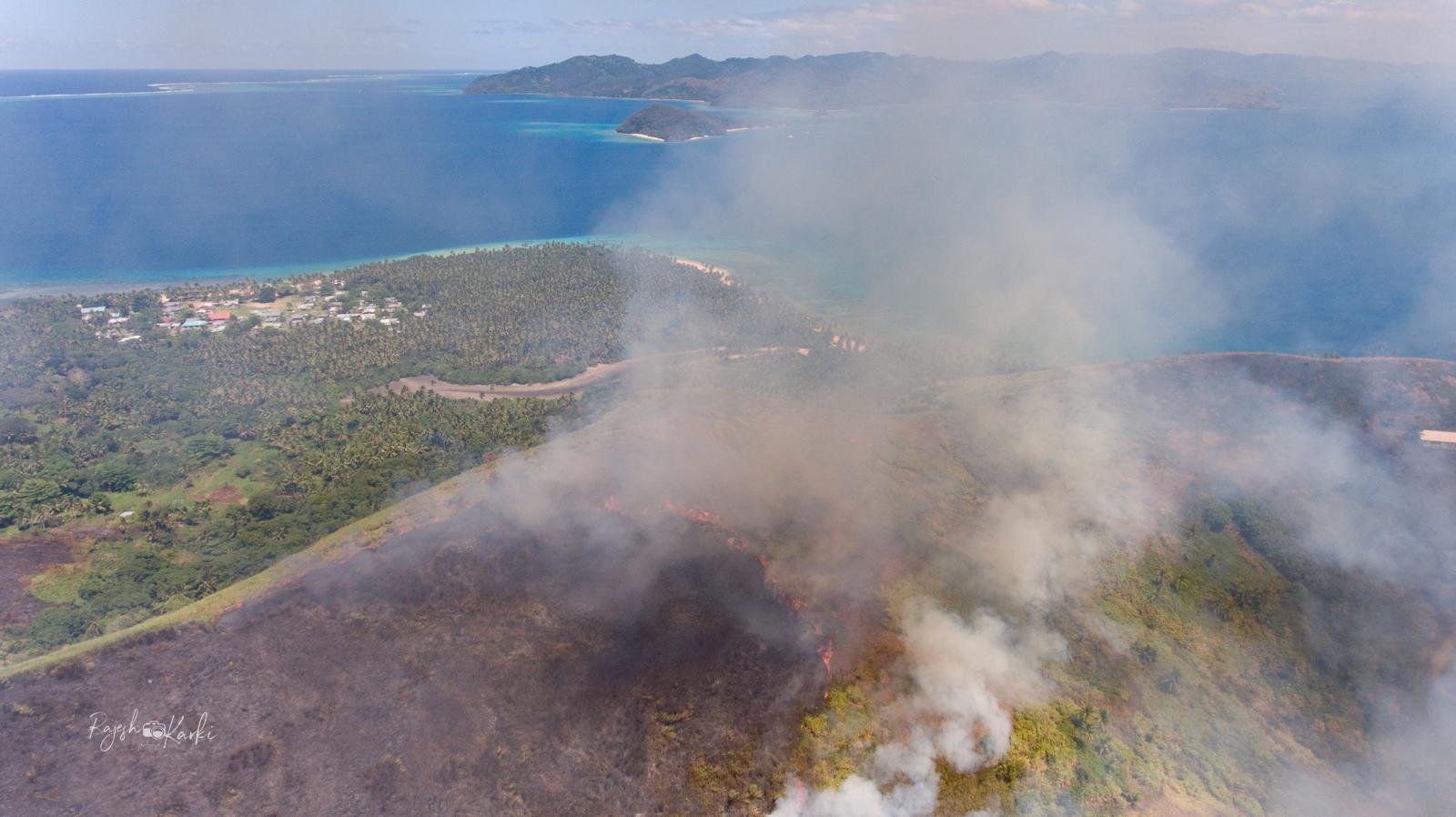
Now a year has passed, and as we sail towards Buliya once again, I wonder what the island looks like today. Have the blackened areas disappeared? Has the vegetation returned? Will we still recognize the places where the fire burned its way through the landscape, or has nature reclaimed so much in just one year that we will have to search for the spots that remain so clearly etched in our memories?
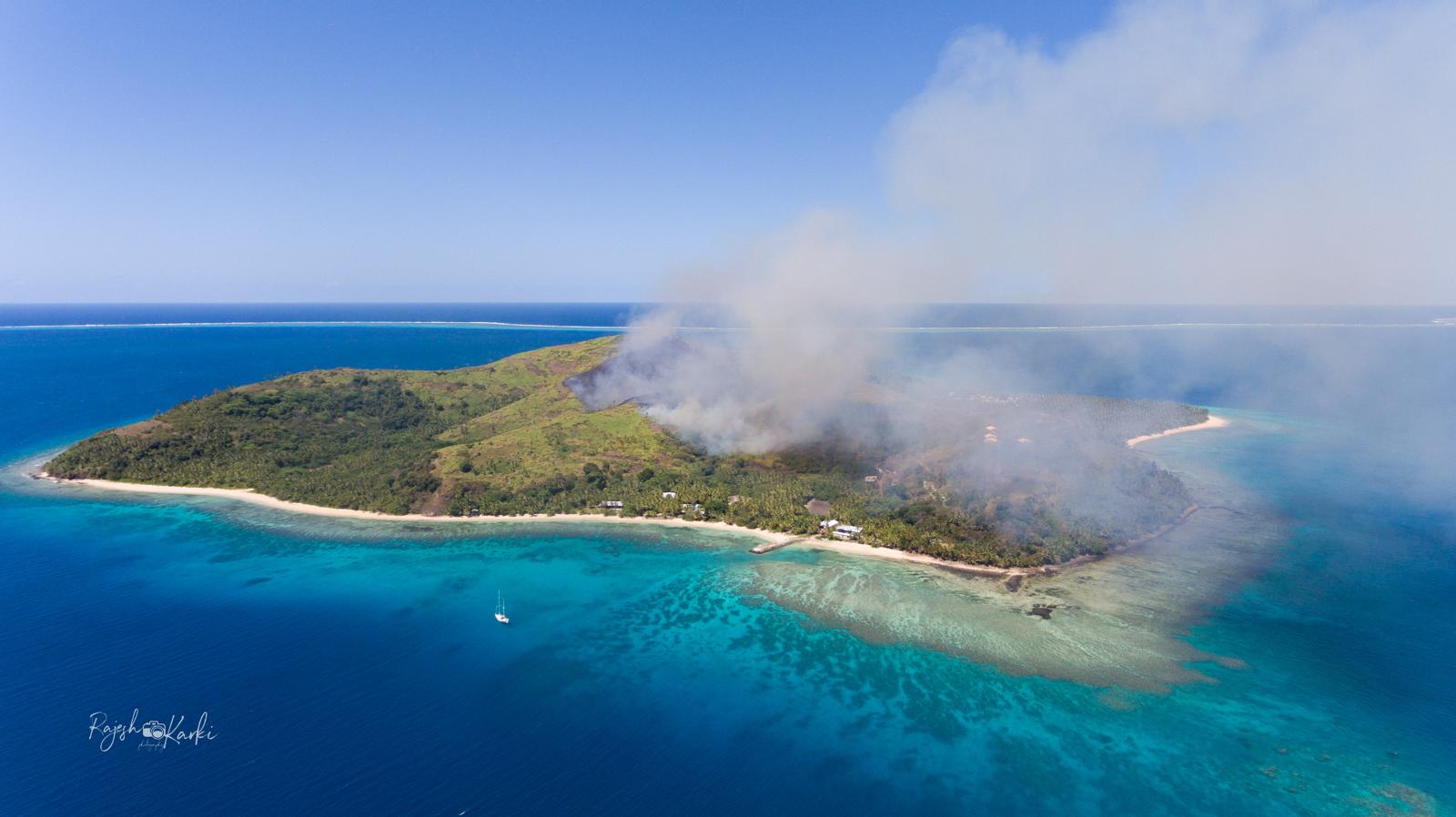
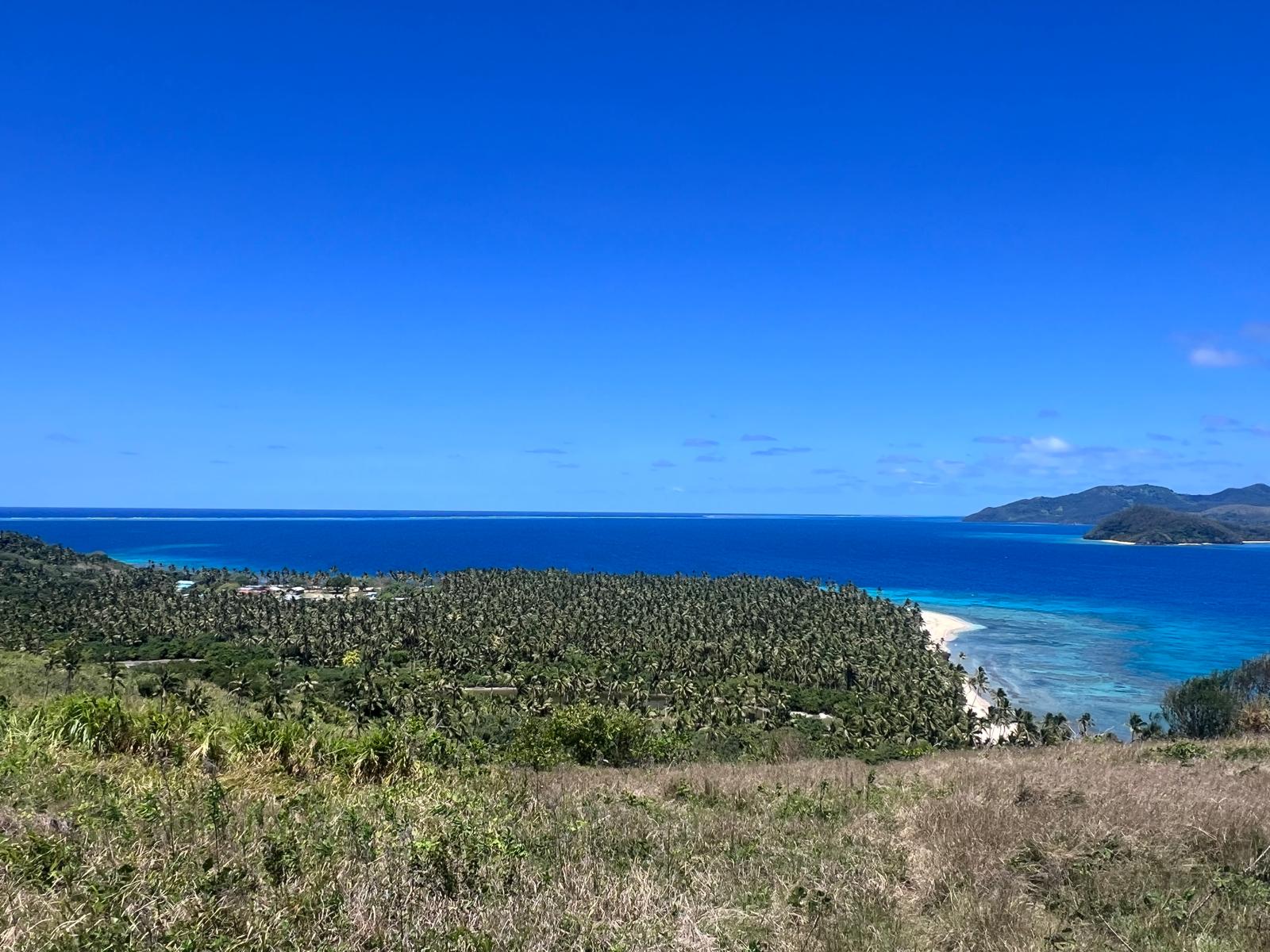
To our surprise, Buliya looks beautifully green again. Of course, we know that nature can recover, especially in a tropical climate where everything sometimes seems to grow faster than you can keep up with, but we certainly did not expect the traces of that enormous fire to be so difficult to see. Where a year ago we were looking at blackened trees and bushes, green vegetation has now largely taken over again. Almost as though the island decided it had carried those dark scars for long enough and simply got on with life.
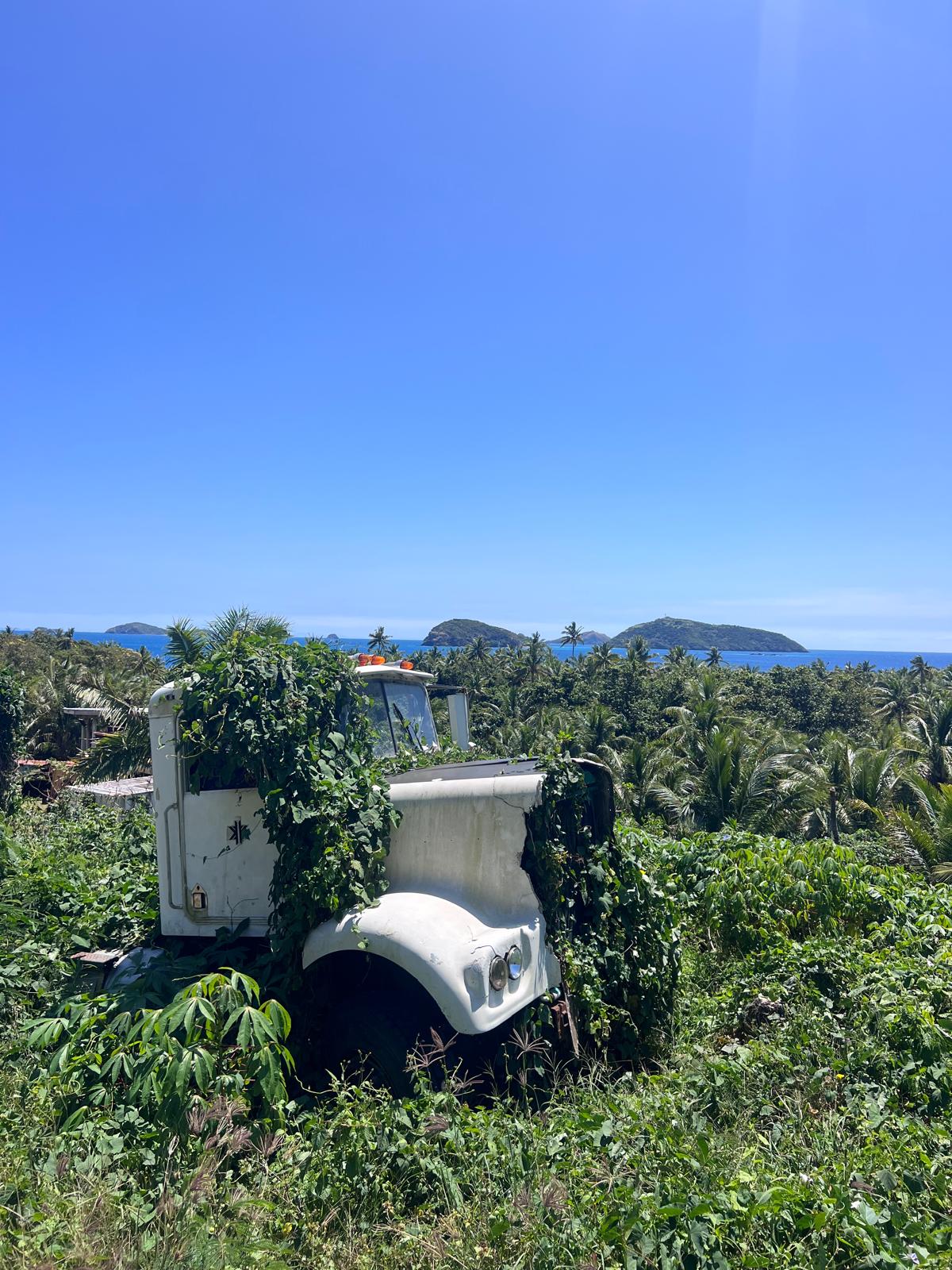
The survival camp we remember so well is still there too. Miraculously, the fire never reached it, although time itself seems to have been a little less gentle. It already looked rather run-down last year, but another twelve months of tropical weather have certainly left their mark. It is one of those places where you wonder how much longer everything will remain standing, but apparently, it is still stubbornly holding on.
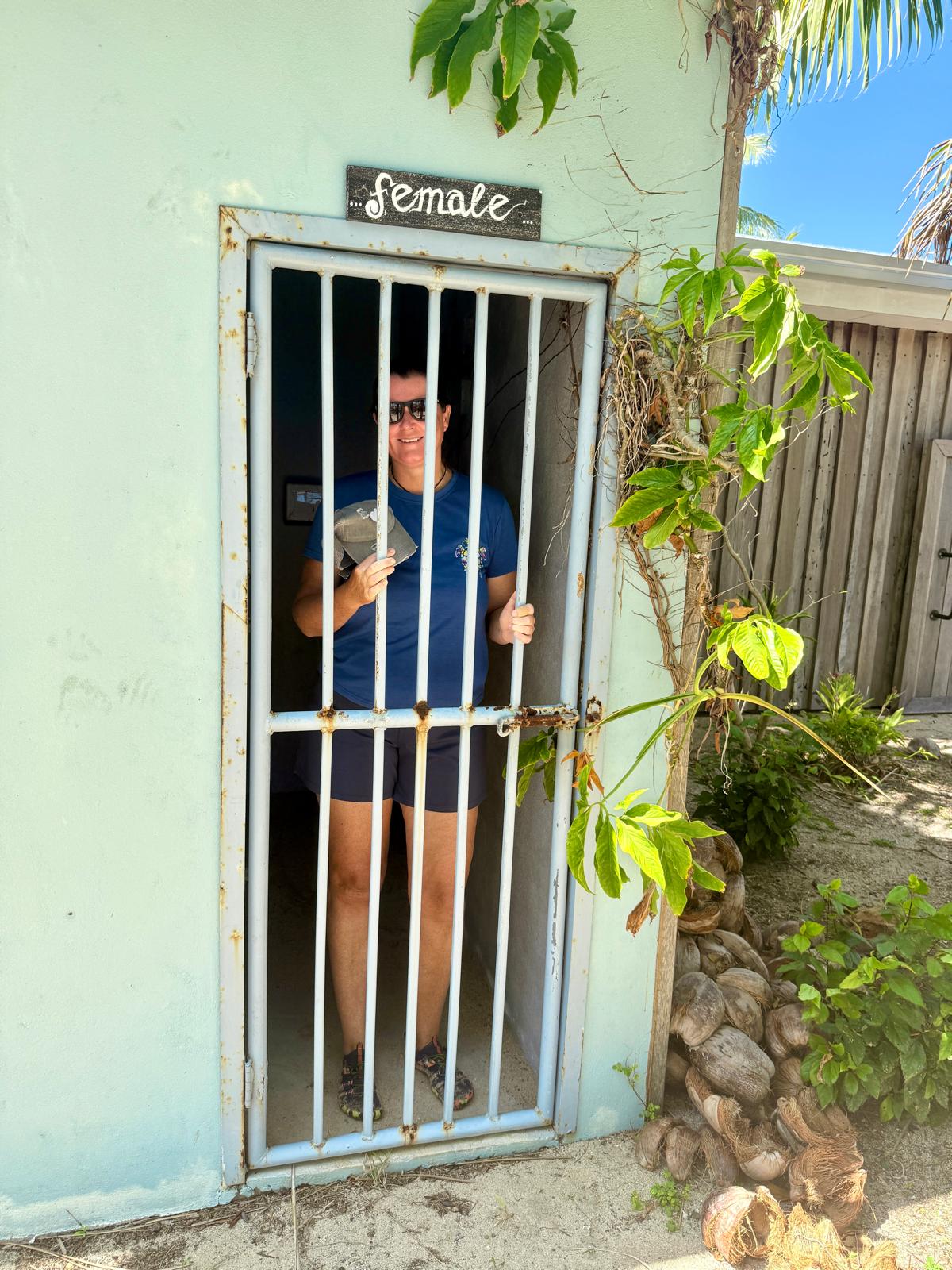
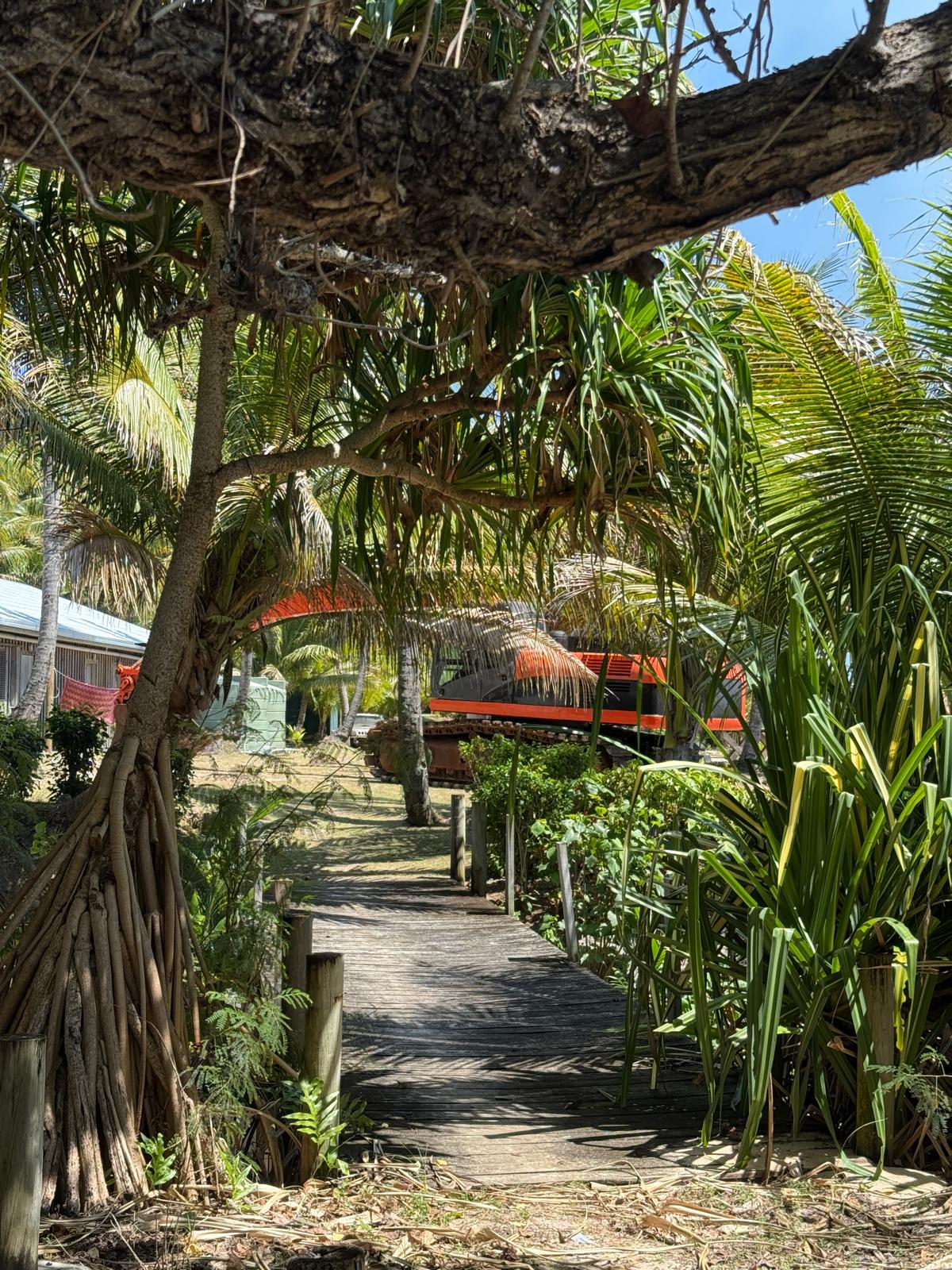
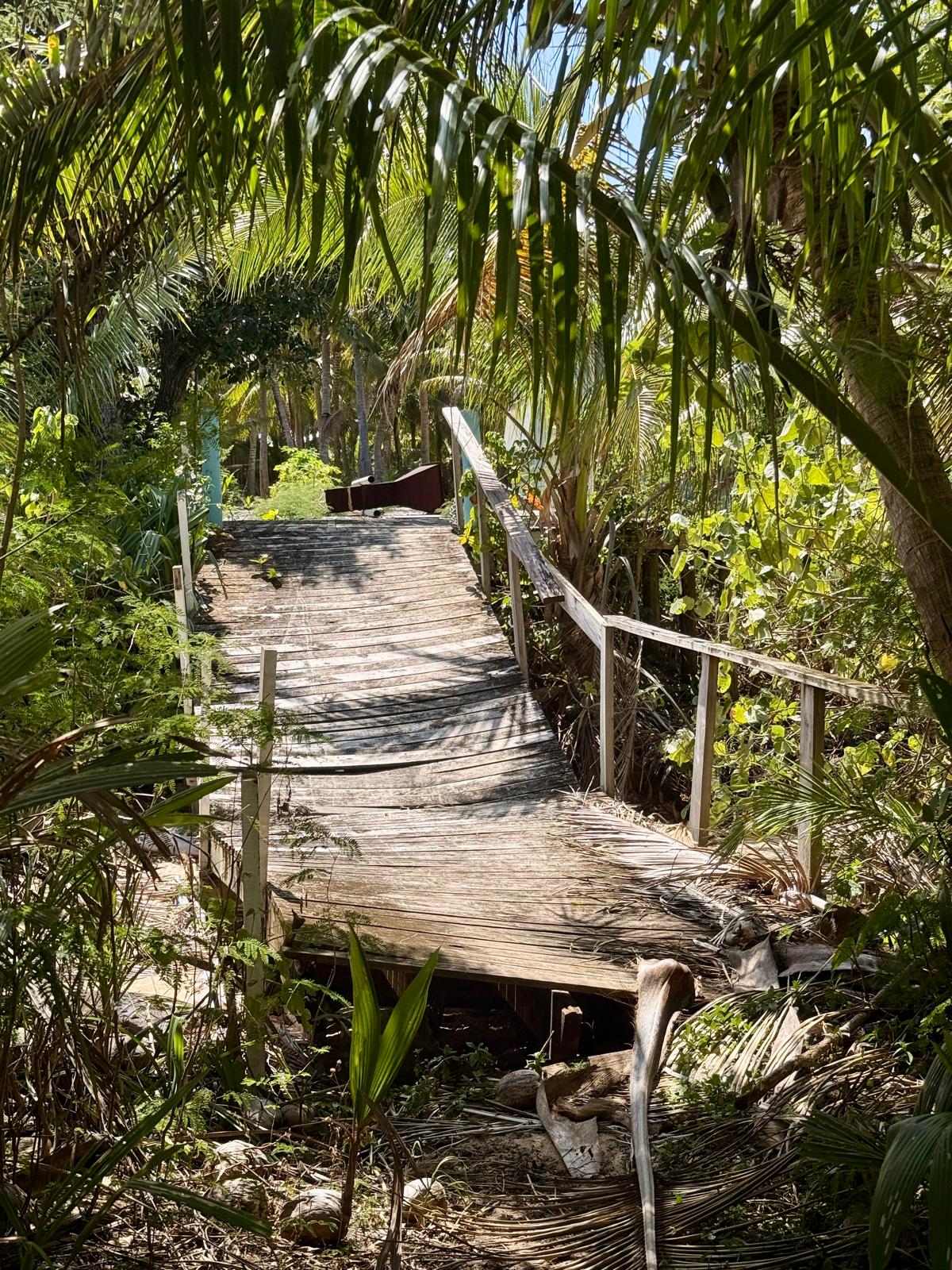
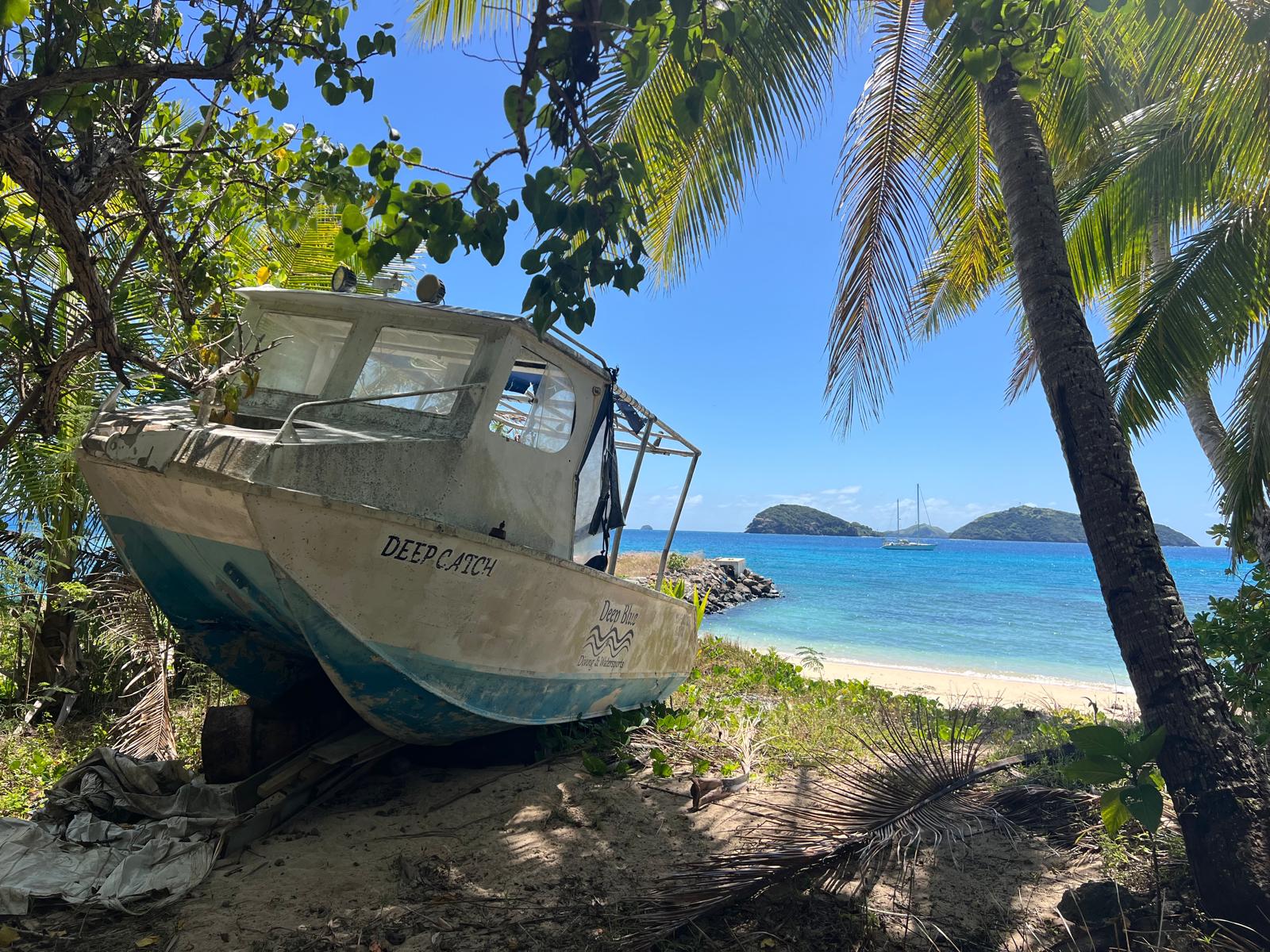
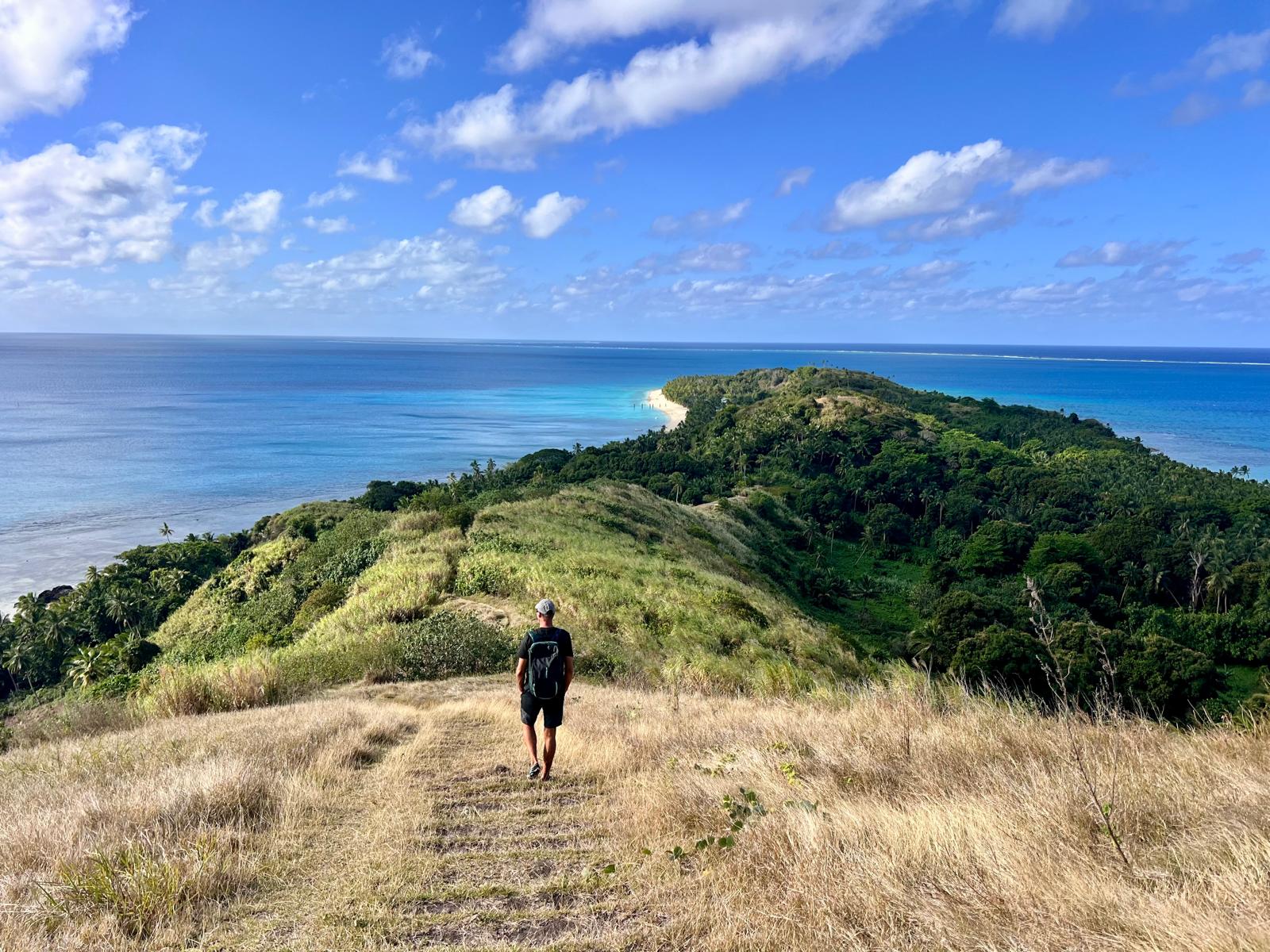
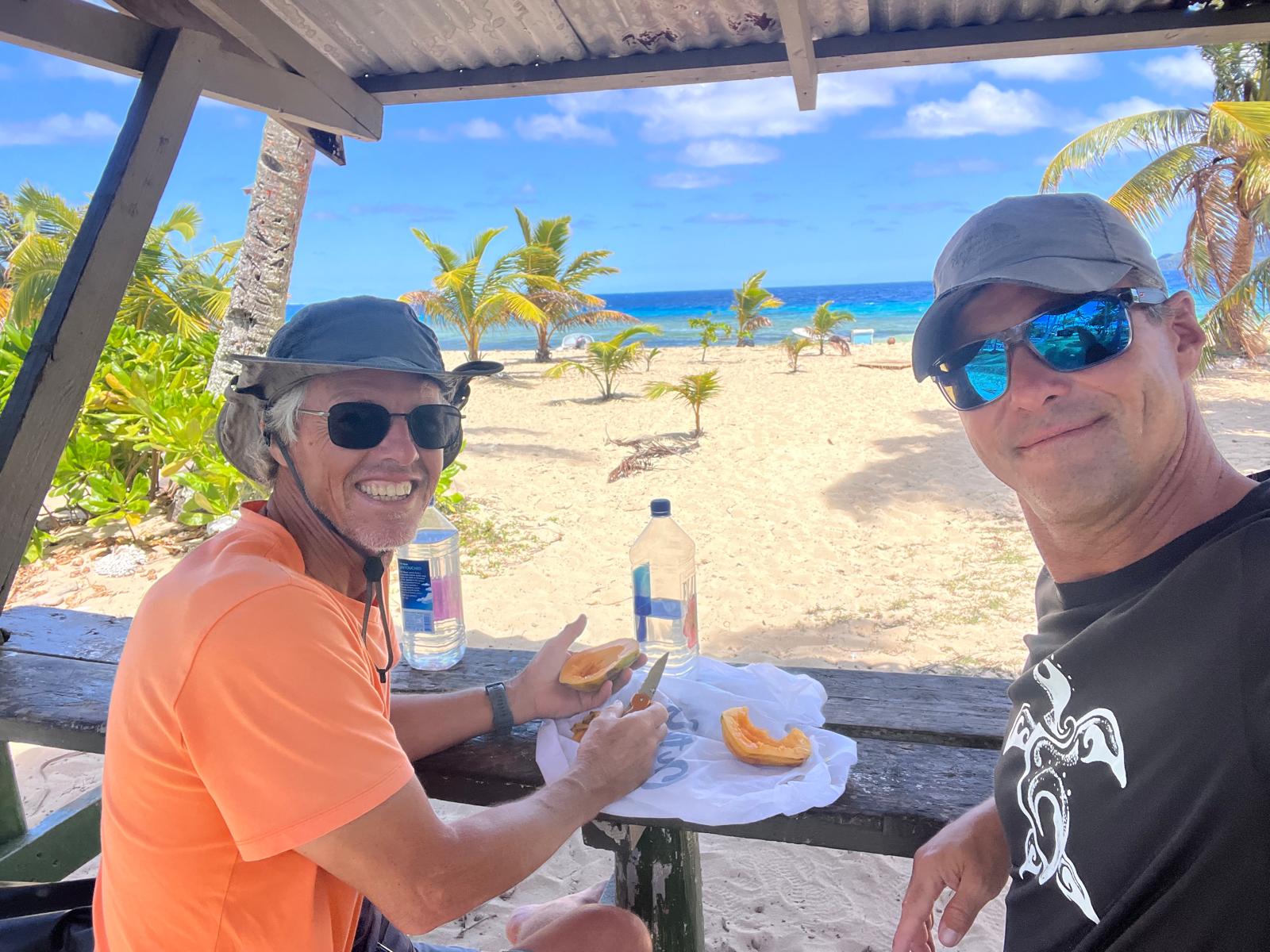
After visiting the camp, Jeroen and Ralph decide to hike to the village on the other side of the mountain. Quite a walk, because quickly popping over to somewhere on these islands rarely seems to exist. There is usually a mountain in the way, a path that turns out to be less straightforward than expected or a distance that looked considerably shorter on the map. But this hike also has an important purpose, because they are going to perform sevusevu. Before we can anchor near the village or use the surrounding waters, it is customary to ask permission from the village chief. This is done in the traditional Fijian way, by presenting a gift of kava root as a sign of respect.
Meanwhile, My Motu is lying nicely sheltered, which is certainly no luxury because a strong wind is blowing around the island. It is one of those typical situations where you sit in the cockpit enjoying a beautiful, peaceful anchorage, knowing that only a short distance away, the conditions can be considerably rougher. But as long as we are here, we have very little to complain about.
Once the men return and the sevusevu has been completed, we can finally move on the following day to the place we have been looking forward to ever since arriving in Kadavu: the manta ray cleaning station.
A year ago, our encounters here were so extraordinary that we cannot help wondering whether this visit will be just as special. Perhaps that is the disadvantage of returning somewhere you have already experienced something unforgettable. You try not to have expectations, but deep down, of course, you hope it will be just as wonderful again.
And it is.
Unfortunately, the water is less clear than we are used to. Last year, we could sometimes spot the dark silhouettes moving beneath us from quite a distance, whereas now we have to look a little more carefully. But really, what does that matter when suddenly eight enormous manta rays are swimming around you at the same time?
Eight!
They keep circling around the cleaning station, where small fish remove parasites from their bodies. With their enormous wings, they move almost effortlessly through the water, making graceful turns, briefly disappearing from view before appearing again. Sometimes several glide beneath us at once, and we hardly know where to look. Despite the reduced visibility, we remain completely fascinated, because no matter how often we have seen these animals, the experience never becomes ordinary.
There is something magical about manta rays. Perhaps it is their enormous size, perhaps the peaceful way they move, or the fact that they seem completely unconcerned by our presence. We float at the surface with our snorkels, trying not to miss a single moment, while they simply continue going about their daily business. Eight of these magnificent creatures together, and we are lucky enough to witness it.
At moments like these, I realize once again how extraordinary the life we lead really is. Not because every day is spectacular, because believe me, life on a sailing boat also includes days when laundry needs doing, something breaks down or the wind is once again blowing from exactly the wrong direction. But because we have the freedom to return to places that have left an impression on us, to discover what has changed and to be surprised all over again by something we thought we already knew.
And perhaps that is what makes returning somewhere so special. In your memory, a place remains exactly as you left it. To us, Buliya was the island of the fire, of smoke and flying ash, of Rajesh filming with his drone and of the moment we decided it would be wiser to move My Motu to a safer location. But while we continued sailing, life here simply carried on. Nature recovered, the survival camp grew another year older, and the manta rays continued swimming their circles, completely unaware of the extraordinary memories we carry of them.
We, too, have moved on during that year. We have discovered new places, said goodbye to people, made new friends and collected memories that have become just as precious as the old ones. And yet it feels special to be here again, this time without Rajesh, but with Ralph and Lille Venn nearby. The same islands, the same ocean, and yet a completely different moment in our lives.
Perhaps that is why truly going back is not actually possible. You can enter the same coordinates, sail through the same pass and drop your anchor in almost exactly the same spot, but you can never return to precisely the same moment. Not only because places change, but because you are no longer quite the same person you were back then.
And as I think back to Fulaga, the place we really did not want to leave, I suddenly understand that saying goodbye and returning somewhere have much more in common than I once thought. During our final days in Fulaga, I tried to take everything in consciously, as though I wanted to hold on forever to the colors of the lagoon, the faces of the people and all those small, ordinary moments. Here in Kadavu, I discover that memories do not simply disappear when you leave a place. They travel with you, sometimes for years, until a familiar smell, a particular view or an unexpected encounter suddenly brings them back to life.
We cannot stay everywhere, no matter how much we might sometimes want to. There will be new islands, different people and undoubtedly more days when we wonder why on earth we ever decided to begin this adventure. But there will also be moments when eight manta rays circle around us, and for a little while, we completely forget that another world exists beyond that small piece of ocean.
And perhaps that is ultimately what Fulaga has taught me. That you do not have to wait until something is over to realize how special it was. That sometimes you simply need to keep looking a little longer, listen a little more carefully and enjoy what is happening right now, without already thinking about what tomorrow might bring.
Because the most beautiful moments of our journey are not always about the places we are sailing towards, but rather those moments when there is nowhere else in the world we would rather be.
And as eight manta rays continue circling peacefully around us, this is another one of those moments.
MESSAGES ON BOARD
Leave a message
Share a thought, question or greeting. Aagje reads every comment before it appears here.
Loading comments…